-
Mon-Fri: 10AM to 8PM 01722665665
-
My Account
-
-
0
Total :
₹ 0.00

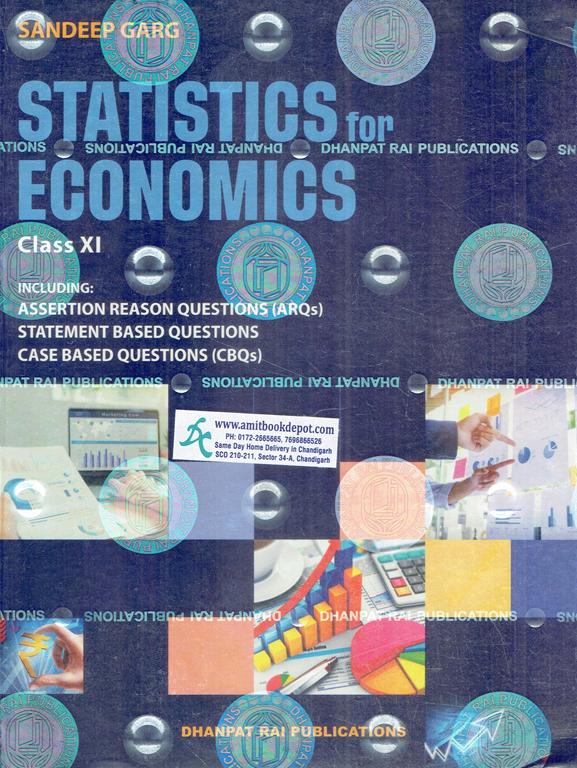
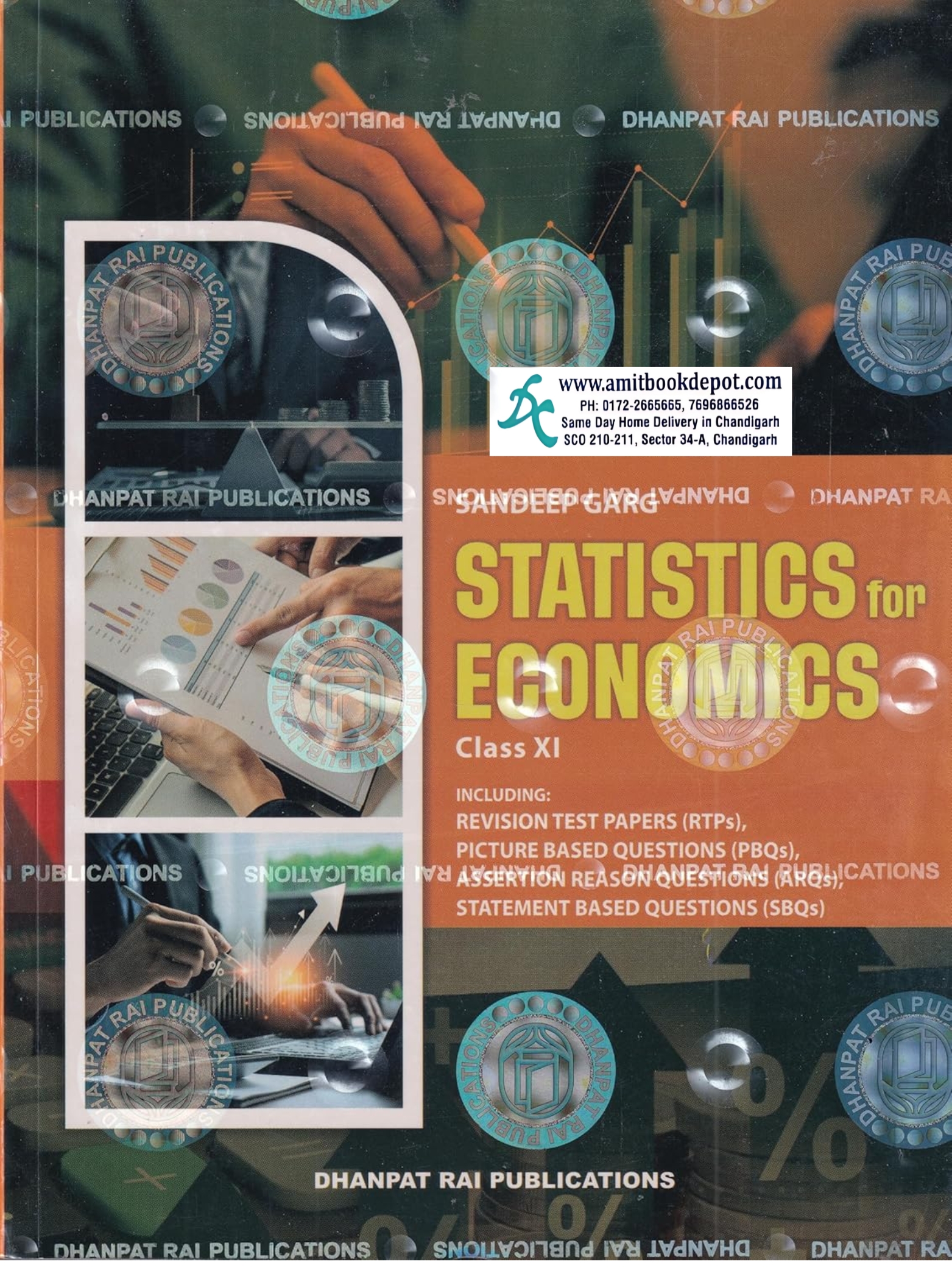



Unit 1 introduces economics as a subject and explains the meaning, scope, and importance of statistics in analyzing economic data for decision-making.
Chapter 3 (Collection of Data) distinguishes primary data (collected firsthand) from secondary data (already published), citing methods, sources, and relative merits.
Chapter 4 (Organization of Data) covers raw data arrangement, frequency distribution, tally marks, and preparing continuous or discrete series.
Bar diagrams (simple, multiple, component) and pie diagrams are covered in Chapter 6 for visually comparing economic variables.
Chapter 8 provides direct formula (sum of observations divided by number of observations) with solved examples for individual and discrete series.
Mode = 3 Median – 2 Mean. The book explains this for moderately symmetrical distributions in Chapter 9.
Chapter 10 (Measures of Correlation) covers Karl Pearson’s product-moment method, including step-deviation derivation and interpretation of r.
Chapter 11 defines index numbers as statistical measures showing relative changes in price, quantity, or value over time (base year comparison).
Yes, Appendix II gives complete answers to all Revision Test Papers (RTPs) for self-assessment and doubt clearing.
Appendix III contains QR codes that link to supplementary video tutorials, topic-wise quizzes, and additional solved examples online.
No Description Added
Unit 1 introduces economics as a subject and explains the meaning, scope, and importance of statistics in analyzing economic data for decision-making.
Chapter 3 (Collection of Data) distinguishes primary data (collected firsthand) from secondary data (already published), citing methods, sources, and relative merits.
Chapter 4 (Organization of Data) covers raw data arrangement, frequency distribution, tally marks, and preparing continuous or discrete series.
Bar diagrams (simple, multiple, component) and pie diagrams are covered in Chapter 6 for visually comparing economic variables.
Chapter 8 provides direct formula (sum of observations divided by number of observations) with solved examples for individual and discrete series.
Mode = 3 Median – 2 Mean. The book explains this for moderately symmetrical distributions in Chapter 9.
Chapter 10 (Measures of Correlation) covers Karl Pearson’s product-moment method, including step-deviation derivation and interpretation of r.
Chapter 11 defines index numbers as statistical measures showing relative changes in price, quantity, or value over time (base year comparison).
Yes, Appendix II gives complete answers to all Revision Test Papers (RTPs) for self-assessment and doubt clearing.
Appendix III contains QR codes that link to supplementary video tutorials, topic-wise quizzes, and additional solved examples online.