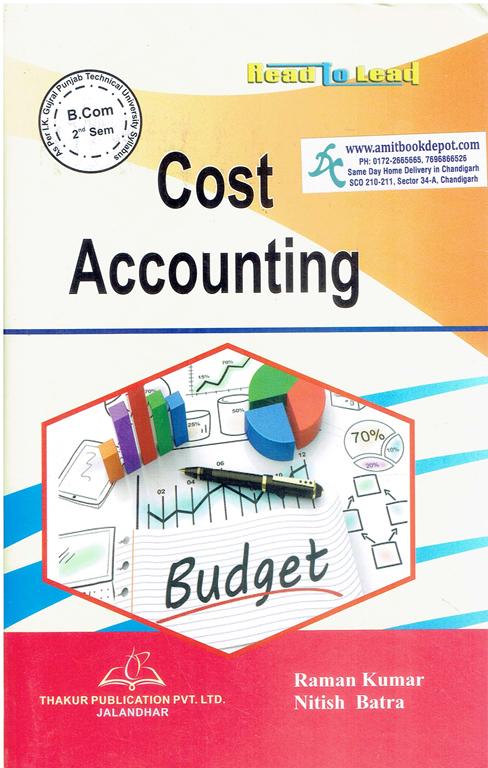
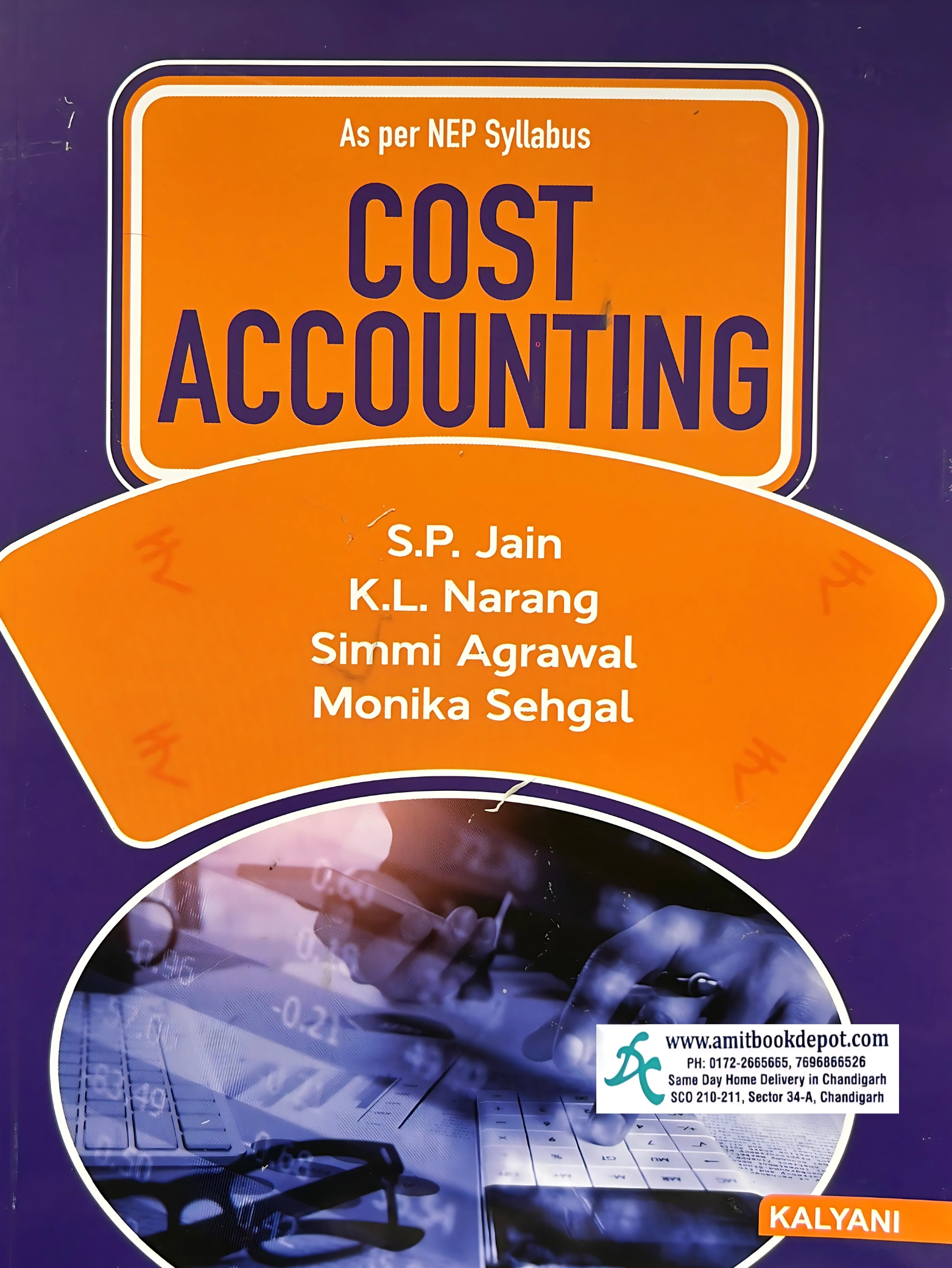
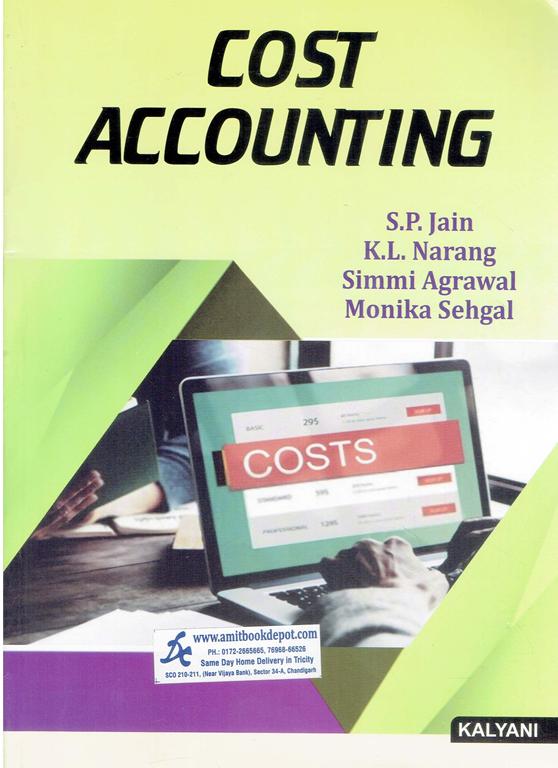
Yes, this book is meticulously crafted to align 100% with the updated National Education Policy (NEP) syllabus for the Cost Accounting course (NBCM 301) at Panjab University Chandigarh.
Yes, it includes a dedicated "Practical Work" section that provides guidance on using Microsoft Excel and other software packages for tasks like overhead apportionment and cost sheet preparation.
Absolutely. The book includes a wide range of numerical problems on all key topics, such as pricing of material issues, labor cost calculations, overhead absorption, and various costing methods, as mandated by the university's instructions to paper setters.
The content is organized to reflect the division of the question paper into Sections A, B, and C, emphasizing the types of questions (short answer, essay-type, numerical) asked in each section.
Yes, Unit II contains a detailed chapter on Overheads that breaks down the entire process, from collection and classification to primary/secondary distribution and absorption, including the calculation of Machine Hour Rate, with step-by-step examples.
Yes, Chapter 3 in Unit I provides a comprehensive overview and comparison of FIFO, LIFO, Simple Average, and Weighted Average methods, complete with numerical illustrations for clarity.
Yes, Unit I has a dedicated chapter on Labor Cost that covers the meaning, computation, and control of Labor Turnover, along with accounting for idle time and overtime.
Yes, the book comprehensively covers Job Order Costing, Batch Costing, Contract Costing, and Unit (Operation) Costing in separate, detailed chapters.
Yes, the content is explicitly designed to help students understand cost concepts, analyze cost components, compute costs, and determine costs for different industries, directly addressing all the stated Course Outcomes.
Yes, the book is written in clear, concise, and student-friendly language to make complex topics in cost accounting accessible and easy to grasp.
No Description Added
Yes, this book is meticulously crafted to align 100% with the updated National Education Policy (NEP) syllabus for the Cost Accounting course (NBCM 301) at Panjab University Chandigarh.
Yes, it includes a dedicated "Practical Work" section that provides guidance on using Microsoft Excel and other software packages for tasks like overhead apportionment and cost sheet preparation.
Absolutely. The book includes a wide range of numerical problems on all key topics, such as pricing of material issues, labor cost calculations, overhead absorption, and various costing methods, as mandated by the university's instructions to paper setters.
The content is organized to reflect the division of the question paper into Sections A, B, and C, emphasizing the types of questions (short answer, essay-type, numerical) asked in each section.
Yes, Unit II contains a detailed chapter on Overheads that breaks down the entire process, from collection and classification to primary/secondary distribution and absorption, including the calculation of Machine Hour Rate, with step-by-step examples.
Yes, Chapter 3 in Unit I provides a comprehensive overview and comparison of FIFO, LIFO, Simple Average, and Weighted Average methods, complete with numerical illustrations for clarity.
Yes, Unit I has a dedicated chapter on Labor Cost that covers the meaning, computation, and control of Labor Turnover, along with accounting for idle time and overtime.
Yes, the book comprehensively covers Job Order Costing, Batch Costing, Contract Costing, and Unit (Operation) Costing in separate, detailed chapters.
Yes, the content is explicitly designed to help students understand cost concepts, analyze cost components, compute costs, and determine costs for different industries, directly addressing all the stated Course Outcomes.
Yes, the book is written in clear, concise, and student-friendly language to make complex topics in cost accounting accessible and easy to grasp.