-
Mon-Fri: 10AM to 8PM 01722665665
-
My Account
-
-
0
Total :
₹ 0.00

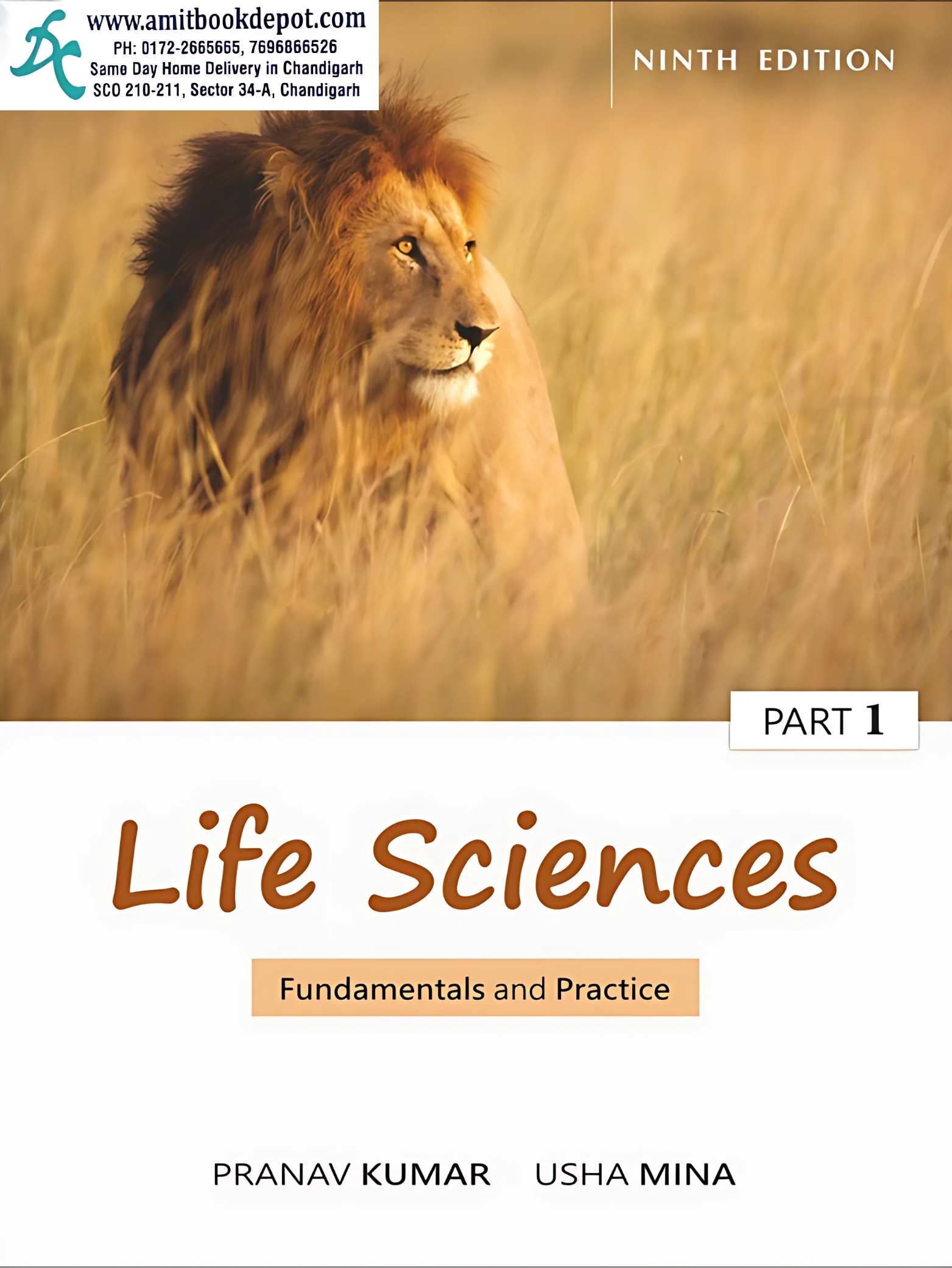
Life Sciences Fundamentals and Practice 1 by Pranav Kumar and Usha Mina (Pathfinder Publication) is a comprehensive book for CSIR NET, GATE, DBT-JRF, and other life sciences competitive exams. It provides in-depth coverage of core topics, including biomolecules, metabolism, cell biology, prokaryotes, immunology, diversity of life, and ecology. With detailed explanations of advanced concepts like enzyme kinetics, protein folding, cell signaling, immunoglobulins, and ecological models, this book is designed to build a strong conceptual foundation. Its structured content and exam-oriented approach make it an essential resource for serious aspirants aiming for success.
Absolutely. The book is designed to serve as a comprehensive primary text. It covers the entire foundational syllabus for postgraduate programs, with a depth that bridges the gap between introductory textbooks and advanced research-oriented references.
Yes. Chapter 5 on Immunology includes dedicated sections on hybridoma technology for monoclonal antibody production (5.12) and a detailed overview of various vaccine types and principles (5.20), which are high-yield topics for competitive exams.
The book uses clear, pedagogically designed, black-and-white line diagrams and schematic illustrations. Complex mechanisms like the ATP synthase (2.1.10), photosynthetic units (2.6.4), and cell signaling cascades are broken down into stepwise visuals for easier comprehension and recall.
Yes. Chapter 7 (Ecology) explicitly covers the Lotka-Volterra model (7.11) for predator-prey dynamics. It also includes discussions on population growth equations, diversity indices, and ecological efficiencies with the conceptual clarity needed to solve related numerical problems.
Yes. These are specifically addressed in Section 1.7 on RNA. It discusses the RNA World hypothesis (1.7.2) and includes a section on nucleic acids as catalysts (1.12.9), which details ribozymes, a crucial topic in evolutionary biology and molecular biology.
Chapter 3 has a dedicated section on Protein Targeting and Sorting (3.15). It provides separate, detailed mechanisms for targeting to the ER, mitochondria, peroxisomes, nucleus, and transport to lysosomes, which is a key focus area in modern cell biology.
It covers all. Section 4.12 on Viruses includes detailed life cycles of bacteriophages (lytic and lysogenic) and dedicated sub-sections on animal viruses (4.12.5) and plant viruses (4.12.6), along with prions and viroids (4.13), making it a complete virology resource.
Comprehensively. The book covers allosteric proteins (1.2.6) in the context of hemoglobin and dedicates a section to regulatory enzymes (1.12.6) within enzyme kinetics. Key metabolic regulators in pathways like glycolysis and the TCA cycle are highlighted in Chapter 2.
As a fundamentals-focused volume, it covers the essential principles of bacterial defense systems (like restriction-modification) under prokaryotic genetics. Detailed molecular tools like CRISPR or targeted cancer therapies are typically covered in more advanced or subsequent volumes in a series.
Yes. Chapter 7 includes a specific section on Ecosystem Services (7.4) and a thorough part on Biodiversity Conservation (7.15), which explains IUCN Red List categories and criteria (7.15.6), topics of increasing importance in modern exam patterns.
Absolutely. The book is designed to serve as a comprehensive primary text. It covers the entire foundational syllabus for postgraduate programs, with a depth that bridges the gap between introductory textbooks and advanced research-oriented references.
Yes. Chapter 5 on Immunology includes dedicated sections on hybridoma technology for monoclonal antibody production (5.12) and a detailed overview of various vaccine types and principles (5.20), which are high-yield topics for competitive exams.
The book uses clear, pedagogically designed, black-and-white line diagrams and schematic illustrations. Complex mechanisms like the ATP synthase (2.1.10), photosynthetic units (2.6.4), and cell signaling cascades are broken down into stepwise visuals for easier comprehension and recall.
Yes. Chapter 7 (Ecology) explicitly covers the Lotka-Volterra model (7.11) for predator-prey dynamics. It also includes discussions on population growth equations, diversity indices, and ecological efficiencies with the conceptual clarity needed to solve related numerical problems.
Yes. These are specifically addressed in Section 1.7 on RNA. It discusses the RNA World hypothesis (1.7.2) and includes a section on nucleic acids as catalysts (1.12.9), which details ribozymes, a crucial topic in evolutionary biology and molecular biology.
Chapter 3 has a dedicated section on Protein Targeting and Sorting (3.15). It provides separate, detailed mechanisms for targeting to the ER, mitochondria, peroxisomes, nucleus, and transport to lysosomes, which is a key focus area in modern cell biology.
It covers all. Section 4.12 on Viruses includes detailed life cycles of bacteriophages (lytic and lysogenic) and dedicated sub-sections on animal viruses (4.12.5) and plant viruses (4.12.6), along with prions and viroids (4.13), making it a complete virology resource.
Comprehensively. The book covers allosteric proteins (1.2.6) in the context of hemoglobin and dedicates a section to regulatory enzymes (1.12.6) within enzyme kinetics. Key metabolic regulators in pathways like glycolysis and the TCA cycle are highlighted in Chapter 2.
As a fundamentals-focused volume, it covers the essential principles of bacterial defense systems (like restriction-modification) under prokaryotic genetics. Detailed molecular tools like CRISPR or targeted cancer therapies are typically covered in more advanced or subsequent volumes in a series.
Yes. Chapter 7 includes a specific section on Ecosystem Services (7.4) and a thorough part on Biodiversity Conservation (7.15), which explains IUCN Red List categories and criteria (7.15.6), topics of increasing importance in modern exam patterns.