-
Mon-Fri: 10AM to 8PM 01722665665
-
My Account
-
-
0
Total :
₹ 0.00

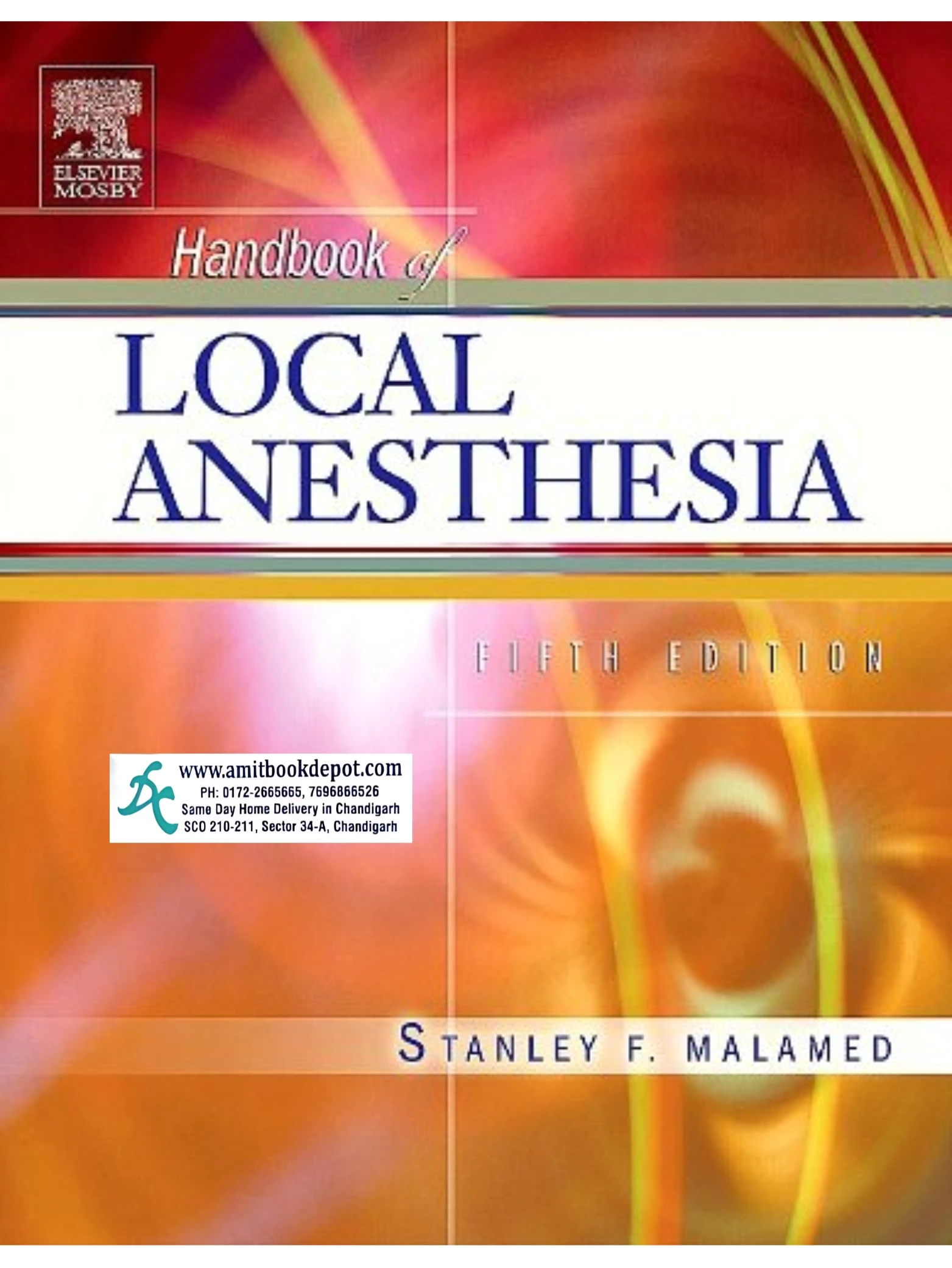
Handbook of Local Anaesthesia, 5th Edition, by Stanley F. Malamed, is the leading guide to safe and effective pain control in dentistry. Published by Elsevier, this comprehensive resource covers the pharmacology of local anaesthetics and vasoconstrictors, precise injection techniques for maxillary and mandibular anaesthesia, and the management of local and systemic complications. Ideal for students and practitioners, it provides evidence-based protocols to master regional anaesthesia, ensure patient comfort, and navigate legal considerations in clinical practice.





Epinephrine is the primary vasoconstrictor detailed, with concentrations like 1:50,000 to 1:200,000 for hemostasis and duration.
Supplemental injections, such as intraosseous or intraligamentary techniques, are outlined for achieving profound anesthesia.
Prilocaine is discussed regarding methemoglobinemia risk, especially at higher doses, with management strategies provided.
he text specifies 7.0 mg/kg, not to exceed 500 mg total dose, ensuring safe administration protocols.
It distinguishes true allergy from toxicity or psychogenic reactions and recommends using ester-type agents or diphenhydramine.
The book advises a two-step aspiration—rotating the syringe 90 degrees—to reduce the risk of intravascular injection.
It advises never inserting the needle to the hub and using a 25-gauge long needle to withstand tissue forces.
They are essential for reducing needle penetration pain, with guidelines on application time for benzocaine or lidocaine gels.
Accurate location of this space is critical for depositing solution near the inferior alveolar nerve for a successful block.
Immediate management includes stopping injection, maintaining airway, administering 100% oxygen, and supportive care.
Epinephrine is the primary vasoconstrictor detailed, with concentrations like 1:50,000 to 1:200,000 for hemostasis and duration.
Supplemental injections, such as intraosseous or intraligamentary techniques, are outlined for achieving profound anesthesia.
Prilocaine is discussed regarding methemoglobinemia risk, especially at higher doses, with management strategies provided.
he text specifies 7.0 mg/kg, not to exceed 500 mg total dose, ensuring safe administration protocols.
It distinguishes true allergy from toxicity or psychogenic reactions and recommends using ester-type agents or diphenhydramine.
The book advises a two-step aspiration—rotating the syringe 90 degrees—to reduce the risk of intravascular injection.
It advises never inserting the needle to the hub and using a 25-gauge long needle to withstand tissue forces.
They are essential for reducing needle penetration pain, with guidelines on application time for benzocaine or lidocaine gels.
Accurate location of this space is critical for depositing solution near the inferior alveolar nerve for a successful block.
Immediate management includes stopping injection, maintaining airway, administering 100% oxygen, and supportive care.