-
Mon-Fri: 10AM to 8PM 01722665665
-
My Account
-
-
0
Total :
₹ 0.00

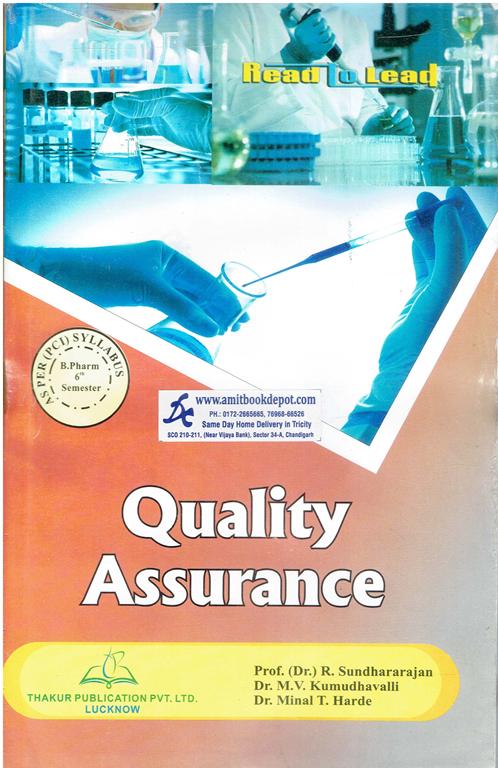
Yes, this book is specifically structured to cover the entire latest syllabus for BP606T: Pharmaceutical Quality Assurance as prescribed by Punjab Technical University (PTU).
Absolutely. Chapter 3 provides a comprehensive overview of ICH, including its purpose, participants, the harmonization process, and a detailed breakdown of the QSEM guidelines with special emphasis on Q-Series and stability testing protocols.
Yes, Chapter 14 is dedicated to Calibration and Validation. It covers general principles, qualification (DQ, IQ, OQ, PQ), analytical method validation parameters, and includes practical protocols for calibrating a pH meter and qualifying a UV-Visible spectrophotometer.
Yes, Chapter 13 is entirely focused on Document Maintenance. It explains critical documents like the Master Formula Record (MFR), Batch Formula Record (BFR), Standard Operating Procedures (SOPs), and details on quality audits and reports.
Yes. Chapter 2 covers Total Quality Management (TQM) philosophies and elements. Chapter 4 is dedicated to Quality by Design (QbD), explaining its elements like QTPP, CQAs, Design Space, and Control Strategy.
Yes, Chapter 11 provides a thorough explanation of Good Laboratory Practices, covering organization, facilities, equipment, study protocols, records, reports, and even procedures for disqualification of testing facilities.
Yes, Chapter 5 covers the overview, benefits, and elements of ISO 9000 and ISO 14000 series. Chapter 6 is dedicated to NABL accreditation, its benefits, scope, and procedures.
Yes, the final chapter (Chapter 15) is dedicated to Warehousing, outlining Good Warehousing Practices, materials management, and related procedures.
Yes, while tailored for the PTU syllabus, the book covers fundamental and applied concepts of pharmaceutical quality systems, making it a valuable introductory resource for roles in QA, QC, production, and regulatory affairs in the industry.
Yes, every chapter concludes with an "Exercise" section, which aids in revision and self-testing of the concepts learned.
No Description Added
Yes, this book is specifically structured to cover the entire latest syllabus for BP606T: Pharmaceutical Quality Assurance as prescribed by Punjab Technical University (PTU).
Absolutely. Chapter 3 provides a comprehensive overview of ICH, including its purpose, participants, the harmonization process, and a detailed breakdown of the QSEM guidelines with special emphasis on Q-Series and stability testing protocols.
Yes, Chapter 14 is dedicated to Calibration and Validation. It covers general principles, qualification (DQ, IQ, OQ, PQ), analytical method validation parameters, and includes practical protocols for calibrating a pH meter and qualifying a UV-Visible spectrophotometer.
Yes, Chapter 13 is entirely focused on Document Maintenance. It explains critical documents like the Master Formula Record (MFR), Batch Formula Record (BFR), Standard Operating Procedures (SOPs), and details on quality audits and reports.
Yes. Chapter 2 covers Total Quality Management (TQM) philosophies and elements. Chapter 4 is dedicated to Quality by Design (QbD), explaining its elements like QTPP, CQAs, Design Space, and Control Strategy.
Yes, Chapter 11 provides a thorough explanation of Good Laboratory Practices, covering organization, facilities, equipment, study protocols, records, reports, and even procedures for disqualification of testing facilities.
Yes, Chapter 5 covers the overview, benefits, and elements of ISO 9000 and ISO 14000 series. Chapter 6 is dedicated to NABL accreditation, its benefits, scope, and procedures.
Yes, the final chapter (Chapter 15) is dedicated to Warehousing, outlining Good Warehousing Practices, materials management, and related procedures.
Yes, while tailored for the PTU syllabus, the book covers fundamental and applied concepts of pharmaceutical quality systems, making it a valuable introductory resource for roles in QA, QC, production, and regulatory affairs in the industry.
Yes, every chapter concludes with an "Exercise" section, which aids in revision and self-testing of the concepts learned.