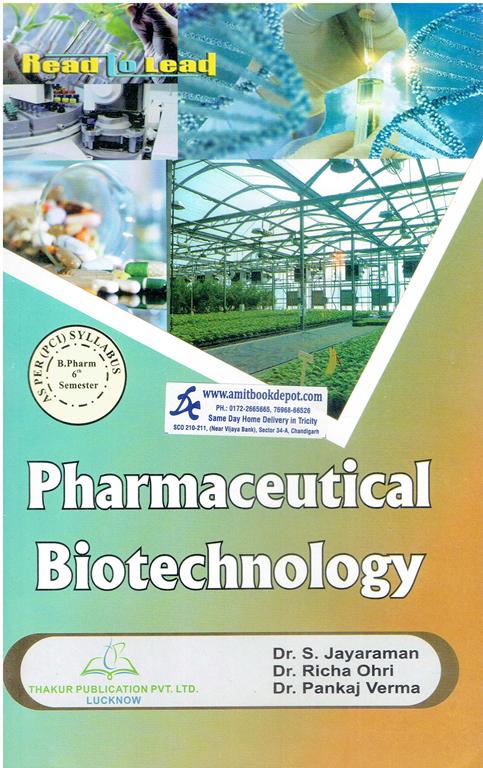
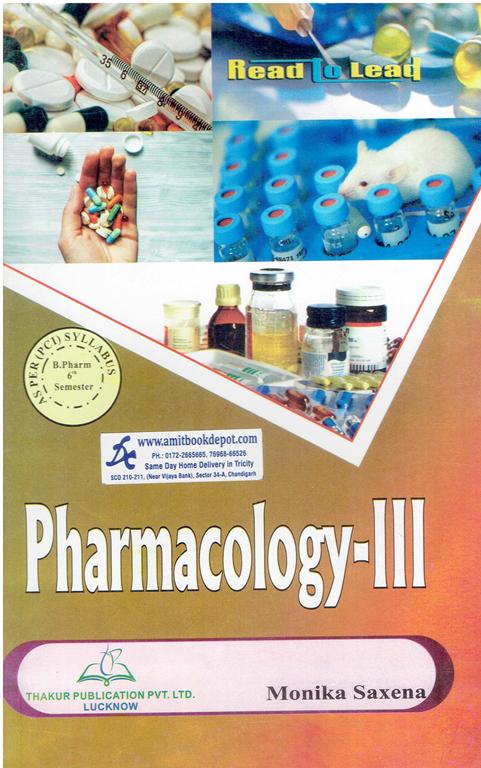
Yes, this textbook is specifically designed and structured to cover the entire prescribed syllabus for PTU's B.Pharm Semester 6 subject Pharmaceutical Biotechnology (BP 605 T), module by module and unit by unit.
Absolutely. It includes detailed chapters on the production of key pharmaceuticals such as Penicillins, Citric Acid, Vitamin B12, Glutamic Acid, Griseofulvin, Insulin, Interferon, and Hepatitis B Vaccine.
Yes, the book provides dedicated sections on techniques including Polymerase Chain Reaction (PCR), Gel Electrophoresis, and Immunoblotting techniques like ELISA, Western Blotting, and Southern Blotting, with explanations of their principles and applications.
Yes, there is a comprehensive chapter on Hybridoma Technology that details the principle, step-by-step production process, purification, and diverse applications of Monoclonal Antibodies (MAbs) in diagnostics and therapy.
The book has an extensive module on Fermentation, covering methods (Batch, Fed-Batch, Continuous), fermenter design, media, sterilization, aeration, and includes specific industrial case studies for a practical understanding.
Yes, the book offers an in-depth study of Recombinant DNA Technology, including various cloning vectors (plasmids, bacteriophages, cosmids, phagemids), restriction endonucleases, DNA ligase, and the overall process of gene cloning.
Yes, the immunology section thoroughly explains the structure and classification of Immunoglobulins (Antibodies) and the structure, classes, and functions of the Major Histocompatibility Complex (MHC).
Yes, the book covers Enzyme Biotechnology extensively, explaining various methods of Enzyme Immobilization (e.g., adsorption, covalent bonding) and their applications in pharmaceutical industries.
Yes, there is a dedicated section on Biosensors that covers their introduction, principle, working, types, and specific applications in pharmaceutical industries.
While the subject is advanced, the book starts with an introduction to biotechnology and builds concepts progressively, making it accessible for Semester 6 students who have completed prerequisite pharmacy subjects.
No Description Added
Yes, this textbook is specifically designed and structured to cover the entire prescribed syllabus for PTU's B.Pharm Semester 6 subject Pharmaceutical Biotechnology (BP 605 T), module by module and unit by unit.
Absolutely. It includes detailed chapters on the production of key pharmaceuticals such as Penicillins, Citric Acid, Vitamin B12, Glutamic Acid, Griseofulvin, Insulin, Interferon, and Hepatitis B Vaccine.
Yes, the book provides dedicated sections on techniques including Polymerase Chain Reaction (PCR), Gel Electrophoresis, and Immunoblotting techniques like ELISA, Western Blotting, and Southern Blotting, with explanations of their principles and applications.
Yes, there is a comprehensive chapter on Hybridoma Technology that details the principle, step-by-step production process, purification, and diverse applications of Monoclonal Antibodies (MAbs) in diagnostics and therapy.
The book has an extensive module on Fermentation, covering methods (Batch, Fed-Batch, Continuous), fermenter design, media, sterilization, aeration, and includes specific industrial case studies for a practical understanding.
Yes, the book offers an in-depth study of Recombinant DNA Technology, including various cloning vectors (plasmids, bacteriophages, cosmids, phagemids), restriction endonucleases, DNA ligase, and the overall process of gene cloning.
Yes, the immunology section thoroughly explains the structure and classification of Immunoglobulins (Antibodies) and the structure, classes, and functions of the Major Histocompatibility Complex (MHC).
Yes, the book covers Enzyme Biotechnology extensively, explaining various methods of Enzyme Immobilization (e.g., adsorption, covalent bonding) and their applications in pharmaceutical industries.
Yes, there is a dedicated section on Biosensors that covers their introduction, principle, working, types, and specific applications in pharmaceutical industries.
While the subject is advanced, the book starts with an introduction to biotechnology and builds concepts progressively, making it accessible for Semester 6 students who have completed prerequisite pharmacy subjects.