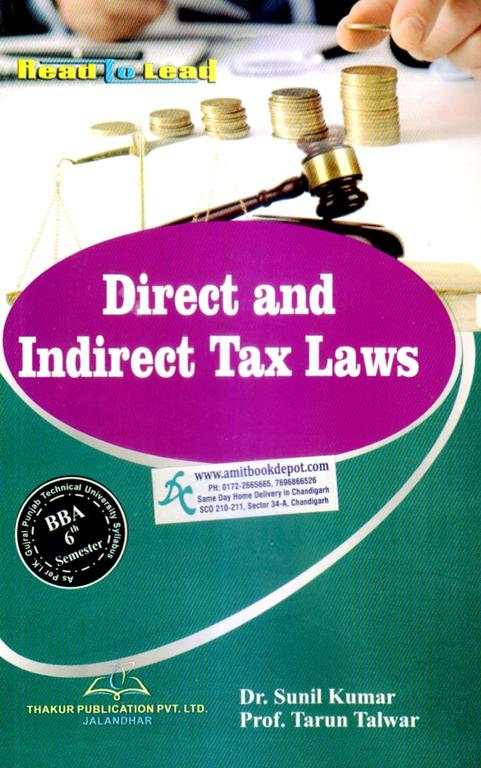
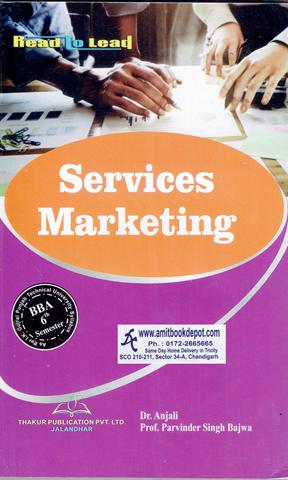
Thakur Direct and Indirect Tax Laws for BBA 6th Sem by Dr. Sunil Kumar and Prof. Tarun Talwar is a definitive guide tailored to the university syllabus. This comprehensive book covers the Income Tax Act, 1961, detailing the computation of income under all five heads, clubbing of income, TDS, and ITR filing. It also provides an in-depth overview of the GST Act, 2017, including registration and the GST portal. With practical exercises and a focus on real-world application, including the preparation of Form 16 and ITR forms, this book is an essential resource for BBA students mastering direct and indirect tax laws.
Thakur Direct and Indirect Tax Laws for BBA 6th Semester is a comprehensive and meticulously crafted academic resource, authored by Dr. Sunil Kumar and Prof. Tarun Talwar and published by Thakur Publishers. This book is specifically designed to align with the prescribed syllabus for BBA programs, providing an in-depth exploration of both direct and indirect tax frameworks in India. It serves as an essential guide for students aspiring to build a strong foundation in taxation laws, a critical component for careers in business, finance, and commerce.
The book is systematically divided into four units, ensuring a logical progression from fundamental concepts to advanced practical applications. Unit I lays the groundwork with an introduction to tax and direct tax laws. It begins by explaining the very nature and characteristics of different types of taxes, with a clear distinction between direct and indirect taxes. Students are introduced to the Income Tax Act, 1961, its scope, and crucial definitions. This unit meticulously covers key concepts such as income, assessment year, previous year, and assessee. A dedicated section on the Basis of Charge provides a thorough understanding of how to determine residential status, a fundamental aspect for tax liability in India.
Unit II is dedicated to the detailed computation of income under the five heads of income as per the Income Tax Act. It offers dedicated chapters on income from salaries, income from house property, profits and gains from business and profession, income from capital gains, and income from other sources. Each chapter breaks down complex provisions into digestible segments, illustrating the methodology for calculating income under each head. The unit culminates with a crucial chapter on the computation of the gross total income of an individual, integrating the learnings from all heads and introducing the various deductions available under the act, which are vital for accurate tax planning and computation.
Unit III advances into more complex areas of direct taxation, covering the clubbing of income and the set-off and carry forward of losses, which are essential for a holistic understanding of total income calculation. It further demystifies the procedural aspects of taxation with chapters on Assessment Procedures, Advance Payment of Tax, and Deduction of Tax at Source (TDS). A significant highlight of this unit is its strong emphasis on practical application. It includes step-by-step guidance on the preparation of Form 16 and Form 16A, the preparation and filing of Income Tax Returns (ITR), and the process for applying for a Permanent Account Number (PAN). This practical approach bridges the gap between theoretical knowledge and real-world compliance.
Unit IV provides a comprehensive overview of the transformative indirect tax law, the Goods and Services Tax (GST) Act, 2017. It offers an overview of GST, explaining the reasons for its introduction, the liability of a taxpayer, and the unique structure of GST, including SGST, CGST, UTGST, and IGST. The role of the GST Council and the mechanisms for the levy and collection of GST are clearly explained. The unit also provides a practical guide to the registration procedure under GST, amendments, and cancellation. Students are introduced to the GST Portal, the GST Ecosystem, the role of GST Suvidha Providers (GSP), and the practical process of uploading invoices on the portal.
Structured with the student in mind, each chapter concludes with an exercise section to facilitate self-assessment and reinforce learning. Keywords such as BBA 6th Sem book, Direct and Indirect Tax, Income Tax Act 1961, GST Act 2017, Income from Salaries, Capital Gains, TDS, Form 16, ITR Filing, and GST Registration are integral to the content, making this book an indispensable and complete resource for mastering the curriculum and building a practical understanding of Indian tax laws.
Is this book updated with the latest amendments in the Income Tax slabs and GST rates?
A1
This textbook is structured to explain the fundamental laws and concepts. However, for the most current financial year's tax slabs and GST rates, which are subject to annual budgets and GST council meetings, students are advised to refer to the official government websites for updates.
Q2
Does the book provide solved illustrations for computing total income for an individual?
A2
Yes, Unit II includes a dedicated chapter on the "Computation of Gross Total Income of an Individual," which guides students through the process of integrating income from all sources and applying deductions.
Q3
Is practical guidance for filling out GST returns included in the book?
A3
The book provides a strong foundation on the GST ecosystem, registration, and invoice uploading. However, the specific step-by-step process for filing monthly/quarterly returns (like GSTR-1, GSTR-3B) is not the primary focus of the syllabus it covers.
Q4
How does this book help in understanding the difference between CGST, SGST, and IGST?
A4
Chapter 11, "GST Act, 2017," includes a specific section on the "Structure of GST" that clearly explains the applicability and scope of CGST, SGST, UTGST, and IGST with contextual examples.
Q5
Is the concept of TDS (Tax Deducted at Source) explained from the perspective of both a deductor and a deductee?
A5
Yes, Chapter 9 covers "Deduction of Tax at Source (Section 190 to 206AA)," explaining the provisions, and Chapter 10 provides practical guidance on preparing Form 16 (for salaried employees) and Form 16A (for non-salary payments), covering both perspectives.
Q6
Does the book cover the process for a new business to obtain GST registration?
A6
Yes, Chapter 12, "GST Registration and GST Portal," details the registration procedure under GST as per Sections 22 to 28, which is directly applicable to new businesses.
Q7
Can this book be used as a reference for professional courses like CA or CMA?
A7
This book is specifically designed for the BBA curriculum and provides a foundational understanding. While the core concepts are the same, CA and CMA courses require more detailed and advanced study materials tailored to their specific syllabus.
Q8
What is the level of detail provided on the GST Council and its functions?
A8
Chapter 11 provides an overview of the GST Council, explaining its composition and its pivotal role in deciding rates, rules, and procedures under the GST regime.
Q9
Does the book include information on the penalties for non-compliance under Income Tax and GST?
A9
The primary focus is on the core laws and procedures. While major compliance requirements are discussed, an exhaustive list of penalties for every scenario is beyond the scope of this introductory textbook.
Q10
Is the process of clubbing of income explained with scenarios involving minor children?
A10
Yes, Chapter 8, "Clubbing of Income," covers the provisions where income of a minor child is included in the income of their parent, a common application of the clubbing rules.
0.00
0 Overall Rating
5
0
4
0
3
0
2
0
1
0
Try this product & share your review &
thoughts
UNIT - I
Chapter 1: Introduction to Tax and Direct Tax Laws
1. Tax
2. Income Tax Act, 1961
3. Concepts and Definitions under Income Tax Act, 1961
4. Basis of Charge (Residential Status)
5. Exercise
UNIT - II
Chapter 2: Income from Salaries
1. Heads of Income
2. Income from Salary
3. Exercise
Chapter 3: Income from House Property
1. Income from House Property
2. Annual Value
3. Income From House Property Under Different Conditions
4. Exercise
Chapter 4: Profit & Gains from Business and Profession
1. Profits & Gains from Business and Profession
2. Exercise
Chapter 5: Income from Capital Gain
1. Income from Capital Gain
2. Exercise
Chapter 6: Income from Other Sources
1. Income from Other Sources
2. Exercise
Chapter 7: Total Income of Individuals and Deductions
1. Computation of Gross Total Income of an Individual
2. Exercise
UNIT - III
Chapter 8: Clubbing of Income & Set-Off and Carry Forward of Losses
1. Clubbing of Income
2. Set-Off and Carry Forward of Losses
3. Exercise
Chapter 9: Assessment, Advance Payment of Tax & TDS
1. Procedure of Assessment
2. Advance Payment of Tax
3. Deduction of Tax at Source (Section 190 to 206AA)
4. Exercise
Chapter 10: Preparation of Form 16, 16A, PAN & Filing of ITR
1. Preparation of Form 16
2. Preparation of Form 16A
3. Preparation and Filing of Income Tax Returns (ITR) Forms
4. Preparation of PAN Request Forms
UNIT - IV
Chapter 11: GST Act, 2017
1. GST Act, 2017
2. Liability of Taxpayer
3. Structure of GST
4. GST Council
5. Levy and Collection of GST
Chapter 12: GST Registration and GST Portal
1. Registration under GST (Sections 22 to 28)
2. GST Portal
3. GST Suvidha Providers (GSP)
4. Uploading Invoices
5. Exercise
BBA 622-18
DIRECT AND INDIRECT TAX LAWS
UNIT - I
Concept of Tax—Nature and Characteristics of Different Types of Taxes—Direct and Indirect Taxes. Direct Tax Laws—Income Tax Act 1961: Introduction and Brief History of Income Tax in India, Scope of the Act, Meaning and Concept of Income, Assessment Year, Previous Year, Assessed Person, Agriculture Income, Basis of Charge, Determination of Residential Status.
UNIT - II
Heads of Income - Computation of Income Under the Head of Salaries. House Property, Capital Gains, Profits & Gains from Business and Profession, and Other Sources. Computation of Gross Total Income and Deductions from Gross Total Income.
UNIT - III
Clubbing of Income, Set off and Carry Forward of Losses, Procedure of Assessment, Advance Payment of Tax and Deduction of Tax at Source. Practical Work: Preparation of Form 16 and 16A, preparation and filling of ITR forms, and preparation of PAN request forms.
UNIT - IV
GST Act 2017: Overview of Goods and Services Tax, Implementation of GST, Reasons for GST Introduction, Liability of Taxpayer, Structure of GST (SGST, CGST, UTGST & IGST): GST Council, Levy, and Collection of CGST/SGST.
Registration: Introduction, Registration Procedure, Special Persons, Amendments/Cancellation,
Thakur Direct and Indirect Tax Laws for BBA 6th Semester is a comprehensive and meticulously crafted academic resource, authored by Dr. Sunil Kumar and Prof. Tarun Talwar and published by Thakur Publishers. This book is specifically designed to align with the prescribed syllabus for BBA programs, providing an in-depth exploration of both direct and indirect tax frameworks in India. It serves as an essential guide for students aspiring to build a strong foundation in taxation laws, a critical component for careers in business, finance, and commerce.
The book is systematically divided into four units, ensuring a logical progression from fundamental concepts to advanced practical applications. Unit I lays the groundwork with an introduction to tax and direct tax laws. It begins by explaining the very nature and characteristics of different types of taxes, with a clear distinction between direct and indirect taxes. Students are introduced to the Income Tax Act, 1961, its scope, and crucial definitions. This unit meticulously covers key concepts such as income, assessment year, previous year, and assessee. A dedicated section on the Basis of Charge provides a thorough understanding of how to determine residential status, a fundamental aspect for tax liability in India.
Unit II is dedicated to the detailed computation of income under the five heads of income as per the Income Tax Act. It offers dedicated chapters on income from salaries, income from house property, profits and gains from business and profession, income from capital gains, and income from other sources. Each chapter breaks down complex provisions into digestible segments, illustrating the methodology for calculating income under each head. The unit culminates with a crucial chapter on the computation of the gross total income of an individual, integrating the learnings from all heads and introducing the various deductions available under the act, which are vital for accurate tax planning and computation.
Unit III advances into more complex areas of direct taxation, covering the clubbing of income and the set-off and carry forward of losses, which are essential for a holistic understanding of total income calculation. It further demystifies the procedural aspects of taxation with chapters on Assessment Procedures, Advance Payment of Tax, and Deduction of Tax at Source (TDS). A significant highlight of this unit is its strong emphasis on practical application. It includes step-by-step guidance on the preparation of Form 16 and Form 16A, the preparation and filing of Income Tax Returns (ITR), and the process for applying for a Permanent Account Number (PAN). This practical approach bridges the gap between theoretical knowledge and real-world compliance.
Unit IV provides a comprehensive overview of the transformative indirect tax law, the Goods and Services Tax (GST) Act, 2017. It offers an overview of GST, explaining the reasons for its introduction, the liability of a taxpayer, and the unique structure of GST, including SGST, CGST, UTGST, and IGST. The role of the GST Council and the mechanisms for the levy and collection of GST are clearly explained. The unit also provides a practical guide to the registration procedure under GST, amendments, and cancellation. Students are introduced to the GST Portal, the GST Ecosystem, the role of GST Suvidha Providers (GSP), and the practical process of uploading invoices on the portal.
Structured with the student in mind, each chapter concludes with an exercise section to facilitate self-assessment and reinforce learning. Keywords such as BBA 6th Sem book, Direct and Indirect Tax, Income Tax Act 1961, GST Act 2017, Income from Salaries, Capital Gains, TDS, Form 16, ITR Filing, and GST Registration are integral to the content, making this book an indispensable and complete resource for mastering the curriculum and building a practical understanding of Indian tax laws.
UNIT - I
Chapter 1: Introduction to Tax and Direct Tax Laws
1. Tax
2. Income Tax Act, 1961
3. Concepts and Definitions under Income Tax Act, 1961
4. Basis of Charge (Residential Status)
5. Exercise
UNIT - II
Chapter 2: Income from Salaries
1. Heads of Income
2. Income from Salary
3. Exercise
Chapter 3: Income from House Property
1. Income from House Property
2. Annual Value
3. Income From House Property Under Different Conditions
4. Exercise
Chapter 4: Profit & Gains from Business and Profession
1. Profits & Gains from Business and Profession
2. Exercise
Chapter 5: Income from Capital Gain
1. Income from Capital Gain
2. Exercise
Chapter 6: Income from Other Sources
1. Income from Other Sources
2. Exercise
Chapter 7: Total Income of Individuals and Deductions
1. Computation of Gross Total Income of an Individual
2. Exercise
UNIT - III
Chapter 8: Clubbing of Income & Set-Off and Carry Forward of Losses
1. Clubbing of Income
2. Set-Off and Carry Forward of Losses
3. Exercise
Chapter 9: Assessment, Advance Payment of Tax & TDS
1. Procedure of Assessment
2. Advance Payment of Tax
3. Deduction of Tax at Source (Section 190 to 206AA)
4. Exercise
Chapter 10: Preparation of Form 16, 16A, PAN & Filing of ITR
1. Preparation of Form 16
2. Preparation of Form 16A
3. Preparation and Filing of Income Tax Returns (ITR) Forms
Is this book updated with the latest amendments in the Income Tax slabs and GST rates?
A1
This textbook is structured to explain the fundamental laws and concepts. However, for the most current financial year's tax slabs and GST rates, which are subject to annual budgets and GST council meetings, students are advised to refer to the official government websites for updates.
Q2
Does the book provide solved illustrations for computing total income for an individual?
A2
Yes, Unit II includes a dedicated chapter on the "Computation of Gross Total Income of an Individual," which guides students through the process of integrating income from all sources and applying deductions.
Q3
Is practical guidance for filling out GST returns included in the book?
A3
The book provides a strong foundation on the GST ecosystem, registration, and invoice uploading. However, the specific step-by-step process for filing monthly/quarterly returns (like GSTR-1, GSTR-3B) is not the primary focus of the syllabus it covers.
Q4
How does this book help in understanding the difference between CGST, SGST, and IGST?
A4
Chapter 11, "GST Act, 2017," includes a specific section on the "Structure of GST" that clearly explains the applicability and scope of CGST, SGST, UTGST, and IGST with contextual examples.
Q5
Is the concept of TDS (Tax Deducted at Source) explained from the perspective of both a deductor and a deductee?
A5
Yes, Chapter 9 covers "Deduction of Tax at Source (Section 190 to 206AA)," explaining the provisions, and Chapter 10 provides practical guidance on preparing Form 16 (for salaried employees) and Form 16A (for non-salary payments), covering both perspectives.
Q6
Does the book cover the process for a new business to obtain GST registration?
A6
Yes, Chapter 12, "GST Registration and GST Portal," details the registration procedure under GST as per Sections 22 to 28, which is directly applicable to new businesses.
Q7
Can this book be used as a reference for professional courses like CA or CMA?
A7
This book is specifically designed for the BBA curriculum and provides a foundational understanding. While the core concepts are the same, CA and CMA courses require more detailed and advanced study materials tailored to their specific syllabus.
Q8
What is the level of detail provided on the GST Council and its functions?
A8
Chapter 11 provides an overview of the GST Council, explaining its composition and its pivotal role in deciding rates, rules, and procedures under the GST regime.
Q9
Does the book include information on the penalties for non-compliance under Income Tax and GST?
A9
The primary focus is on the core laws and procedures. While major compliance requirements are discussed, an exhaustive list of penalties for every scenario is beyond the scope of this introductory textbook.
Q10
Is the process of clubbing of income explained with scenarios involving minor children?
A10
Yes, Chapter 8, "Clubbing of Income," covers the provisions where income of a minor child is included in the income of their parent, a common application of the clubbing rules.
BBA 622-18
DIRECT AND INDIRECT TAX LAWS
UNIT - I
Concept of Tax—Nature and Characteristics of Different Types of Taxes—Direct and Indirect Taxes. Direct Tax Laws—Income Tax Act 1961: Introduction and Brief History of Income Tax in India, Scope of the Act, Meaning and Concept of Income, Assessment Year, Previous Year, Assessed Person, Agriculture Income, Basis of Charge, Determination of Residential Status.
UNIT - II
Heads of Income - Computation of Income Under the Head of Salaries. House Property, Capital Gains, Profits & Gains from Business and Profession, and Other Sources. Computation of Gross Total Income and Deductions from Gross Total Income.
UNIT - III
Clubbing of Income, Set off and Carry Forward of Losses, Procedure of Assessment, Advance Payment of Tax and Deduction of Tax at Source. Practical Work: Preparation of Form 16 and 16A, preparation and filling of ITR forms, and preparation of PAN request forms.
UNIT - IV
GST Act 2017: Overview of Goods and Services Tax, Implementation of GST, Reasons for GST Introduction, Liability of Taxpayer, Structure of GST (SGST, CGST, UTGST & IGST): GST Council, Levy, and Collection of CGST/SGST.
Registration: Introduction, Registration Procedure, Special Persons, Amendments/Cancellation,
Classic Literature Reimagined: Discuss modern twists on classic novels.
Lorem ipsum dolor sit amet, consectetur adipiscing elit, sed
do
eiusmod tempor incididunt ut labore et dolore magna aliqua. Ut enim ad minim
veniam, quis nostrud exercitation ullamco Lorem ipsum dolor sit amet,
consectetur adipiscing elit, sed do eiusmod tempor incididunt ut labore et
dolore magna aliqua. Utenim ad minim veniam, quis nostrud exercitation
ullamco
Lorem ipsum dolor sit amet, consecte...
Classic Literature Reimagined: Discuss modern twists on classic novels.
Lorem ipsum dolor sit amet, consectetur adipiscing elit, sed
do
eiusmod tempor incididunt ut labore et dolore magna aliqua. Ut enim ad minim
veniam, quis nostrud exercitation ullamco Lorem ipsum dolor sit amet,
consectetur adipiscing elit, sed do eiusmod tempor incididunt ut labore et
dolore magna aliqua. Utenim ad minim veniam, quis nostrud exercitation
ullamco
Lorem ipsum dolor sit amet, consecte...
Classic Literature Reimagined: Discuss modern twists on classic novels.
Lorem ipsum dolor sit amet, consectetur adipiscing elit, sed
do
eiusmod tempor incididunt ut labore et dolore magna aliqua. Ut enim ad minim
veniam, quis nostrud exercitation ullamco Lorem ipsum dolor sit amet,
consectetur adipiscing elit, sed do eiusmod tempor incididunt ut labore et
dolore magna aliqua. Utenim ad minim veniam, quis nostrud exercitation
ullamco
Lorem ipsum dolor sit amet, consecte...



.jpg)