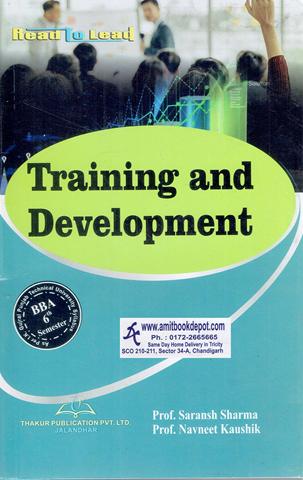
Training and Development the definitive book for BBA 6th Sem PTU. Authored by Prof. Saransh Sharma and Prof. Navneet Kaushik and published by Thakur Publication, this book offers a comprehensive curriculum-aligned guide. It provides an in-depth exploration of training needs assessment, various training methods, and program evaluation. While designed for BBA, its robust foundational knowledge also serves as a valuable resource for an MBA Semester II syllabus covering training and development modules. Clear, structured, and practical, this book is your essential academic companion for mastering the art and science of effective training.
Training and Development meticulously crafted for the BBA 6th Semester curriculum of Punjab Technical University (PTU). Authored by the esteemed Prof. Saransh Sharma and Prof. Navneet Kaushik, and published by the trusted Thakur Publication, this book is the definitive academic resource for students seeking to build a strong foundation in the strategic domain of training. Its comprehensive coverage and practical approach also make it an excellent supplementary resource for students pursuing an MBA Semester II, particularly in modules focused on Human Resource Management and organizational development.
Key Features of the Book:
1. PTU Syllabus Aligned: Fully covers the prescribed syllabus for BBA 6th Semester, ensuring you have all the material needed for your exams.
2. Ideal for MBA Semester II: The depth and breadth of topics covered, including advanced concepts like MBE and Transactional Analysis, make it a highly relevant and valuable reference for MBA Semester II students specializing in HR.
3. Clear and Concise Language: Written in an accessible manner, making complex theories and models easy to understand.
4. Chapter-End Exercises: Each unit concludes with a dedicated exercise section to help students test their knowledge, prepare for exams, and apply concepts to real-world scenarios.
5. Structured Content: A well-organized table of contents and logical flow of topics facilitate easy learning and quick revision.
Why Choose This Book?
Whether you are a BBA student aiming for academic success or an MBA Semester II candidate seeking to solidify your knowledge in corporate training mechanisms, this book is an indispensable resource. It successfully bridges the gap between theoretical knowledge and its practical application in the modern business environment. Prof. Sharma and Prof. Kaushik have distilled their expertise into a guide that not only prepares you for examinations but also equips you with the foundational skills necessary for a successful career in management and human resources.
Conclusion
Training and Development for BBA 6th Sem PTU by Prof. Saransh Sharma and Prof. Navneet Kaushik is an essential academic tool, combining theoretical insights with practical applications, tailored specifically to the needs of MBA Semester II students. Its comprehensive coverage, structured approach, and focus on contemporary training methods make it an indispensable addition to any management studentβs library.
Is this book suitable for students outside Punjab Technical University (PTU)?
A1
Yes, while the book is specifically aligned with PTU's syllabus, its comprehensive coverage and practical insights make it valuable for any management student interested in training, development, and HR topics.
Q2
Does the book include real-world case studies or examples?
A2
The book emphasizes practical application and includes chapter-end exercises, which often incorporate real-world scenarios to enhance understanding.
Q3
Can this book help in preparing for managerial roles in multinational companies?
A3
Absolutely. Its focus on cross-cultural management, global training methods, and HR practices equips students with essential skills for international and multicultural work environments.
Q4
How is the book structured to facilitate effective learning?
A4
The book is well-organized into units and chapters with logical flow, ending with exercises that reinforce learning and prepare students for exams and practical application.
Q5
Does the book cover modern training technology and digital learning tools?
A5
Yes, the introductory units discuss instructional technology and modern teaching aids, aligning with contemporary training practices.
Q6
Can this book assist students in understanding cross-cultural challenges in HR management?
A6
Definitely. It provides insights into cultural dimensions, models for comparing cultures, and strategies for managing multicultural teams.
Q7
Is the content suitable for students interested in organizational development and strategic HRM?
A7
Yes, the book explores strategic decision-making, transfer of knowledge, and emerging models of international strategic management, making it relevant for organizational development studies.
Q8
Are the exercises designed to promote critical thinking and practical skills?
A8
Yes, each chapter concludes with exercises aimed at applying concepts, fostering analytical skills, and preparing students for real-world HR challenges.
Q9
Does the book include any guidelines for effective cross-cultural negotiation?
A9
Yes, the relevant unit discusses cross-cultural negotiation techniques, dispute resolution, and decision-making in multicultural contexts.
Q10
Is this book useful for students preparing for HR certifications or managerial exams?
A10
Yes, its comprehensive coverage of core HRM and training principles makes it a valuable resource for exam preparation and certification.

0.00
0 Overall Rating
5
0
4
0
3
0
2
0
1
0
Try this product & share your review &
thoughts
Unit 1: Introduction to Learning
1.1. Learning
1.2. Teaching/Training Aids and Techniques
1.3. Instructional Technology
1.4. Attention
1.5. Exercise
Unit 2: Introduction to Training
2.1. Training
2.2. Identification of Training Needs/Training Needs Assessment
2.3. Evaluation of Training Effectiveness
2.4. Exercise
Unit 3: Methods of Training
3.1. Methods of Training
3.2. On-the-Job Training Methods
3.3. Off-the-Job Training Methods
3.4. Transactional Analysis
3.5. Management By Exception (MBE)
3.6. Training Agenda
3.7. Exercise
Unit 4: Evaluation of Training & Development
4.1. Management and Development
4.2. Designing Training Programs
4.3. Evaluation of Training and Development Program
4.4. Training and Development in India
4.5. Exercise
Model Paper
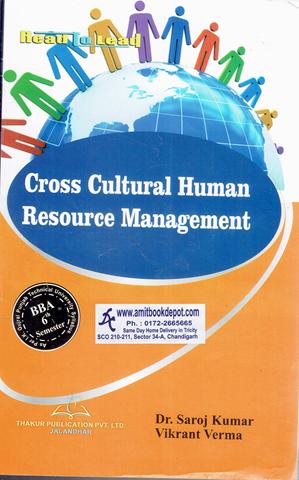
BBA 632-18 Cross Cultural Human Resource Management
Course Objective: World is now global village. In this globalised world managers of international organizations have to travel across the world. They had to interact, manage people from various cultures. So they need to understand different cultures and respect cross culture differences. This course will help them to understand various cultures and they will learn to manage cross cultural differences
Course Outcomes:
CO1: Understand issues, opportunities and challenges pertaining to Cross Cultural HRM.
CO2: Develop competency in dealing with cross cultural situations.
CO3: Identify the role of cross cultural leadership in managing multicultural teams.
CO4: Understand external forces (e.g. globalisation, sociocultural changes, political and economic changes) that have the potential to shape Cross Cultural HRM.
CO5: To understand different cultures with respect to cross culture differences.
UNIT βI
Introduction to cross cultural management: Understanding Culture, Culture dimensions, Significance and impact of cross culture on organizations, role of culture in Strategic DecisionMaking .Influence of National Culture on Organizational Culture. Shift in Culture: significance of shift in Culture, Influence of economic factors and foreign intervention on shifts in local cultures
UNIT-II
Comparing Culture : Cultural and Behavioral differences in different countries, various models for comparing cultural- Hofstede , Edward T Hall Study, GLOBE, Kluchohm & Stoodbeck ,Cultural Adaptation through Sensitivity Training, Political, Legal, Economic, Ecological and Technological Facing Business and their Management.
UNIT- III
Cross Cultural Human Resources Management β Staffing and Training for Global Operations Global Staffing Choices β Expatriates or Local Managers, Dynamics of Cross-Cultural leadership, managing and motivating multi culture Teams. Cross βcultural Negotiation & Decision making: Culture and Dispute, Resolution of Conflicts and Disputes in cross culture context,
UNIT- IV
Transfer of Knowledge, Transfer of managerial know-how, Emerging Models of Strategic Management in International Context, Achieving and Sustaining International Competitive Advantage; International Strategic Alliances, Cross-culture ethics: Ethics values across cultures and Ethics dilemma.
Training and Development meticulously crafted for the BBA 6th Semester curriculum of Punjab Technical University (PTU). Authored by the esteemed Prof. Saransh Sharma and Prof. Navneet Kaushik, and published by the trusted Thakur Publication, this book is the definitive academic resource for students seeking to build a strong foundation in the strategic domain of training. Its comprehensive coverage and practical approach also make it an excellent supplementary resource for students pursuing an MBA Semester II, particularly in modules focused on Human Resource Management and organizational development.
Key Features of the Book:
1. PTU Syllabus Aligned: Fully covers the prescribed syllabus for BBA 6th Semester, ensuring you have all the material needed for your exams.
2. Ideal for MBA Semester II: The depth and breadth of topics covered, including advanced concepts like MBE and Transactional Analysis, make it a highly relevant and valuable reference for MBA Semester II students specializing in HR.
3. Clear and Concise Language: Written in an accessible manner, making complex theories and models easy to understand.
4. Chapter-End Exercises: Each unit concludes with a dedicated exercise section to help students test their knowledge, prepare for exams, and apply concepts to real-world scenarios.
5. Structured Content: A well-organized table of contents and logical flow of topics facilitate easy learning and quick revision.
Why Choose This Book?
Whether you are a BBA student aiming for academic success or an MBA Semester II candidate seeking to solidify your knowledge in corporate training mechanisms, this book is an indispensable resource. It successfully bridges the gap between theoretical knowledge and its practical application in the modern business environment. Prof. Sharma and Prof. Kaushik have distilled their expertise into a guide that not only prepares you for examinations but also equips you with the foundational skills necessary for a successful career in management and human resources.
Conclusion
Training and Development for BBA 6th Sem PTU by Prof. Saransh Sharma and Prof. Navneet Kaushik is an essential academic tool, combining theoretical insights with practical applications, tailored specifically to the needs of MBA Semester II students. Its comprehensive coverage, structured approach, and focus on contemporary training methods make it an indispensable addition to any management studentβs library.
Unit 1: Introduction to Learning
1.1. Learning
1.2. Teaching/Training Aids and Techniques
1.3. Instructional Technology
1.4. Attention
1.5. Exercise
Unit 2: Introduction to Training
2.1. Training
2.2. Identification of Training Needs/Training Needs Assessment
2.3. Evaluation of Training Effectiveness
2.4. Exercise
Unit 3: Methods of Training
3.1. Methods of Training
3.2. On-the-Job Training Methods
3.3. Off-the-Job Training Methods
3.4. Transactional Analysis
3.5. Management By Exception (MBE)
3.6. Training Agenda
3.7. Exercise
Unit 4: Evaluation of Training & Development
4.1. Management and Development
4.2. Designing Training Programs
4.3. Evaluation of Training and Development Program
Is this book suitable for students outside Punjab Technical University (PTU)?
A1
Yes, while the book is specifically aligned with PTU's syllabus, its comprehensive coverage and practical insights make it valuable for any management student interested in training, development, and HR topics.
Q2
Does the book include real-world case studies or examples?
A2
The book emphasizes practical application and includes chapter-end exercises, which often incorporate real-world scenarios to enhance understanding.
Q3
Can this book help in preparing for managerial roles in multinational companies?
A3
Absolutely. Its focus on cross-cultural management, global training methods, and HR practices equips students with essential skills for international and multicultural work environments.
Q4
How is the book structured to facilitate effective learning?
A4
The book is well-organized into units and chapters with logical flow, ending with exercises that reinforce learning and prepare students for exams and practical application.
Q5
Does the book cover modern training technology and digital learning tools?
A5
Yes, the introductory units discuss instructional technology and modern teaching aids, aligning with contemporary training practices.
Q6
Can this book assist students in understanding cross-cultural challenges in HR management?
A6
Definitely. It provides insights into cultural dimensions, models for comparing cultures, and strategies for managing multicultural teams.
Q7
Is the content suitable for students interested in organizational development and strategic HRM?
A7
Yes, the book explores strategic decision-making, transfer of knowledge, and emerging models of international strategic management, making it relevant for organizational development studies.
Q8
Are the exercises designed to promote critical thinking and practical skills?
A8
Yes, each chapter concludes with exercises aimed at applying concepts, fostering analytical skills, and preparing students for real-world HR challenges.
Q9
Does the book include any guidelines for effective cross-cultural negotiation?
A9
Yes, the relevant unit discusses cross-cultural negotiation techniques, dispute resolution, and decision-making in multicultural contexts.
Q10
Is this book useful for students preparing for HR certifications or managerial exams?
A10
Yes, its comprehensive coverage of core HRM and training principles makes it a valuable resource for exam preparation and certification.

BBA 632-18 Cross Cultural Human Resource Management
Course Objective: World is now global village. In this globalised world managers of international organizations have to travel across the world. They had to interact, manage people from various cultures. So they need to understand different cultures and respect cross culture differences. This course will help them to understand various cultures and they will learn to manage cross cultural differences
Course Outcomes:
CO1: Understand issues, opportunities and challenges pertaining to Cross Cultural HRM.
CO2: Develop competency in dealing with cross cultural situations.
CO3: Identify the role of cross cultural leadership in managing multicultural teams.
CO4: Understand external forces (e.g. globalisation, sociocultural changes, political and economic changes) that have the potential to shape Cross Cultural HRM.
CO5: To understand different cultures with respect to cross culture differences.
UNIT βI
Introduction to cross cultural management: Understanding Culture, Culture dimensions, Significance and impact of cross culture on organizations, role of culture in Strategic DecisionMaking .Influence of National Culture on Organizational Culture. Shift in Culture: significance of shift in Culture, Influence of economic factors and foreign intervention on shifts in local cultures
UNIT-II
Comparing Culture : Cultural and Behavioral differences in different countries, various models for comparing cultural- Hofstede , Edward T Hall Study, GLOBE, Kluchohm & Stoodbeck ,Cultural Adaptation through Sensitivity Training, Political, Legal, Economic, Ecological and Technological Facing Business and their Management.
UNIT- III
Cross Cultural Human Resources Management β Staffing and Training for Global Operations Global Staffing Choices β Expatriates or Local Managers, Dynamics of Cross-Cultural leadership, managing and motivating multi culture Teams. Cross βcultural Negotiation & Decision making: Culture and Dispute, Resolution of Conflicts and Disputes in cross culture context,
UNIT- IV
Transfer of Knowledge, Transfer of managerial know-how, Emerging Models of Strategic Management in International Context, Achieving and Sustaining International Competitive Advantage; International Strategic Alliances, Cross-culture ethics: Ethics values across cultures and Ethics dilemma.
Classic Literature Reimagined: Discuss modern twists on classic novels.
Lorem ipsum dolor sit amet, consectetur adipiscing elit, sed
do
eiusmod tempor incididunt ut labore et dolore magna aliqua. Ut enim ad minim
veniam, quis nostrud exercitation ullamco Lorem ipsum dolor sit amet,
consectetur adipiscing elit, sed do eiusmod tempor incididunt ut labore et
dolore magna aliqua. Utenim ad minim veniam, quis nostrud exercitation
ullamco
Lorem ipsum dolor sit amet, consecte...
Classic Literature Reimagined: Discuss modern twists on classic novels.
Lorem ipsum dolor sit amet, consectetur adipiscing elit, sed
do
eiusmod tempor incididunt ut labore et dolore magna aliqua. Ut enim ad minim
veniam, quis nostrud exercitation ullamco Lorem ipsum dolor sit amet,
consectetur adipiscing elit, sed do eiusmod tempor incididunt ut labore et
dolore magna aliqua. Utenim ad minim veniam, quis nostrud exercitation
ullamco
Lorem ipsum dolor sit amet, consecte...
Classic Literature Reimagined: Discuss modern twists on classic novels.
Lorem ipsum dolor sit amet, consectetur adipiscing elit, sed
do
eiusmod tempor incididunt ut labore et dolore magna aliqua. Ut enim ad minim
veniam, quis nostrud exercitation ullamco Lorem ipsum dolor sit amet,
consectetur adipiscing elit, sed do eiusmod tempor incididunt ut labore et
dolore magna aliqua. Utenim ad minim veniam, quis nostrud exercitation
ullamco
Lorem ipsum dolor sit amet, consecte...