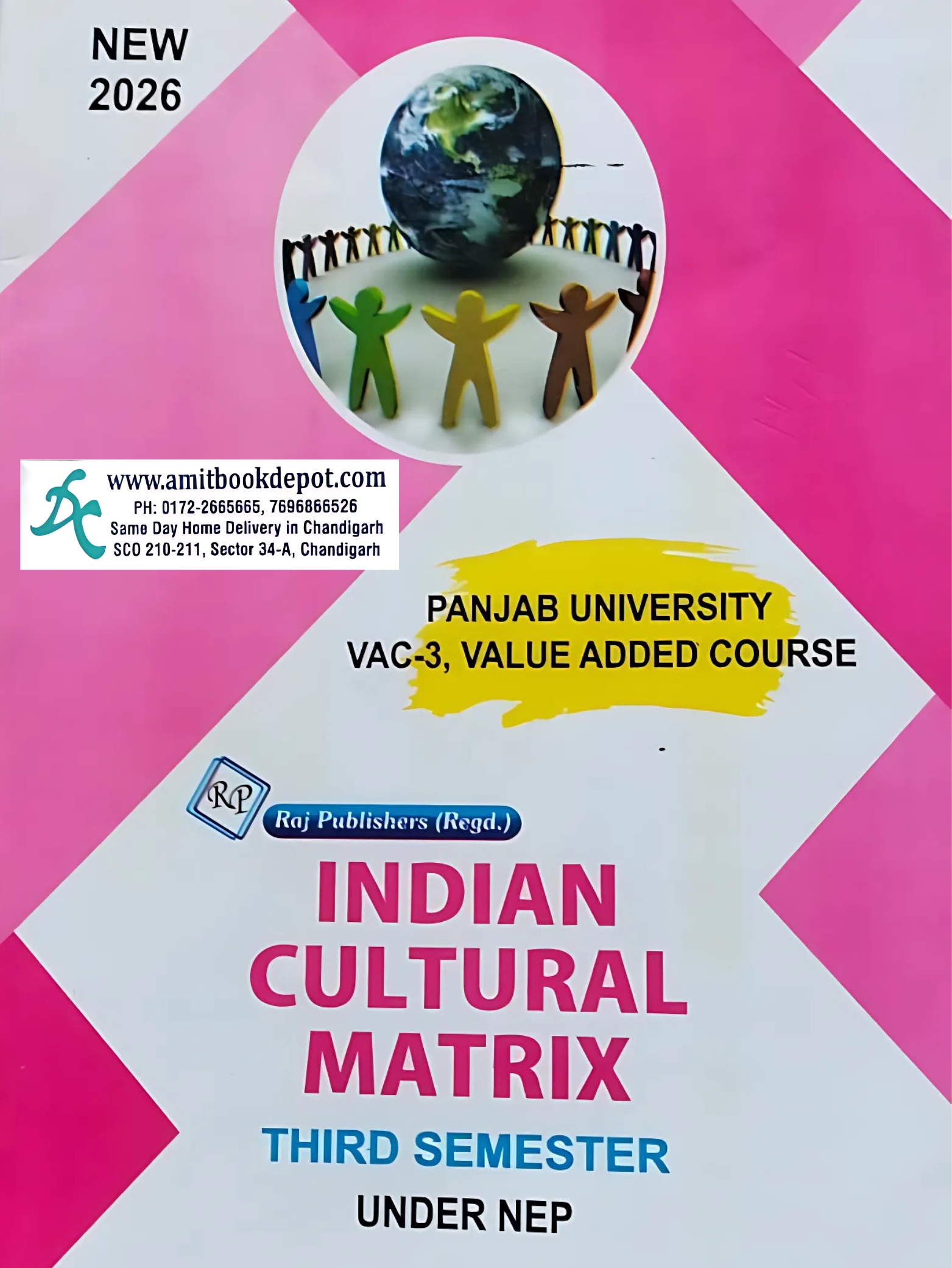
Yes, this edition of "Raj Indian Cultural Matrix" by Dr. Mona Arora is meticulously crafted to be 100% aligned with the most recent syllabus prescribed by Panjab University (PU), Chandigarh for the VAC-3 Sociology paper.
Absolutely. The book is structured into two dedicated units that comprehensively cover both mandated topics: Unit I on Contemporary Understanding of Values in Transition (Family and Marriage) and Unit II on the Sociological Relevance of Spirituality in India.
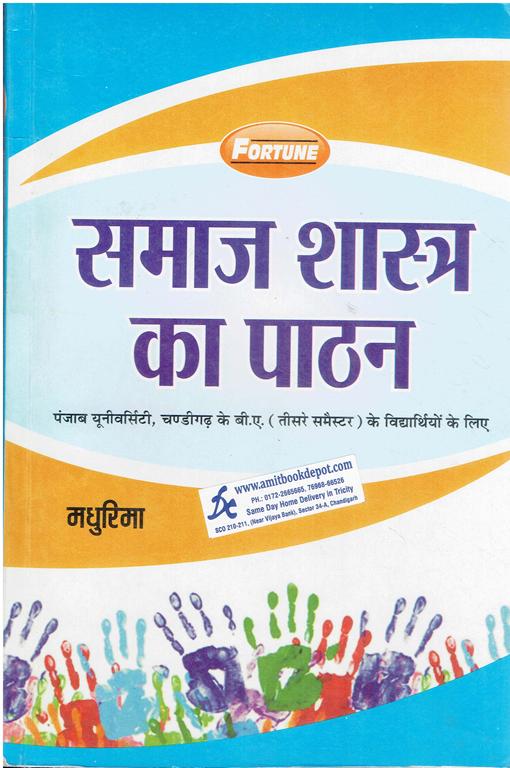
This textbook is designed as a comprehensive guide that covers the entire prescribed syllabus. For most students, it will be sufficient for thorough exam preparation. However, students may consult additional sources for further in-depth research.
Yes, Dr. Mona Arora has written the book in a clear, academic yet accessible language, making complex sociological concepts understandable for undergraduate students.
Yes, the book is designed to help students understand social problems at a ground level and encourages critical thinking towards identifying viable solutions, directly meeting the stated course outcomes.
The book prepares you to answer both types of exam questions: 10 short answer-type questions of 2 marks each and long essay-type questions of 18 marks each from each unit.
The book is grounded in a sociological perspective that connects theory to the Indian context, aiding in the understanding of concepts through relevant examples and analysis.
While it is specifically designed for PU Chandigarh, students from other universities with similar sociology curricula focusing on Indian culture, family, and spirituality may find it a useful reference text.
The book explores the Indian Cultural Matrix through the lens of its two core units: the evolving institutions of family and marriage (dynamic values) and the enduring sociological role of spirituality, providing a balanced view of change and continuity.
It strikes a balance between theoretical sociological concepts and their application to the contemporary Indian context, helping students apply what they learn to real-world social issues.
No Description Added
Yes, this edition of "Raj Indian Cultural Matrix" by Dr. Mona Arora is meticulously crafted to be 100% aligned with the most recent syllabus prescribed by Panjab University (PU), Chandigarh for the VAC-3 Sociology paper.
Absolutely. The book is structured into two dedicated units that comprehensively cover both mandated topics: Unit I on Contemporary Understanding of Values in Transition (Family and Marriage) and Unit II on the Sociological Relevance of Spirituality in India.
This textbook is designed as a comprehensive guide that covers the entire prescribed syllabus. For most students, it will be sufficient for thorough exam preparation. However, students may consult additional sources for further in-depth research.
Yes, Dr. Mona Arora has written the book in a clear, academic yet accessible language, making complex sociological concepts understandable for undergraduate students.
Yes, the book is designed to help students understand social problems at a ground level and encourages critical thinking towards identifying viable solutions, directly meeting the stated course outcomes.
The book prepares you to answer both types of exam questions: 10 short answer-type questions of 2 marks each and long essay-type questions of 18 marks each from each unit.
The book is grounded in a sociological perspective that connects theory to the Indian context, aiding in the understanding of concepts through relevant examples and analysis.
While it is specifically designed for PU Chandigarh, students from other universities with similar sociology curricula focusing on Indian culture, family, and spirituality may find it a useful reference text.
The book explores the Indian Cultural Matrix through the lens of its two core units: the evolving institutions of family and marriage (dynamic values) and the enduring sociological role of spirituality, providing a balanced view of change and continuity.
It strikes a balance between theoretical sociological concepts and their application to the contemporary Indian context, helping students apply what they learn to real-world social issues.