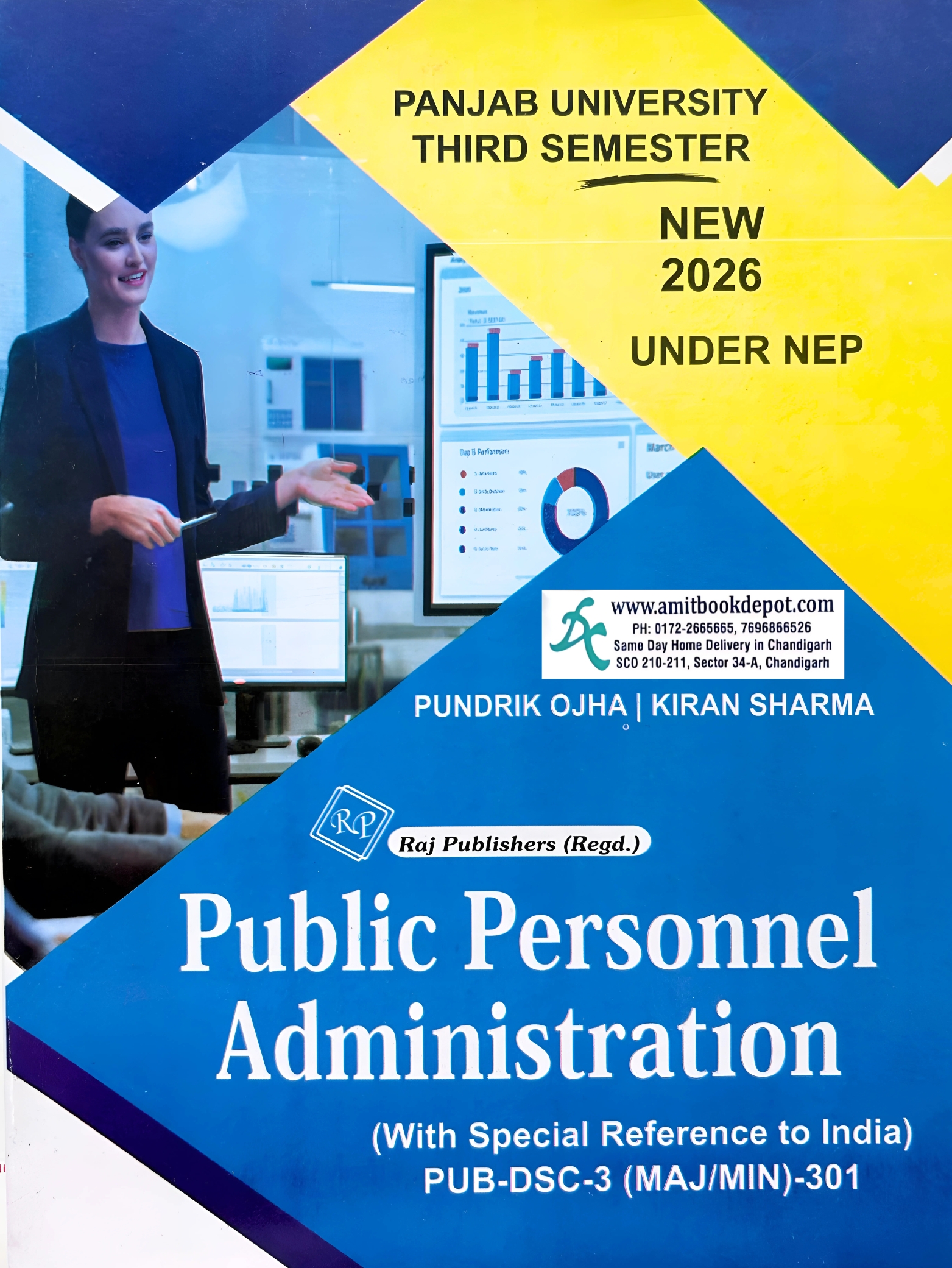
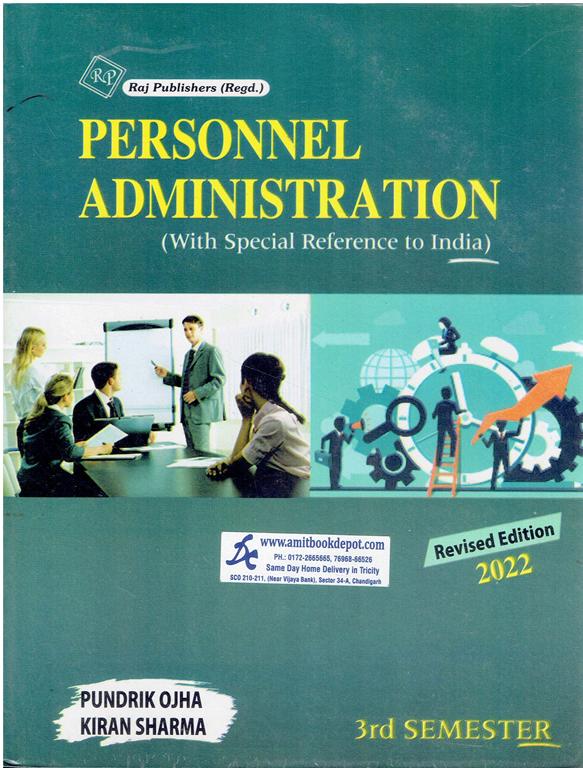
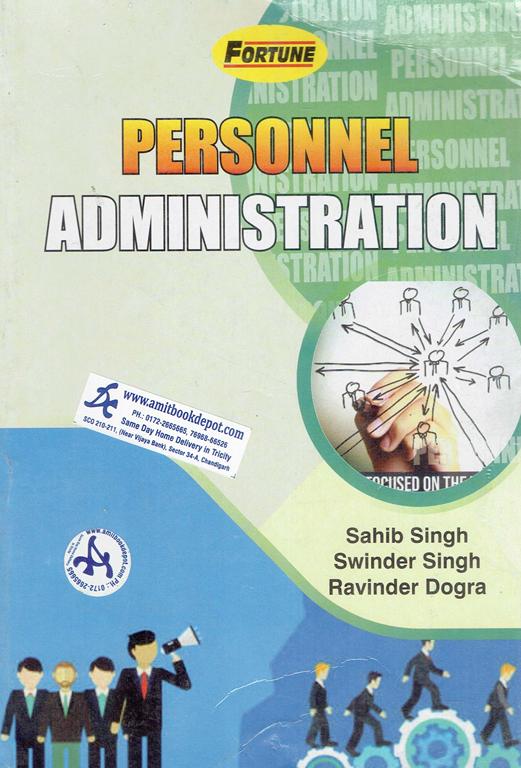
Yes, this book is meticulously crafted to align with the latest syllabus for course code PUB-DSC-3 (MAJ/MIN)-301, covering all prescribed units and topics.
While the book provides comprehensive theoretical knowledge for the 90-mark theory paper, specific internal assessment tasks like class assignments are to be completed as per the instructor's guidance. The book's content forms the foundation for all such activities.
The book contains a section with a list of short answer type questions, which are ideal for practice. Students are expected to formulate answers based on the detailed chapter content provided.
Absolutely. The book covers the entire syllabus and is equally beneficial for regular and USOL students. It explains the university's instruction regarding mark distribution for students without internal assessment.
The book contains dedicated chapters on both the UPSC and SPSC, detailing their composition, functions, and role in the recruitment of higher civil services, providing a clear, practical understanding of these constitutional bodies.
Yes, the chapter on Administrative Tribunals discusses their meaning, types, advantages, and disadvantages within the specific context of India's administrative system.
Yes, there is a complete chapter that critically analyzes the causes of corruption in administration and discusses various remedies to address this challenge.
While this book is designed for university exams, the foundational knowledge on ethics, bureaucracy, and public administration it provides is undoubtedly beneficial for building a base for competitive examinations like the UPSC CSE.
Yes, the book breaks down these concepts into their meaning, significance, and practical principles (for promotion) and causes/improvement measures (for morale), making them easily digestible for students.
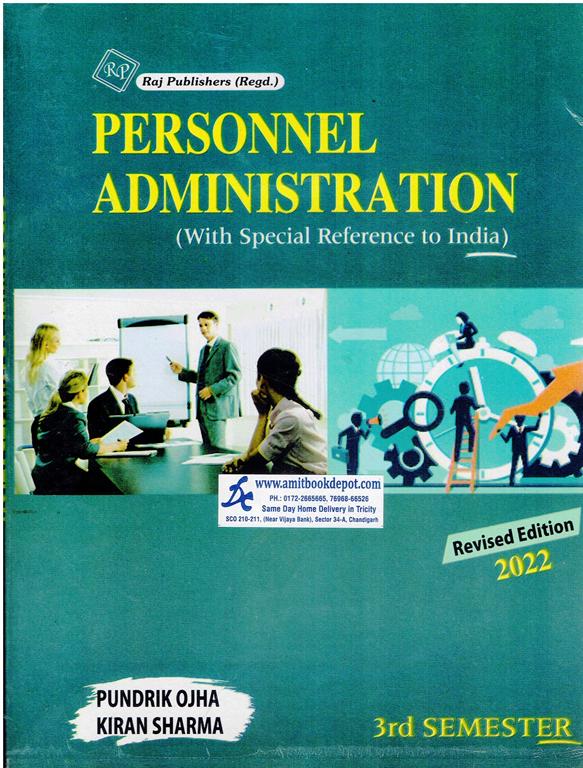
The book is written in English Medium with a clear, academic yet accessible tone, designed specifically for undergraduate students to facilitate easy comprehension.
No Description Added
Yes, this book is meticulously crafted to align with the latest syllabus for course code PUB-DSC-3 (MAJ/MIN)-301, covering all prescribed units and topics.
While the book provides comprehensive theoretical knowledge for the 90-mark theory paper, specific internal assessment tasks like class assignments are to be completed as per the instructor's guidance. The book's content forms the foundation for all such activities.
The book contains a section with a list of short answer type questions, which are ideal for practice. Students are expected to formulate answers based on the detailed chapter content provided.
Absolutely. The book covers the entire syllabus and is equally beneficial for regular and USOL students. It explains the university's instruction regarding mark distribution for students without internal assessment.
The book contains dedicated chapters on both the UPSC and SPSC, detailing their composition, functions, and role in the recruitment of higher civil services, providing a clear, practical understanding of these constitutional bodies.
Yes, the chapter on Administrative Tribunals discusses their meaning, types, advantages, and disadvantages within the specific context of India's administrative system.
Yes, there is a complete chapter that critically analyzes the causes of corruption in administration and discusses various remedies to address this challenge.
While this book is designed for university exams, the foundational knowledge on ethics, bureaucracy, and public administration it provides is undoubtedly beneficial for building a base for competitive examinations like the UPSC CSE.
Yes, the book breaks down these concepts into their meaning, significance, and practical principles (for promotion) and causes/improvement measures (for morale), making them easily digestible for students.
The book is written in English Medium with a clear, academic yet accessible tone, designed specifically for undergraduate students to facilitate easy comprehension.