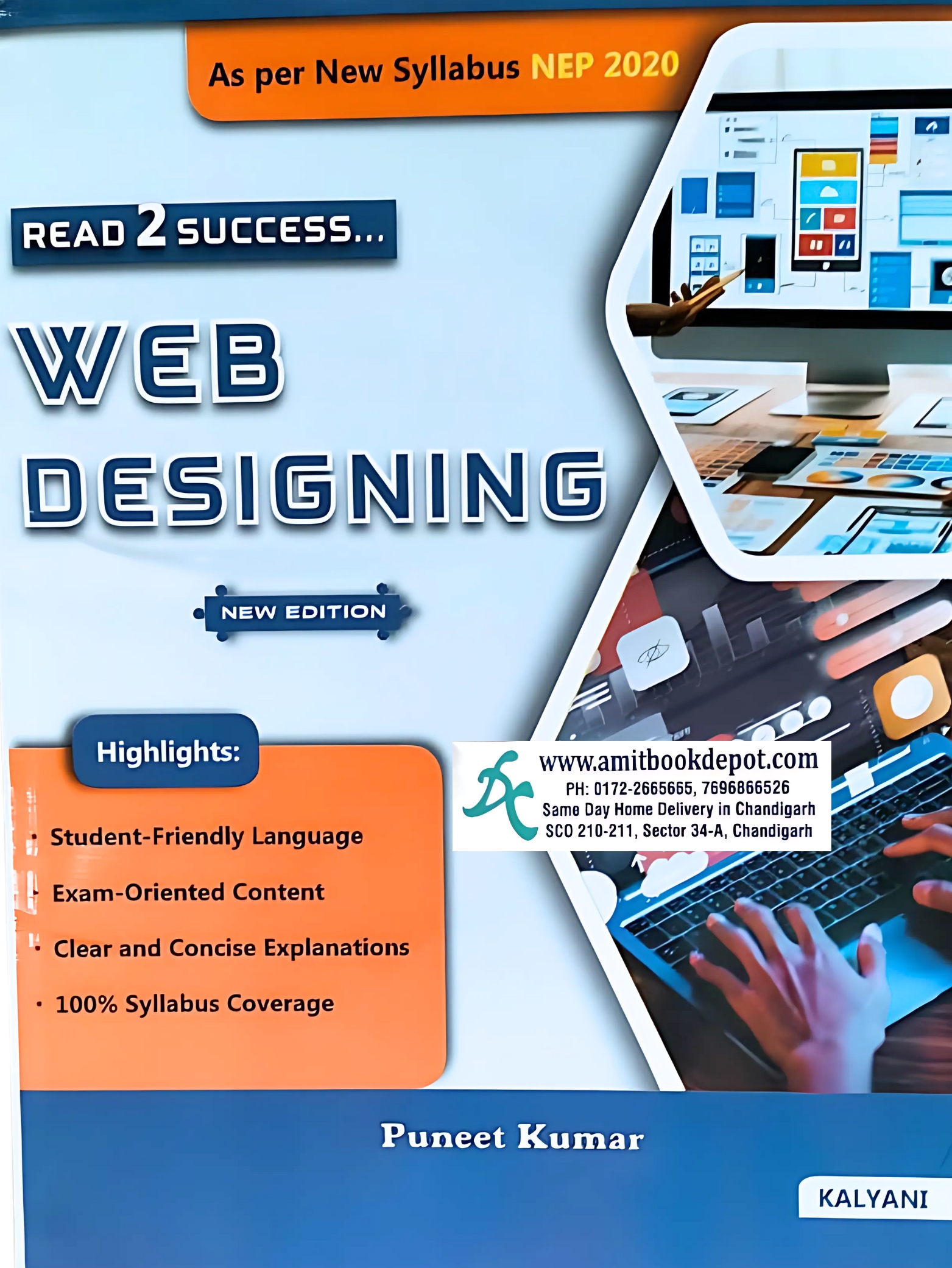
Yes, this book is specifically written to cover 100% of the syllabus for Paper Title: Web Designing, Paper Code: CSA - DSC - 3 (Maj/Min) - 302 as prescribed by Panjab University, Chandigarh under the NEP framework.
Absolutely. The content is structured to cover the 30 theory hours and 60 practical hours outlined in the syllabus, with dedicated sections for theoretical concepts and hands-on implementation, especially for tools like Dreamweaver.
Yes, the book is designed for beginners. It starts with fundamental web terminology and gradually progresses to more complex topics like JavaScript, ensuring a smooth learning curve for students new to web designing and programming.
While the core concepts of managing workspaces, creating websites, and using templates in Dreamweaver are universal, it is recommended to check the book's preface or introduction for the specific version referenced. The fundamental skills taught are applicable across recent versions.
Yes, the book includes structured code examples and explanations for HTML elements, CSS styling (inline, internal, external), and JavaScript fundamentals, allowing students to practice and understand the implementation.
Yes, Unit II provides a detailed explanation of the HTML Form element and its various input types, including Text, Password, Button, Reset, Checkbox, Radio, Text Area, Select, and Option.
Unit I on Web Terminology explicitly covers how a browser (client) communicates with a web server, along with explanations of URL, WWW, and other related concepts, providing a clear understanding of the web's architecture.
Yes, Unit III on JavaScript goes beyond basic operations and control constructs to include objects, user-defined objects, creating instances, and objects within objects, as per the syllabus.
Yes, the book is written in a clear, structured manner with sequential topics, making it an excellent resource for students who wish to learn and revise the subject independently.
Yes, Unit II contains a dedicated section on Frames, explaining the concept and guiding students on how to create and target named frames in a web page.
No Description Added
Yes, this book is specifically written to cover 100% of the syllabus for Paper Title: Web Designing, Paper Code: CSA - DSC - 3 (Maj/Min) - 302 as prescribed by Panjab University, Chandigarh under the NEP framework.
Absolutely. The content is structured to cover the 30 theory hours and 60 practical hours outlined in the syllabus, with dedicated sections for theoretical concepts and hands-on implementation, especially for tools like Dreamweaver.
Yes, the book is designed for beginners. It starts with fundamental web terminology and gradually progresses to more complex topics like JavaScript, ensuring a smooth learning curve for students new to web designing and programming.
While the core concepts of managing workspaces, creating websites, and using templates in Dreamweaver are universal, it is recommended to check the book's preface or introduction for the specific version referenced. The fundamental skills taught are applicable across recent versions.
Yes, the book includes structured code examples and explanations for HTML elements, CSS styling (inline, internal, external), and JavaScript fundamentals, allowing students to practice and understand the implementation.
Yes, Unit II provides a detailed explanation of the HTML Form element and its various input types, including Text, Password, Button, Reset, Checkbox, Radio, Text Area, Select, and Option.
Unit I on Web Terminology explicitly covers how a browser (client) communicates with a web server, along with explanations of URL, WWW, and other related concepts, providing a clear understanding of the web's architecture.
Yes, Unit III on JavaScript goes beyond basic operations and control constructs to include objects, user-defined objects, creating instances, and objects within objects, as per the syllabus.
Yes, the book is written in a clear, structured manner with sequential topics, making it an excellent resource for students who wish to learn and revise the subject independently.
Yes, Unit II contains a dedicated section on Frames, explaining the concept and guiding students on how to create and target named frames in a web page.