Categories
College Bookssss >
BA PU Chandigarh
BSC PU Chandigarh
MSC PU Chandigarh
BBA PU Chandigarh
MA PU Chandigarh
Medical Books
Engineering Books
Management Books
PGDCA Books
BCOM PU Chandigarh
MCOM PU Chandigarh
BCA PU Chandigarh
MCA PU Chandigarh
animate-books

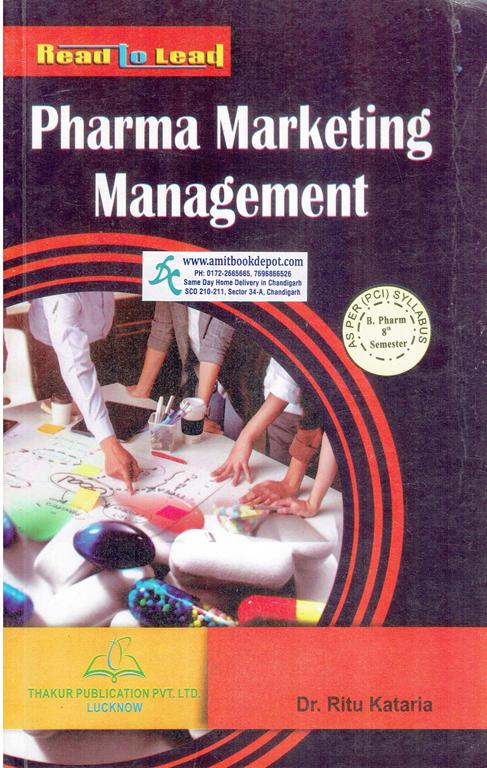
Thakur Pharma Marketing Management For B Pharm 8th Semester PTU

by Madhurima
₹250 ₹250.00(-/ off)

Rating & Reviews

23 Customer Review

Thakur Pharma Marketing Management For B Pharm 8th Semester PTU by Dr. Ritu Kataria is the prescribed book for the BP803ET subject. This comprehensive guide covers the entire syllabus, from core marketing concepts and pharmaceutical market analysis to product decisions, promotion strategies, distribution channels, and pricing under DPCO & NPPA regulations. It includes specialized units on the Professional Sales Representative (PSR) and emerging marketing concepts. Ideal for PTU pharmacy students and pharma marketing professionals, this book provides essential knowledge for a successful career in the pharmaceutical industry.

Have Doubts Regarding This Product ? Ask Your Question

  • Q1
    Is this book strictly aligned with the Punjab Technical University (PTU) B.Pharm syllabus?
    A1

    Yes, this textbook is specifically designed for the PTU B.Pharm 8th Semester, covering the subject "Pharma Marketing Management" (Subject Code: BP803ET) in its entirety, as per the latest syllabus.

  • Q2
    Does it cover topics relevant to the Indian pharmaceutical market and regulations?
    A2

    Absolutely. The book extensively covers the Indian pharmaceutical market's structure, government initiatives, and crucial regulatory frameworks like the Drug Price Control Order (DPCO) and the National Pharmaceutical Pricing Authority (NPPA).

  • Q3
    Are there any sections useful for someone preparing for a career as a Medical Representative?
    A3

    Yes, Unit IV and Chapter 7 are dedicated to the Professional Sales Representative (PSR), detailing duties, recruitment, training, detailing techniques, supervision, and motivation, providing direct career preparation.

  • Q4
    Does the book explain how to analyze a pharmaceutical product's market performance?
    A4

    Yes. It covers Product Portfolio Analysis techniques like the BCG Matrix and GE 9 Cell Model, which are essential tools for evaluating a product's market share and growth potential.

  • Q5
    Is the marketing of Over-the-Counter (OTC) products discussed?
    A5

    Yes, the book includes a dedicated section on OTC products within the Promotion chapter, discussing specific marketing strategies and online promotional techniques for this category.

  • Q6
    How does this book differentiate between consumer marketing and pharmaceutical marketing?
    A6

    It clearly distinguishes the unique characteristics of pharmaceutical marketing, such as the role of physicians as influencers, ethical considerations, regulatory constraints, and the difference between B2B and B2C marketing in the pharma context.

  • Q7
    How detailed is the coverage of promotional tools like detailing and sampling?
    A7

    It offers comprehensive coverage. The book explains detailing (its purpose, tips, advantages) and sampling as key promotional tools within the pharmaceutical promotional mix.

  • Q8
    Can this book be useful for professionals already working in pharma marketing?
    A8

    Certainly. While it's a textbook, its structured explanation of concepts like pricing strategies, channel conflicts, portfolio analysis, and emerging trends makes it a valuable reference guide for marketing executives and managers.

  • Q9
    Is the important topic of "Product Positioning" in a competitive market covered?
    A9

    Yes, a dedicated section on Product Positioning explains the process, various strategies, and its importance in differentiating a pharmaceutical product in the market.

  • Q10
    Does the book discuss the role of market research in the pharmaceutical industry?
    A10

    Yes, it covers the objectives, steps, and role of market research specifically within the pharmaceutical context, along with its limitations.

0.00

0 Overall Rating
  • 5
    0
  • 4
    0
  • 3
    0
  • 2
    0
  • 1
    0

Try this product & share your review & thoughts

Chapter 1: Concepts of Marketing

1.1. Marketing
1.1.1. Meaning and Definition of Marketing
1.1.2. Nature of Marketing
1.1.3. Scope of Marketing
1.1.4. General and Core Concepts of Marketing
1.1.5. Importance of Marketing
1.1.6. Distinction between Marketing and Selling

1.2. Marketing Environment
1.2.1. Concept of Marketing Environment
1.2.2. Factors Affecting Marketing Environment
1.2.3. Internal Marketing Environment
1.2.4. External Marketing Environment
1.2.5. Micro Environment
1.2.6. Macro Environment
1.2.6.1. Political Environment
1.2.6.2. Economic Environment
1.2.6.3. Socio-Cultural Environment
1.2.6.4. Technological Environment
1.2.6.5. Demographic Environment
1.2.6.6. Natural Environment
1.2.6.7. Legal Environment
1.2.7. Significance of Marketing Environment Analysis

1.3. Industry and Competitive Analysis
1.3.1. Industry Analysis
1.3.1.1. Factors Analyzed in Industry Analysis
1.3.1.2. Porter's 5 Forces Model
1.3.1.3. Significance of Industry Analysis
1.3.2. Competitor Analysis
1.3.2.1. Competitor Analysis Framework
1.3.2.2. Steps in Competitor's Analysis
1.3.2.3. Benefits of Competitor's Analysis

1.4. Analyzing Consumer Buying Behavior
1.4.1. Introduction
1.4.2. Buying Role of Consumers
1.4.3. Types of Buying Decisions
1.4.4. Factors Affecting Consumer Buying Behavior
1.4.5. Buyer Decision Process
1.4.6. Importance of Consumer Buying Behavior

1.5. Industrial Buying Behavior
1.5.1. Introduction
1.5.2. Nature of Industrial Buying Behavior
1.5.3. Objectives of Industrial Buying Behavior
1.5.4. Factors Influencing Industrial Buying Behavior
1.5.5. Industrial Buying Process
1.5.6. Consumer Buying Versus Industrial Buying
1.6. Summary
1.7. Exercise

Chapter 2: Pharmaceutical Market Aspects

2.1. Pharmaceutical Marketing
2.1.1. Introduction to Pharmaceutical Marketing
2.1.2. Characteristics of Pharmaceutical Marketing
2.1.3. Functions of Pharmaceutical Marketing
2.1.3.1. Buying and Assembling
2.1.3.2. Selling
2.1.3.3. Transportation
2.1.3.4. Storage
2.1.3.5. Finance
2.1.3.6. Grading
2.1.3.7. Risk Bearing
2.1.3.8. Feedback Information
2.1.4. Pharmaceutical Market
2.1.4.1. Qualitative and Quantitative Aspects of Pharmaceutical Markets 
2.1.4.2. Size and Composition of Pharmaceutical Market
2.1.4.3. Investments and Recent Developments
2.1.4.4. Government Initiatives
2.1.5. Barriers to Marketing in the Pharmaceutical Industry
2.1.6. (Motivation and Prescribing Habits of the Physician

2.2. Market Segmentation
2.2.1. Concept of Market Segmentation
2.2.2. Bases of Segmentation for Consumer Goods and Services
2.2.2.1. Geographic Segmentation
2.2.2.2. Demographic Description
2.2.2.3. Psychographic Segmentation
2.2.2.4. Behavioral Segmentation
2.2.3. Pharmaceutical Market Segmentation 
2.2.4. Benefits of Pharmaceutical Market Segmentation 

2.3. Targeting: Target Market
2.3.1. Concept of Target Market
2.3.2. Process of Targeting the Market
2.3.3. Evaluating Market Segments to Target: Bases for Identifying Target Customers
2.3.4. Selection of Target Markets: Targeting Strategies
2.3.4.1. Limited Market Coverage Targeting
2.3.4.2. Full Market Coverage Targeting
2.3.5. Benefits of Targeting
2.4. Summary
2.5. Exercise

Chapter 3: Analyzing the Market and Consumers

3.1. Consumer Profile
3.1.1. Introduction
3.1.2. Characteristics of Indian Consumers
3.1.3. Socio-Psychological Characteristics of the Consumer—
3.1.3.1. Motivation
3.1.3.2. Perception
3.1.3.3. Personality
3.1.3.4. Learning
3.1.3.5. Attitude
3.1.4. Changing Indian Consumer Behavior
3.1.4.1. Drivers of Change in Indian Consumer Behavior
3.1.4.2. Changing Consumer Trends
3.1.4.3. New Consumption Patterns of Indian Consumers
3.1.5. Patient's Choice of Physician
3.1.6. Patients' Choice of Retail Pharmacist

3.2. Market Research
3.2.1. Introduction
3.2.2. Objectives of Market Research
3.2.3. Steps in the Market Research Process
3.2.4. Role of Market Research
3.2.5. Limitations of Market Research
3.3. Summary
3.4. Exercise

Chapter 4: Product Decisions

4.1. Product Decisions
4.1.1. Concept of a Product
4.1.2. Characteristics of Product
4.1.3. Levels of Product
4.1.4. Classification of Pharmaceutical Products
4.1.5. Product Management in the Pharmaceutical Industry—5 marks
4.1.5.1. Hierarchical Structure of Product Management in the Pharmaceutical Industry
4.1.5.2. Roles and Responsibilities of Product Manager in the Pharmaceutical Industry
4.1.5.3. Knowledge Areas of a Product Manager

4.2. Major Product Decisions
4.2.1. Introduction
4.2.2. Product Line Decision
4.2.3. Product Mix
4.2.3.1. Product Mix Decisions
4.2.3.2. Product Mix Strategies
4.2.4. Product Branding
4.2.4.1. General Branding Strategies
4.2.4.2. Advantages of Branding
4.2.5. Product Packaging Decisions
4.2.5.1. Levels of Pharmaceutical Packaging
4.2.5.2. Types of Packaging
4.2.5.3. Benefits of Pharmaceutical Packaging
4.2.6. Labeling Decisions
4.2.6.1. Labeling Requirements
4.2.6.2. Guidelines for Labelling Pharmaceutical and Healthcare Products
4.2.6.3. Importance of Labeling in Pharmaceutical Products

4.3. Product Life Cycle (PLC)
4.3.1. Introduction
4.3.2. Characteristics of Product Life Cycle
4.3.3. Stages of Product Life Cycle
4.3.4. Drug Life Cycle and Corresponding Strategic Plans

4.4. Product Portfolio Analysis) -
4.4.1. Introduction
4.4.2. Portfolio Analysis Techniques
4.4.2.1. BCG Matrix
4.4.2.2. GE 9 Cell Model
4.4.2.3. Corporate Parenting Analysis
4.4.3. Advantages of Portfolio Analysis 
4.4.4. Disadvantages of Portfolio Analysis

4.5. Product Positioning
4.5.1. Introduction 
4.5.2. Tasks Involved in Positioning: Process of Positioning 
4.5.3. Positioning Strategies 
4.5.4. Importance of Positioning 

4.6. New Product Development Decisions
4.6.1. Introduction
4.6.2. New Product Development Process
4.6.3. Why New Products Fail: Failure of New Pharmaceutical Products
4.7. Summary
4.8. Exercise

Chapter 5: Promotion

5.1. Promotion
5.1.1. Introduction
5.1.2. Importance of Promotion
5.1.3. Strategies of Marketing Communication
5.1.4. Promotional Mix: Methods of Promotion
5.1.5. (Determinants of Promotional Mix)

5.2. Promotional Budget
5.2.1. Introduction
5.2.2. Objectives of Promotional Budget
5.2.3. Factors Influencing Promotional Budget
5.2.4. Methods of Promotional Budgeting in Pharmaceutical Companies
5.2.5. Promotional Expenditures in the Pharmaceutical Industry

5.3. An Overview of Personal Selling
5.3.1. Introduction
5.3.2. Features of Personal Selling
5.3.3. Process of Personal Selling in the Pharmaceutical Industry
5.3.4. Importance of Personal Selling

5.4. Advertising
5.4.1. Introduction
5.4.2. Advertising Objectives
5.4.3. Changing Role of Pharmaceutical Advertising
5.4.4. Principles of Advertisement
5.4.5. Advertising Techniques in Pharmaceutical Marketing
5.4.6. Direct Mail
5.4.6.1. Types of Direct Mail Marketing
5.4.6.2. Importance of Direct Advertising
5.4.6.3. Effective Ways to Use Direct Mail for Pharmaceutical Marketing
5.4.7. Trade Journal
5.4.7.1. Advantages of Trade Journals
5.4.7.2. Disadvantages of Trade Journals
5.4.8. Exhibition
5.4.8.1. Types of Exhibitions
5.4.8.2. Importance of Exhibitions
5.4.8.3. Medical Exhibition
5.4.9. Sampling/Samples Distribution 

5.5. Retailing
5.5.1. Introduction
5.5.2. Functions of Retailing
5.5.3. Difference between Wholesaler and Retailer in the Pharmaceutical Industry
5.5.4. Importance of a Retailer in the Pharmaceutical Industry

5.6. Public Relations
5.6.1. Introduction
5.6.2. Types of Public Relations
5.6.3. Public Relation Strategies in the Pharmaceutical Industry
5.6.4. Role of Public Relations in the Healthcare Industry
5.6.5. Limitations of Public Relations

5.7. OTC Products
5.7.1. Introduction
5.7.2. Pharmaceutical Marketing Strategies for OTC Products 
5.7.3. Promotion of OTC Medicines
5.7.4. Online Promotional Techniques for OTC Products.
5.8. Summary
5.9. Exercise

Chapter 6: Pharmaceutical Marketing Channels

6.1. Physical Distribution Management
6.1.1. Introduction
6.1.2. Tasks in Physical Distribution Management/Components of Physical Distribution
6.1.3. Strategic Importance of Distribution

6.2. Channels of Distribution
6.2.1. Meaning and Definition of Channels of Distribution
6.2.2. Nature of Distribution Channels
6.2.3. Ways to Improve Pharma Distribution Channel
6.2.4. Pharmaceutical Marketing Channels
6.2.5. Selecting the Appropriate Channel of Distribution
6.2.6. Types of Channel Members
6.2.7. Types of Distribution Channels
6.2.8. Importance of Distribution Channels

6.3. Designing Channel
6.3.1. Introduction
6.3.2. Dimensions of Channel Design
6.3.3. Process of Channel Design
6.3.4. Criteria for Effective Channel Design
6.3.5. Channel Design Decisions

6.4. Channel Conflicts
6.4.1. Introduction
6.4.2. Causes for Channel Conflict
6.4.3. Conflicts in Pharmaceutical Marketing Channels
6.4.4. Stages in Channel Conflicts
6.4.5. Impact of Channel Conflicts
6.4.6. Techniques to Resolve Channel Conflict
6.5. Summary
6.6. Exercise

Chapter 7: Professional Sales Representative

7.1. Professional Sales Representative
7.1.1. Introduction
7.1.2. Duties of Pharmaceutical Sales Representatives (PSR)
7.1.3. Recruitment of PSR
7.1.4. Selection of PSR
7.1.5. Training of PSR
7.1.6. Compensation to PSR
7.1.7. Supervising the PSR
7.1.7.1. Norms for Customer Calls
7.1:7.2. Norms for Prospect Calls
7.1.8. Motivating the PSR
7.1.8.1. Process of Motivation
7.1.8.2. Methods of PSR Motivation
7.1.9. Evaluation of PSR
7.1.9.1. Determinants of PSR Appraisal
7.1.9.2. Methods of PSR Evaluation
7.1.10. Future Prospects of PSR (Pharmaceutical Medical Representative)

7.2. Detailing
7.2.1. Introduction 
7.2.2. Purpose of Detailing 
7.2.3. Product Detailing Tips for Medical Representatives 
7.2.4. Advantages of Detailing
7.2.5. Disadvantages of Detailing
7.3. Summary
7.4. Exercise

Chapter 8: Pricing

8.1. Pricing
8.1.1. Meaning and Definition of Price and Pricing
8.1.2. Objectives of Pricing
8.1.3. Determinants of Price: Factors Influencing Pricing Decisions
8.1.4. Cost Structure in Pharmaceutical Products
8.1.5. Pricing Methods
8.1.6. Pricing Strategies
8.1.7. Importance of Pricing
8.1.8. Issues in Price Management in the Pharmaceutical Industry

8.2. Legal Requirements in Price Control on Drugs
8.2.1. Introduction
8.2.2. NPPA (National Pharmaceutical Pricing Authority)
8.2.3. National Pharmaceutical Pricing Policy-2012 Governing Drug Pricing Policy
8.2.3.1. NPPP Regulation for Scheduled Formulation/Drug Prices
8.2.3.2. NPPP Regulation for Non-Scheduled Formulation/Drug Prices
8.2.4. Overview of DPCO (Drug Price Control Order) (5-10)
8.2.4.1. Pricing of Bulk Drugs
8.2.4.2. Steps of Pricing a Bulk Drug
8.2.4.3. Calculation of Retail Price of Formulation
8.2.4.4. Price to Wholesaler and Retailer
8.3. Summary
8.4. Exercise

Chapter 9: Emerging Concepts in Marketing

9.1. Emerging Concept of Marketing

9.1.1. Introduction
9.1.2. Vertical Marketing Systems (VMS): Vertical Integration
9.1.2.1. Advantages of VMS
9.1.2.2. Disadvantages of VMS
9.1.3. Horizontal Marketing Systems (HMS): Horizontal Integration
9.1.3.1. Advantages of HMS
9.1.3.2. Disadvantages of HMS
9.1.4. Rural Marketing
9.1.4.1. Features of Rural Marketing
9.1.4.2. Challenges Faced by the Companies During Rural Penetration
9.1.4.3. Guidelines for Pharmaceutical Industries in Rural Markets
9.1.5. Consumerism
9.1.5.1. Technological Trends in Patient Consumerism
9.1.5.2. Advantages of Healthcare Consumerism
9.1.5.3. Disadvantages of Healthcare Consumerism
9.1.6. Industrial Marketing
9.1.6.1. Characteristics of Industrial Marketing
9.1.6.2. Consumers in Pharmaceutical Industrial Marketing
9.1.6.3. Comparison between B2B and B2C Pharmaceutical Marketing
9.1.7. Global Marketing
9.1.7.1. Systematic Approach of Entering a New or International Market
9.1.7.2. Global Pharmaceutical Industry Analysis
9.1.7.3. Importance of Global Marketing
9.2. Summary
9.3. Exercise

Latest Syllabus of Pharma Marketing Management For B Pharm 8th Semester PTU


BP803ET. PHARMA MARKETING MANAGEMENT (Theory) (45 Hours)

Scope:

The pharmaceutical industry not only needs highly qualified researchers, chemists, and technical people but also requires skilled managers who can take the industry forward by managing and making the complex decisions that are imperative for the growth of the industry. The knowledge and know-how of marketing management groom the people for taking a challenging role in sales and product management.

Course Objective: 
The course aims to provide an understanding of marketing concepts and techniques and their applications in the pharmaceutical industry. 

Unit I (10 Hours)

Marketing:
Definition, general concepts, and scope of marketing; Distinction between marketing & selling; marketing environment; industry and competitive analysis; analyzing consumer buying behavior; industrial buying behavior.

Pharmaceutical market:
Quantitative and qualitative aspects; size and composition of the market; demographic descriptions and socio-psychological characteristics of the consumer; market
segmentation & targeting. Consumer profile; motivation and prescribing habits of the physician; patients' choice of physician and retail pharmacist. Analyzing the Market; Role of market research.

Unit II (10 Hours)

Product decision:
Classification, product line and product mix decisions, product life cycle, product portfolio analysis, product positioning, new product decisions, product branding, packaging and labeling decisions, and product management in the pharmaceutical industry. 

Unit III (10 Hours)

Promotion:
Methods, determinants of promotional mix, promotional budget; An overview of personal selling, advertising, direct mail, journals, sampling, retailing, medical
exhibition, public relations, and online promotional techniques for OTC products.

Unit IV: (10 Hours)

Pharmaceutical marketing channels:
Designing a channel, channel members, selecting the appropriate channel, conflict in channels, physical distribution management: strategic importance, tasks in physical distribution management.

Professional sales representative (PSR):
Duties of the PSR, purpose of detailing, selection and training, supervising, norms for customer calls, motivating, evaluating, compensation, and future prospects of the PSR.

Unit V: (10 Hours)

Pricing:
Meaning, importance, objectives, determinants of price; pricing methods and strategies; issues in price management in the pharmaceutical industry. An overview of DPCO (Drug Price Control Order) and NPPA (National Pharmaceutical Pricing Authority). 

Emerging concepts in marketing: 
Vertical & Horizontal Marketing; Rural Marketing; Consumerism; Industrial Marketing; Global Marketing.

Thakur Pharma Marketing Management for B Pharm 8th Semester PTU is a definitive academic book and professional guide authored by Dr. Ritu Kataria and published by Thakur Publications. Specifically crafted for the Bachelor of Pharmacy (B.Pharm) final-year syllabus of Punjab Technical University (PTU), this comprehensive resource meticulously covers the subject code BP803ET. It serves as an indispensable tool for students aiming to master the specialized field of pharmaceutical marketing management and for professionals seeking to understand the unique dynamics of the pharma industry.

This book provides an exhaustive exploration of core marketing concepts as applied to the pharmaceutical sector. It begins by establishing a strong foundation in general marketing principles, distinguishing between marketing and selling, and analyzing the marketing environment. The book delves deeply into industry and competitive analysis, including Porter’s 5 Forces Model, and offers critical insights into both consumer buying behavior and industrial buying behavior. This foundational knowledge is seamlessly connected to the specifics of the pharmaceutical market, discussing its quantitative and qualitative aspects, size, composition, and government initiatives.

A significant portion of the content is dedicated to strategic decision-making. The book covers pharmaceutical market segmentation, targeting, and positioning in detail, teaching students how to identify and approach specific market segments effectively. It includes a thorough analysis of product decisions, encompassing product life cycle (PLC) management, product portfolio analysis using the BCG Matrix and GE 9 Cell Model, product branding, packaging, and new product development strategies specific to pharma. The promotion unit is exceptionally detailed, explaining the promotional mix, personal selling, pharmaceutical advertising, direct mail, sampling, retailing, and digital strategies for OTC products.

Understanding the critical role of distribution and sales in pharma, the book offers in-depth chapters on pharmaceutical marketing channels, including design, member selection, conflict resolution, and physical distribution management. It features a dedicated unit on the Professional Sales Representative (PSR) / Medical Representative, covering recruitment, training, duties, detailing, motivation, and evaluation, which is vital for career preparation. The pricing section is crucial for the regulated Indian context, explaining pricing methods, strategies, and the legal framework governed by the Drug Price Control Order (DPCO) and the National Pharmaceutical Pricing Authority (NPPA). Finally, the book explores emerging concepts in marketing such as rural marketing, consumerism, industrial (B2B) marketing, and global marketing, preparing students for future industry trends.

Structured to align perfectly with the PTU B.Pharm 8th Semester syllabus, each chapter corresponds to specific units and hours outlined in the curriculum. The content is presented in a clear, organized manner with summaries and exercises to aid revision and self-assessment. Keywords such as "pharmaceutical marketing," "product management," "marketing channels," "sales representative," "DPCO," "NPPA," and "pharma market research" are integral to the text, enhancing its relevance for both academic and professional reference.

As a core book for pharmacy students and a valuable resource for pharma marketing professionals, this book by Thakur Publications bridges the gap between theoretical marketing principles and their practical application in the complex, regulated world of pharmaceuticals. It is an essential investment for anyone pursuing a career in pharma sales, product management, marketing management, or market research.

Chapter 1: Concepts of Marketing

1.1. Marketing
1.1.1. Meaning and Definition of Marketing
1.1.2. Nature of Marketing
1.1.3. Scope of Marketing
1.1.4. General and Core Concepts of Marketing
1.1.5. Importance of Marketing
1.1.6. Distinction between Marketing and Selling

1.2. Marketing Environment
1.2.1. Concept of Marketing Environment
1.2.2. Factors Affecting Marketing Environment
1.2.3. Internal Marketing Environment
1.2.4. External Marketing Environment
1.2.5. Micro Environment
1.2.6. Macro Environment
1.2.6.1. Political Environment
1.2.6.2. Economic Environment
1.2.6.3. Socio-Cultural Environment
1.2.6.4. Technological Environment
1.2.6.5. Demographic Environment
1.2.6.6. Natural Environment
1.2.6.7. Legal Environment
1.2.7. Significance of Marketing Environment Analysis

1.3. Industry and Competitive Analysis
1.3.1. Industry Analysis
1.3.1.1. Factors Analyzed in Industry Analysis
1.3.1.2. Porter's 5 Forces Model
1.3.1.3. Significance of Industry Analysis
1.3.2. Competitor Analysis
1.3.2.1. Competitor Analysis Framework
1.3.2.2. Steps in Competitor's Analysis
1.3.2.3. Benefits of Competitor's Analysis

1.4. Analyzing Consumer Buying Behavior
1.4.1. Introduction
1.4.2. Buying Role of Consumers
1.4.3. Types of Buying Decisions
1.4.4. Factors Affecting Consumer Buying Behavior
1.4.5. Buyer Decision Process
1.4.6. Importance of Consumer Buying Behavior

1.5. Industrial Buying Behavior
1.5.1. Introduction
1.5.2. Nature of Industrial Buying Behavior
1.5.3. Objectives of Industrial Buying Behavior
1.5.4. Factors Influencing Industrial Buying Behavior
1.5.5. Industrial Buying Process
1.5.6. Consumer Buying Versus Industrial Buying
1.6. Summary
1.7. Exercise

Chapter 2: Pharmaceutical Market Aspects

2.1. Pharmaceutical Marketing
2.1.1. Introduction to Pharmaceutical Marketing
2.1.2. Characteristics of Pharmaceutical Marketing
2.1.3. Functions of Pharmaceutical Marketing
2.1.3.1. Buying and Assembling
2.1.3.2. Selling
2.1.3.3. Transportation
2.1.3.4. Storage
2.1.3.5. Finance
2.1.3.6. Grading
2.1.3.7. Risk Bearing
2.1.3.8. Feedback Information
2.1.4. Pharmaceutical Market
2.1.4.1. Qualitative and Quantitative Aspects of Pharmaceutical Markets 
2.1.4.2. Size and Composition of Pharmaceutical Market
2.1.4.3. Investments and Recent Developments
2.1.4.4. Government Initiatives
2.1.5. Barriers to Marketing in the Pharmaceutical Industry
2.1.6. (Motivation and Prescribing Habits of the Physician

2.2. Market Segmentation
2.2.1. Concept of Market Segmentation
2.2.2. Bases of Segmentation for Consumer Goods and Services
2.2.2.1. Geographic Segmentation
2.2.2.2. Demographic Description
2.2.2.3. Psychographic Segmentation
2.2.2.4. Behavioral Segmentation
2.2.3. Pharmaceutical Market Segmentation 
2.2.4. Benefits of Pharmaceutical Market Segmentation 

2.3. Targeting: Target Market
2.3.1. Concept of Target Market
2.3.2. Process of Targeting the Market
2.3.3. Evaluating Market Segments to Target: Bases for Identifying Target Customers
2.3.4. Selection of Target Markets: Targeting Strategies
2.3.4.1. Limited Market Coverage Targeting
2.3.4.2. Full Market Coverage Targeting
2.3.5. Benefits of Targeting
2.4. Summary
2.5. Exercise

Chapter 3: Analyzing the Market and Consumers

3.1. Consumer Profile
3.1.1. Introduction
3.1.2. Characteristics of Indian Consumers
3.1.3. Socio-Psychological Characteristics of the Consumer—
3.1.3.1. Motivation
3.1.3.2. Perception
3.1.3.3. Personality
3.1.3.4. Learning
3.1.3.5. Attitude
3.1.4. Changing Indian Consumer Behavior
3.1.4.1. Drivers of Change in Indian Consumer Behavior
3.1.4.2. Changing Consumer Trends
3.1.4.3. New Consumption Patterns of Indian Consumers
3.1.5. Patient's Choice of Physician
3.1.6. Patients' Choice of Retail Pharmacist

3.2. Market Research
3.2.1. Introduction
3.2.2. Objectives of Market Research
3.2.3. Steps in the Market Research Process
3.2.4. Role of Market Research
3.2.5. Limitations of Market Research
3.3. Summary
3.4. Exercise

Chapter 4: Product Decisions

4.1. Product Decisions
4.1.1. Concept of a Product
4.1.2. Characteristics of Product
4.1.3. Levels of Product
4.1.4. Classification of Pharmaceutical Products
4.1.5. Product Management in the Pharmaceutical Industry—5 marks
4.1.5.1. Hierarchical Structure of Product Management in the Pharmaceutical Industry
4.1.5.2. Roles and Responsibilities of Product Manager in the Pharmaceutical Industry
4.1.5.3. Knowledge Areas of a Product Manager

4.2. Major Product Decisions
4.2.1. Introduction
4.2.2. Product Line Decision
4.2.3. Product Mix
4.2.3.1. Product Mix Decisions
4.2.3.2. Product Mix Strategies
4.2.4. Product Branding
4.2.4.1. General Branding Strategies
4.2.4.2. Advantages of Branding
4.2.5. Product Packaging Decisions
4.2.5.1. Levels of Pharmaceutical Packaging
4.2.5.2. Types of Packaging
4.2.5.3. Benefits of Pharmaceutical Packaging
4.2.6. Labeling Decisions
4.2.6.1. Labeling Requirements
4.2.6.2. Guidelines for Labelling Pharmaceutical and Healthcare Products
4.2.6.3. Importance of Labeling in Pharmaceutical Products

4.3. Product Life Cycle (PLC)
4.3.1. Introduction
4.3.2. Characteristics of Product Life Cycle
4.3.3. Stages of Product Life Cycle
4.3.4. Drug Life Cycle and Corresponding Strategic Plans

4.4. Product Portfolio Analysis) -
4.4.1. Introduction
4.4.2. Portfolio Analysis Techniques
4.4.2.1. BCG Matrix
4.4.2.2. GE 9 Cell Model
4.4.2.3. Corporate Parenting Analysis
4.4.3. Advantages of Portfolio Analysis 
4.4.4. Disadvantages of Portfolio Analysis

4.5. Product Positioning
4.5.1. Introduction 
4.5.2. Tasks Involved in Positioning: Process of Positioning 
4.5.3. Positioning Strategies 
4.5.4. Importance of Positioning 

4.6. New Product Development Decisions
4.6.1. Introduction
4.6.2. New Product Development Process
4.6.3. Why New Products Fail: Failure of New Pharmaceutical Products
4.7. Summary
4.8. Exercise

Chapter 5: Promotion

5.1. Promotion
5.1.1. Introduction
5.1.2. Importance of Promotion
5.1.3. Strategies of Marketing Communication
5.1.4. Promotional Mix: Methods of Promotion
5.1.5. (Determinants of Promotional Mix)

5.2. Promotional Budget
5.2.1. Introduction
5.2.2. Objectives of Promotional Budget
5.2.3. Factors Influencing Promotional Budget
5.2.4. Methods of Promotional Budgeting in Pharmaceutical Companies
5.2.5. Promotional Expenditures in the Pharmaceutical Industry

5.3. An Overview of Personal Selling
5.3.1. Introduction
5.3.2. Features of Personal Selling
5.3.3. Process of Personal Selling in the Pharmaceutical Industry
5.3.4. Importance of Personal Selling

5.4. Advertising
5.4.1. Introduction
5.4.2. Advertising Objectives
5.4.3. Changing Role of Pharmaceutical Advertising
5.4.4. Principles of Advertisement
5.4.5. Advertising Techniques in Pharmaceutical Marketing
5.4.6. Direct Mail
5.4.6.1. Types of Direct Mail Marketing
5.4.6.2. Importance of Direct Advertising
5.4.6.3. Effective Ways to Use Direct Mail for Pharmaceutical Marketing
5.4.7. Trade Journal
5.4.7.1. Advantages of Trade Journals
5.4.7.2. Disadvantages of Trade Journals
5.4.8. Exhibition
5.4.8.1. Types of Exhibitions
5.4.8.2. Importance of Exhibitions
5.4.8.3. Medical Exhibition
5.4.9. Sampling/Samples Distribution 

5.5. Retailing
5.5.1. Introduction
5.5.2. Functions of Retailing
5.5.3. Difference between Wholesaler and Retailer in the Pharmaceutical Industry
5.5.4. Importance of a Retailer in the Pharmaceutical Industry

5.6. Public Relations
5.6.1. Introduction
5.6.2. Types of Public Relations
5.6.3. Public Relation Strategies in the Pharmaceutical Industry
5.6.4. Role of Public Relations in the Healthcare Industry
5.6.5. Limitations of Public Relations

5.7. OTC Products
5.7.1. Introduction
5.7.2. Pharmaceutical Marketing Strategies for OTC Products 
5.7.3. Promotion of OTC Medicines
5.7.4. Online Promotional Techniques for OTC Products.
5.8. Summary
5.9. Exercise

Chapter 6: Pharmaceutical Marketing Channels

6.1. Physical Distribution Management
6.1.1. Introduction
6.1.2. Tasks in Physical Distribution Management/Components of Physical Distribution
6.1.3. Strategic Importance of Distribution

6.2. Channels of Distribution
6.2.1. Meaning and Definition of Channels of Distribution
6.2.2. Nature of Distribution Channels
6.2.3. Ways to Improve Pharma Distribution Channel
6.2.4. Pharmaceutical Marketing Channels
6.2.5. Selecting the Appropriate Channel of Distribution
6.2.6. Types of Channel Members
6.2.7. Types of Distribution Channels
6.2.8. Importance of Distribution Channels

6.3. Designing Channel
6.3.1. Introduction
6.3.2. Dimensions of Channel Design
6.3.3. Process of Channel Design
6.3.4. Criteria for Effective Channel Design
6.3.5. Channel Design Decisions

6.4. Channel Conflicts
6.4.1. Introduction
6.4.2. Causes for Channel Conflict
6.4.3. Conflicts in Pharmaceutical Marketing Channels
6.4.4. Stages in Channel Conflicts
6.4.5. Impact of Channel Conflicts
6.4.6. Techniques to Resolve Channel Conflict
6.5. Summary
6.6. Exercise

Chapter 7: Professional Sales Representative

7.1. Professional Sales Representative
7.1.1. Introduction
7.1.2. Duties of Pharmaceutical Sales Representatives (PSR)
7.1.3. Recruitment of PSR
7.1.4. Selection of PSR
7.1.5. Training of PSR
7.1.6. Compensation to PSR
7.1.7. Supervising the PSR
7.1.7.1. Norms for Customer Calls
7.1:7.2. Norms for Prospect Calls
7.1.8. Motivating the PSR
7.1.8.1. Process of Motivation
7.1.8.2. Methods of PSR Motivation
7.1.9. Evaluation of PSR
7.1.9.1. Determinants of PSR Appraisal
7.1.9.2. Methods of PSR Evaluation
7.1.10. Future Prospects of PSR (Pharmaceutical Medical Representative)

7.2. Detailing
7.2.1. Introduction 
7.2.2. Purpose of Detailing 
7.2.3. Product Detailing Tips for Medical Representatives 
7.2.4. Advantages of Detailing
7.2.5. Disadvantages of Detailing
7.3. Summary
7.4. Exercise

Chapter 8: Pricing

8.1. Pricing
8.1.1. Meaning and Definition of Price and Pricing
8.1.2. Objectives of Pricing
8.1.3. Determinants of Price: Factors Influencing Pricing Decisions
8.1.4. Cost Structure in Pharmaceutical Products
8.1.5. Pricing Methods
8.1.6. Pricing Strategies
8.1.7. Importance of Pricing
8.1.8. Issues in Price Management in the Pharmaceutical Industry

8.2. Legal Requirements in Price Control on Drugs
8.2.1. Introduction
8.2.2. NPPA (National Pharmaceutical Pricing Authority)
8.2.3. National Pharmaceutical Pricing Policy-2012 Governing Drug Pricing Policy
8.2.3.1. NPPP Regulation for Scheduled Formulation/Drug Prices
8.2.3.2. NPPP Regulation for Non-Scheduled Formulation/Drug Prices
8.2.4. Overview of DPCO (Drug Price Control Order) (5-10)
8.2.4.1. Pricing of Bulk Drugs
8.2.4.2. Steps of Pricing a Bulk Drug
8.2.4.3. Calculation of Retail Price of Formulation
8.2.4.4. Price to Wholesaler and Retailer
8.3. Summary
8.4. Exercise

Chapter 9: Emerging Concepts in Marketing

9.1. Emerging Concept of Marketing

9.1.1. Introduction
9.1.2. Vertical Marketing Systems (VMS): Vertical Integration
9.1.2.1. Advantages of VMS
9.1.2.2. Disadvantages of VMS
9.1.3. Horizontal Marketing Systems (HMS): Horizontal Integration
9.1.3.1. Advantages of HMS
9.1.3.2. Disadvantages of HMS
9.1.4. Rural Marketing
9.1.4.1. Features of Rural Marketing
9.1.4.2. Challenges Faced by the Companies During Rural Penetration
9.1.4.3. Guidelines for Pharmaceutical Industries in Rural Markets
9.1.5. Consumerism
9.1.5.1. Technological Trends in Patient Consumerism
9.1.5.2. Advantages of Healthcare Consumerism
9.1.5.3. Disadvantages of Healthcare Consumerism
9.1.6. Industrial Marketing
9.1.6.1. Characteristics of Industrial Marketing
9.1.6.2. Consumers in Pharmaceutical Industrial Marketing
9.1.6.3. Comparison between B2B and B2C Pharmaceutical Marketing
9.1.7. Global Marketing
9.1.7.1. Systematic Approach of Entering a New or International Market
9.1.7.2. Global Pharmaceutical Industry Analysis
9.1.7.3. Importance of Global Marketing
9.2. Summary
9.3. Exercise
Have Doubts Regarding This Product ? Ask Your Question

  • Q1
    Is this book strictly aligned with the Punjab Technical University (PTU) B.Pharm syllabus?
    A1

    Yes, this textbook is specifically designed for the PTU B.Pharm 8th Semester, covering the subject "Pharma Marketing Management" (Subject Code: BP803ET) in its entirety, as per the latest syllabus.

  • Q2
    Does it cover topics relevant to the Indian pharmaceutical market and regulations?
    A2

    Absolutely. The book extensively covers the Indian pharmaceutical market's structure, government initiatives, and crucial regulatory frameworks like the Drug Price Control Order (DPCO) and the National Pharmaceutical Pricing Authority (NPPA).

  • Q3
    Are there any sections useful for someone preparing for a career as a Medical Representative?
    A3

    Yes, Unit IV and Chapter 7 are dedicated to the Professional Sales Representative (PSR), detailing duties, recruitment, training, detailing techniques, supervision, and motivation, providing direct career preparation.

  • Q4
    Does the book explain how to analyze a pharmaceutical product's market performance?
    A4

    Yes. It covers Product Portfolio Analysis techniques like the BCG Matrix and GE 9 Cell Model, which are essential tools for evaluating a product's market share and growth potential.

  • Q5
    Is the marketing of Over-the-Counter (OTC) products discussed?
    A5

    Yes, the book includes a dedicated section on OTC products within the Promotion chapter, discussing specific marketing strategies and online promotional techniques for this category.

  • Q6
    How does this book differentiate between consumer marketing and pharmaceutical marketing?
    A6

    It clearly distinguishes the unique characteristics of pharmaceutical marketing, such as the role of physicians as influencers, ethical considerations, regulatory constraints, and the difference between B2B and B2C marketing in the pharma context.

  • Q7
    How detailed is the coverage of promotional tools like detailing and sampling?
    A7

    It offers comprehensive coverage. The book explains detailing (its purpose, tips, advantages) and sampling as key promotional tools within the pharmaceutical promotional mix.

  • Q8
    Can this book be useful for professionals already working in pharma marketing?
    A8

    Certainly. While it's a textbook, its structured explanation of concepts like pricing strategies, channel conflicts, portfolio analysis, and emerging trends makes it a valuable reference guide for marketing executives and managers.

  • Q9
    Is the important topic of "Product Positioning" in a competitive market covered?
    A9

    Yes, a dedicated section on Product Positioning explains the process, various strategies, and its importance in differentiating a pharmaceutical product in the market.

  • Q10
    Does the book discuss the role of market research in the pharmaceutical industry?
    A10

    Yes, it covers the objectives, steps, and role of market research specifically within the pharmaceutical context, along with its limitations.

Latest Syllabus of Pharma Marketing Management For B Pharm 8th Semester PTU


BP803ET. PHARMA MARKETING MANAGEMENT (Theory) (45 Hours)

Scope:

The pharmaceutical industry not only needs highly qualified researchers, chemists, and technical people but also requires skilled managers who can take the industry forward by managing and making the complex decisions that are imperative for the growth of the industry. The knowledge and know-how of marketing management groom the people for taking a challenging role in sales and product management.

Course Objective: 
The course aims to provide an understanding of marketing concepts and techniques and their applications in the pharmaceutical industry. 

Unit I (10 Hours)

Marketing:
Definition, general concepts, and scope of marketing; Distinction between marketing & selling; marketing environment; industry and competitive analysis; analyzing consumer buying behavior; industrial buying behavior.

Pharmaceutical market:
Quantitative and qualitative aspects; size and composition of the market; demographic descriptions and socio-psychological characteristics of the consumer; market
segmentation & targeting. Consumer profile; motivation and prescribing habits of the physician; patients' choice of physician and retail pharmacist. Analyzing the Market; Role of market research.

Unit II (10 Hours)

Product decision:
Classification, product line and product mix decisions, product life cycle, product portfolio analysis, product positioning, new product decisions, product branding, packaging and labeling decisions, and product management in the pharmaceutical industry. 

Unit III (10 Hours)

Promotion:
Methods, determinants of promotional mix, promotional budget; An overview of personal selling, advertising, direct mail, journals, sampling, retailing, medical
exhibition, public relations, and online promotional techniques for OTC products.

Unit IV: (10 Hours)

Pharmaceutical marketing channels:
Designing a channel, channel members, selecting the appropriate channel, conflict in channels, physical distribution management: strategic importance, tasks in physical distribution management.

Professional sales representative (PSR):
Duties of the PSR, purpose of detailing, selection and training, supervising, norms for customer calls, motivating, evaluating, compensation, and future prospects of the PSR.

Unit V: (10 Hours)

Pricing:
Meaning, importance, objectives, determinants of price; pricing methods and strategies; issues in price management in the pharmaceutical industry. An overview of DPCO (Drug Price Control Order) and NPPA (National Pharmaceutical Pricing Authority). 

Emerging concepts in marketing: 
Vertical & Horizontal Marketing; Rural Marketing; Consumerism; Industrial Marketing; Global Marketing.

0.00

0 Overall Rating
  • 5
    0
  • 4
    0
  • 3
    0
  • 2
    0
  • 1
    0

Try this product & share your review & thoughts

Top Trending Product

Related Product

Related Product

Related Blog Posts

Latest Blogs

Latest Blogs

blog-img
Classic Literature Reimagined: Discuss modern twists on classic novels.
Lorem ipsum dolor sit amet, consectetur adipiscing elit, sed do eiusmod tempor incididunt ut labore et dolore magna aliqua. Ut enim ad minim veniam, quis nostrud exercitation ullamco Lorem ipsum dolor sit amet, consectetur adipiscing elit, sed do eiusmod tempor incididunt ut labore et dolore magna aliqua. Utenim ad minim veniam, quis nostrud exercitation ullamco Lorem ipsum dolor sit amet, consecte...
Read more
Author name | 10 jan, 2025
blog-img
Classic Literature Reimagined: Discuss modern twists on classic novels.
Lorem ipsum dolor sit amet, consectetur adipiscing elit, sed do eiusmod tempor incididunt ut labore et dolore magna aliqua. Ut enim ad minim veniam, quis nostrud exercitation ullamco Lorem ipsum dolor sit amet, consectetur adipiscing elit, sed do eiusmod tempor incididunt ut labore et dolore magna aliqua. Utenim ad minim veniam, quis nostrud exercitation ullamco Lorem ipsum dolor sit amet, consecte...
Read more
Author name | 10 jan, 2025
blog-img
Classic Literature Reimagined: Discuss modern twists on classic novels.
Lorem ipsum dolor sit amet, consectetur adipiscing elit, sed do eiusmod tempor incididunt ut labore et dolore magna aliqua. Ut enim ad minim veniam, quis nostrud exercitation ullamco Lorem ipsum dolor sit amet, consectetur adipiscing elit, sed do eiusmod tempor incididunt ut labore et dolore magna aliqua. Utenim ad minim veniam, quis nostrud exercitation ullamco Lorem ipsum dolor sit amet, consecte...
Read more
Author name | 10 jan, 2025
blog-img
Classic Literature Reimagined: Discuss modern twists on classic novels.
Lorem ipsum dolor sit amet, consectetur adipiscing elit...
Read more
Author Name | 10 Jan, 2025
blog-img
Classic Literature Reimagined: Discuss modern twists on classic novels.
Lorem ipsum dolor sit amet, consectetur adipiscing elit...
Read more
Author Name | 10 Jan, 2025
blog-img
Classic Literature Reimagined: Discuss modern twists on classic novels.
Lorem ipsum dolor sit amet, consectetur adipiscing elit...
Read more
Author Name | 10 Jan, 2025
blog-img
Classic Literature Reimagined: Discuss modern twists on classic novels.
Lorem ipsum dolor sit amet, consectetur adipiscing elit...
Read more
Author Name | 10 Jan, 2025
blog-img
Classic Literature Reimagined: Discuss modern twists on classic novels.
Lorem ipsum dolor sit amet, consectetur adipiscing elit...
Read more
Author Name | 10 Jan, 2025
blog-img
Classic Literature Reimagined: Discuss modern twists on classic novels.
Lorem ipsum dolor sit amet, consectetur adipiscing elit...
Read more
Author Name | 10 Jan, 2025
blog-img
Classic Literature Reimagined: Discuss modern twists on classic novels.
Lorem ipsum dolor sit amet, consectetur adipiscing elit...
Read more
Author Name | 10 Jan, 2025
blog-img
Classic Literature Reimagined: Discuss modern twists on classic novels.
Lorem ipsum dolor sit amet, consectetur adipiscing elit...
Read more
Author Name | 10 Jan, 2025
blog-img
Classic Literature Reimagined: Discuss modern twists on classic novels.
Lorem ipsum dolor sit amet, consectetur adipiscing elit...
Read more
Author Name | 10 Jan, 2025