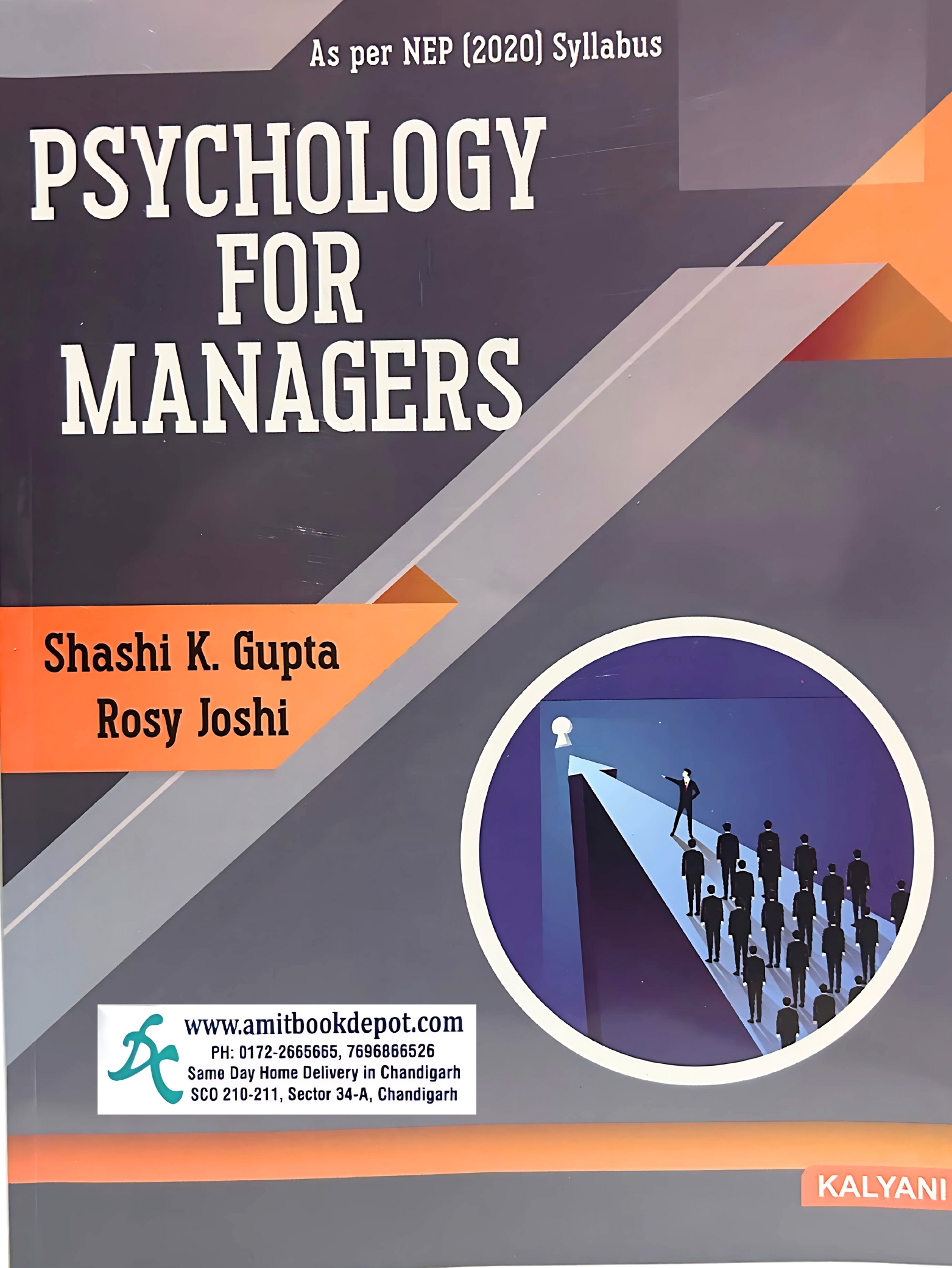
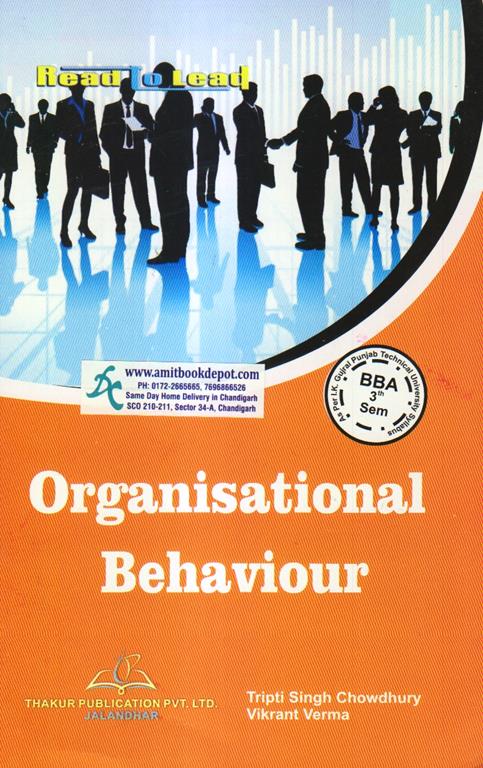
Yes, this book is meticulously crafted to cover the entire syllabus for the "Psychology for Managers" course (Code: NBBA 301) as prescribed by Panjab University under the National Education Policy (NEP) framework.
Absolutely. The book is divided into two clear units: Unit I covers Foundations of Individual Behavior (Personality, Perception, etc.), and Unit II covers Driving Team Dynamics and Leadership (Motivation, Leadership, Conflict Management), as per the syllabus structure.
Yes, the book provides clear, concise, and well-structured explanations of key motivation theories, including those by Maslow, Herzberg, and the Expectancy Theory, linking them to practical managerial scenarios.
Yes, the chapter on Transactional Analysis not only explains the meaning but also provides specific applications and examples within organizational settings to enhance interpersonal communication and behavior.
While the book provides the foundational theory required for case studies and projects, it is primarily a textbook. It equips students with the concepts needed to successfully engage in the group discussions, case studies, and practical projects recommended in the course pedagogy.
Yes, the book includes a dedicated section on the Nature and Process of Perception, which explicitly covers various Perceptual Errors and Distortions that managers must be aware of.
Yes, the Conflict Management chapter goes beyond listing types and causes; it provides actionable conflict resolution techniques that can be applied in real managerial situations.
Yes, students from other universities with similar syllabi for Organizational Behavior or Managerial Psychology will find this book highly relevant and beneficial, though they should cross-verify their specific topic coverage.
Yes, the book explains the components and sources of Attitudes and Values and connects them to their impact on shaping employee behavior and the overall organizational culture.
Yes, one of the initial chapters is dedicated to "Individual Behavior," where it elaborates on the various internal and external factors that influence how an individual behaves in a workplace.
No Description Added
Yes, this book is meticulously crafted to cover the entire syllabus for the "Psychology for Managers" course (Code: NBBA 301) as prescribed by Panjab University under the National Education Policy (NEP) framework.
Absolutely. The book is divided into two clear units: Unit I covers Foundations of Individual Behavior (Personality, Perception, etc.), and Unit II covers Driving Team Dynamics and Leadership (Motivation, Leadership, Conflict Management), as per the syllabus structure.
Yes, the book provides clear, concise, and well-structured explanations of key motivation theories, including those by Maslow, Herzberg, and the Expectancy Theory, linking them to practical managerial scenarios.
Yes, the chapter on Transactional Analysis not only explains the meaning but also provides specific applications and examples within organizational settings to enhance interpersonal communication and behavior.
While the book provides the foundational theory required for case studies and projects, it is primarily a textbook. It equips students with the concepts needed to successfully engage in the group discussions, case studies, and practical projects recommended in the course pedagogy.
Yes, the book includes a dedicated section on the Nature and Process of Perception, which explicitly covers various Perceptual Errors and Distortions that managers must be aware of.
Yes, the Conflict Management chapter goes beyond listing types and causes; it provides actionable conflict resolution techniques that can be applied in real managerial situations.
Yes, students from other universities with similar syllabi for Organizational Behavior or Managerial Psychology will find this book highly relevant and beneficial, though they should cross-verify their specific topic coverage.
Yes, the book explains the components and sources of Attitudes and Values and connects them to their impact on shaping employee behavior and the overall organizational culture.
Yes, one of the initial chapters is dedicated to "Individual Behavior," where it elaborates on the various internal and external factors that influence how an individual behaves in a workplace.