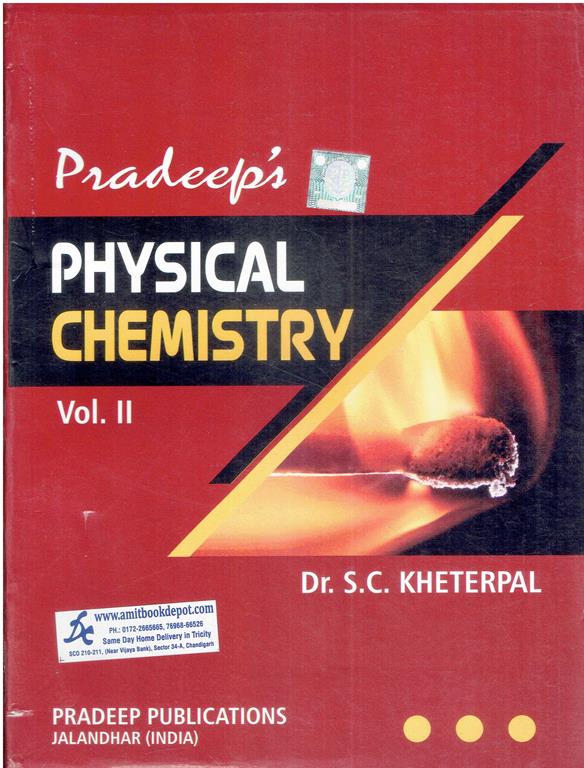
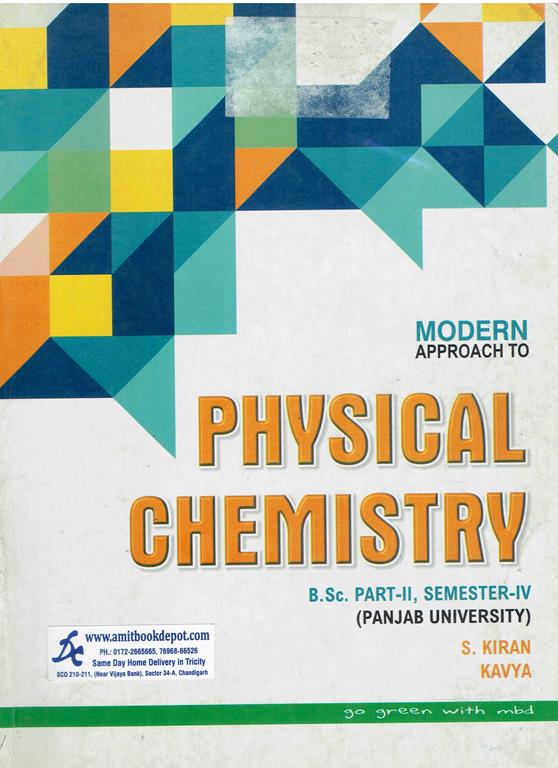
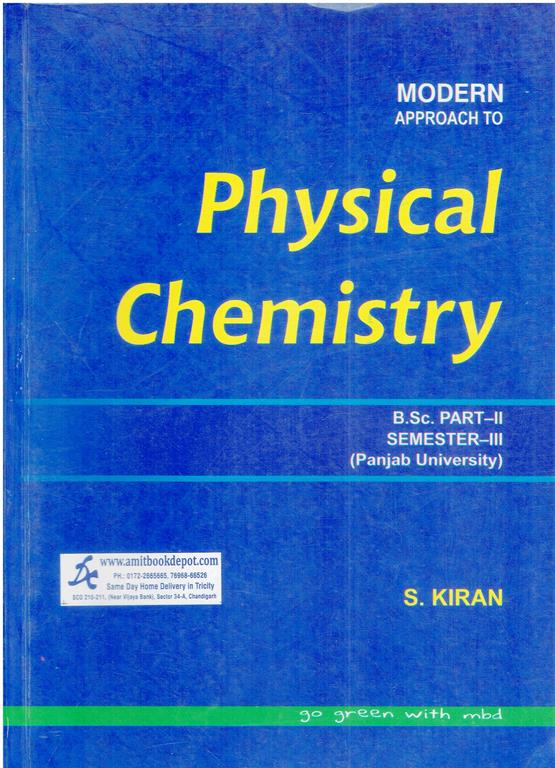
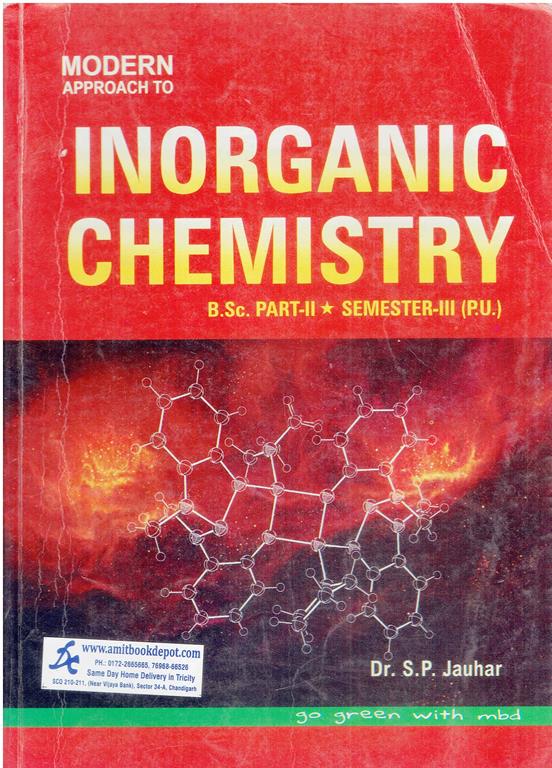
Yes, this book is specifically designed and updated to comprehensively cover the B.Sc. Second Year (3rd and 4th Semester) Physical Chemistry syllabus of Panjab University, Chandigarh, as well as Punjabi University and other major Indian universities.
This volume covers advanced topics including Thermodynamics (I, II, & III), Partial Molar Quantities, Fugacity & Activity, Chemical Equilibrium, Liquid State & Liquid Crystals, Liquid-Liquid Mixtures, Phase Equilibria, Distribution Law, and Electrochemistry (Parts I & II).
Yes, the book integrates numerical applications within the chapters and provides a wide range of practice questions. Each chapter concludes with a detailed question bank, including long and short answer types, to reinforce problem-solving skills.
Absolutely. The Phase Equilibria chapter provides a detailed derivation and explanation of the Gibbs Phase Rule, followed by its application to numerous one-component (e.g., Water, Sulphur) and two-component (e.g., Bi-Cd, Pb-Ag) systems with phase diagrams.
Yes, Chapter 7 on the Liquid State includes a dedicated section on Liquid Crystals, covering their types, properties, and applications such as Thermography and Liquid Crystal Displays (LCDs).
It offers extensive coverage across two dedicated chapters (11 & 12). It starts with conductance, Kohlrausch's Law, and transport numbers, and advances to electrode potentials, Nernst equation, EMF, concentration cells, and applications like pH calculation and corrosion.
Yes, beyond theoretical laws, the book links concepts to practical applications, such as the Joule-Thomson effect, calculation of reaction heats (Kirchoff's equation), spontaneity criteria, and industrial processes like Pattinson's desilverization of lead explained in Phase Rule.
While primarily tailored for the B.Sc. university syllabus, the book's clear foundational explanations and in-depth coverage of core physical chemistry topics can serve as a valuable initial resource for students preparing for higher-level competitive exams.
Yes, it comprehensively covers both. Chapter 11 details conductometric measurements and titrations, while Chapter 12 covers EMF measurement, its relation to thermodynamic functions, and various applications of EMF.
Yes, Chapter 6 on Chemical Equilibrium provides a thermodynamic derivation of the equilibrium law, connects equilibrium constant with standard free energy change (Van't Hoff Isotherm), and explains the temperature dependence using the Van't Hoff Isochore.
No Description Added
Yes, this book is specifically designed and updated to comprehensively cover the B.Sc. Second Year (3rd and 4th Semester) Physical Chemistry syllabus of Panjab University, Chandigarh, as well as Punjabi University and other major Indian universities.
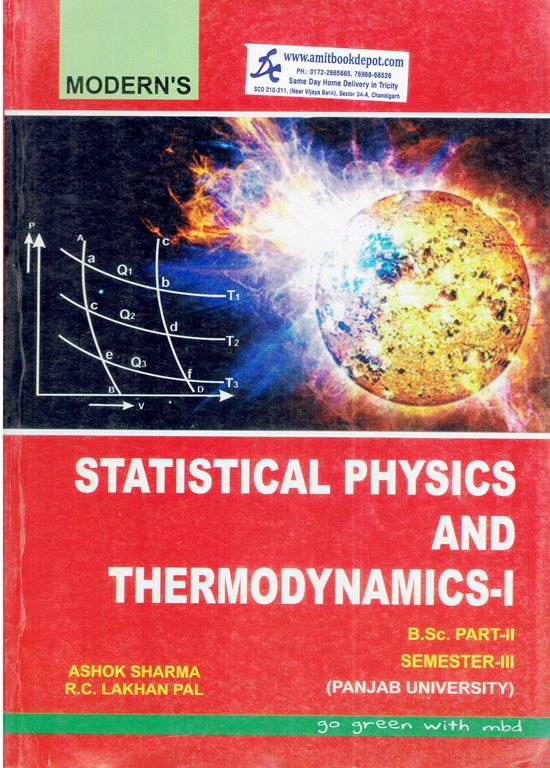
This volume covers advanced topics including Thermodynamics (I, II, & III), Partial Molar Quantities, Fugacity & Activity, Chemical Equilibrium, Liquid State & Liquid Crystals, Liquid-Liquid Mixtures, Phase Equilibria, Distribution Law, and Electrochemistry (Parts I & II).
Yes, the book integrates numerical applications within the chapters and provides a wide range of practice questions. Each chapter concludes with a detailed question bank, including long and short answer types, to reinforce problem-solving skills.
Absolutely. The Phase Equilibria chapter provides a detailed derivation and explanation of the Gibbs Phase Rule, followed by its application to numerous one-component (e.g., Water, Sulphur) and two-component (e.g., Bi-Cd, Pb-Ag) systems with phase diagrams.
Yes, Chapter 7 on the Liquid State includes a dedicated section on Liquid Crystals, covering their types, properties, and applications such as Thermography and Liquid Crystal Displays (LCDs).
It offers extensive coverage across two dedicated chapters (11 & 12). It starts with conductance, Kohlrausch's Law, and transport numbers, and advances to electrode potentials, Nernst equation, EMF, concentration cells, and applications like pH calculation and corrosion.
Yes, beyond theoretical laws, the book links concepts to practical applications, such as the Joule-Thomson effect, calculation of reaction heats (Kirchoff's equation), spontaneity criteria, and industrial processes like Pattinson's desilverization of lead explained in Phase Rule.
While primarily tailored for the B.Sc. university syllabus, the book's clear foundational explanations and in-depth coverage of core physical chemistry topics can serve as a valuable initial resource for students preparing for higher-level competitive exams.
Yes, it comprehensively covers both. Chapter 11 details conductometric measurements and titrations, while Chapter 12 covers EMF measurement, its relation to thermodynamic functions, and various applications of EMF.
Yes, Chapter 6 on Chemical Equilibrium provides a thermodynamic derivation of the equilibrium law, connects equilibrium constant with standard free energy change (Van't Hoff Isotherm), and explains the temperature dependence using the Van't Hoff Isochore.