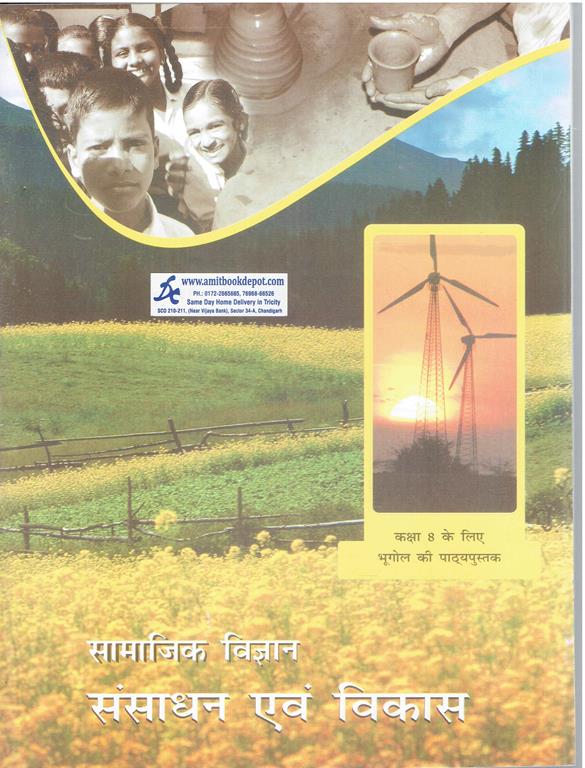
NCERT Sansadhan Aur Vikas for Class 8th (Hindi Edition)
NCERT Sansadhan Aur Vikas for Class 8th (Hindi Edition)
by Madhurima
₹60₹60.00(-/
off)
Rating & Reviews
23 Customer Review
NCERT Social Science Resources and Development is an insightful textbook designed for 8th-grade students, published by NCERT. This engaging resource explores the essential concepts of geography, focusing on the importance and management of various resources. Students will delve into the significance of natural resources, including land, soil, water, and biodiversity, as well as their impact on agriculture and industry. The book emphasizes sustainable development and the responsible use of resources, equipping young learners with the knowledge to understand global challenges.
NCERT Social Science Resources and Development, a meticulously crafted textbook specifically designed for 8th-grade students, published by NCERT. This essential resource serves as a gateway for young learners to explore the diverse elements that constitute our environment, with a focus on geography and the sustainable management of resources.
In this engaging curriculum, students will embark on a journey through various types of resources that are vital for the growth and development of our society. The textbook begins with a comprehensive overview of what constitutes a resource—both natural and human-made—and delves into the intricate relationships between these resources and our daily lives. Its relatable language and clear explanations make complex concepts accessible, fostering a solid understanding of the subject matter.
As students explore the significant interactions between land, water, and natural vegetation, they learn about the intricate ecosystems that sustain life. The book addresses the importance of preserving our natural heritage, including wildlife, and emphasizes the role of sustainable practices in resource conservation. The curriculum seamlessly integrates contemporary environmental issues, encouraging students to think critically about the challenges facing our planet today.
The section on agriculture highlights the essential role of farming in economic development, examining various agricultural practices and their contributions to food security. By understanding the dynamics of agriculture, students will appreciate how human interaction with natural resources helps shape our economy and livelihoods.
The textbook also navigates the world of industries, exposing students to various sectors that rely on the efficient use of natural resources. This section fosters an understanding of industrial processes and the impact of resource exploitation on both communities and ecosystems. By examining real-world case studies, students will grasp the importance of balancing economic growth with environmental sustainability.
Moreover, "NCERT Social Science Resources and Development" delves into human resources, emphasizing the role of people in the development and management of resources. It explores how education, skills, and demographics contribute to societal progress and the responsible use of natural resources. This section inspires students to recognize their own potential in making informed choices that can lead to a sustainable future.
Overall, this textbook is not merely a collection of facts and figures; it is an invitation for young scholars to explore their world, challenge assumptions, and participate in meaningful discussions about resource management and sustainability. Perfect for classroom use or independent study, "NCERT Social Science Resources and Development" is an invaluable companion that equips students with the knowledge and critical thinking skills necessary to navigate the complexities of our environment and take on the challenges of tomorrow.
This book is about exploring the environment, with a focus on geography and how we use and manage resources. It helps students understand how resources affect our lives and how we can use them sustainably.
Q2
What topics are covered in this book?
A2
The book covers resources, land, water, natural vegetation, wildlife, agriculture, industries, and human resources.
Q3
Is this book only about geography?
A3
While the focus is on geography, it also touches on economics (agriculture, industries) and civics (human resources, sustainability), providing a holistic understanding of the environment.
Q4
Does the book include case studies?
A4
Yes, the book includes real-world case studies to help students grasp the importance of balancing economic growth with environmental sustainability.
Q5
Can I use this book for self-study?
A5
Yes, the book is designed for both classroom use and independent study.
Q6
How does this book connect past events to present-day issues?
A6
The book seamlessly integrates contemporary environmental issues, encouraging students to think critically about the challenges facing our planet today.
Q7
Does this book encourage critical thinking by presenting different perspectives?
A7
The book's comprehensive approach allows for critical analysis of the economic, social, and environmental effects of human actions.
Q8
How does this book encourage real-world application of the concepts?
A8
The case studies, practical examples, and focus on environmental issues all aim to link theoretical knowledge to real-world situations and problems.
Q9
What types of resources are covered in the textbook?
A9
The textbook covers various types of resources, including natural resources (land, soil, water, natural vegetation, and wildlife), human resources, and man-made resources.
Q10
How does the textbook approach the concept of resource conservation?
A10
The textbook emphasizes the importance of resource conservation and sustainable development, highlighting the need to balance human needs with environmental protection.
0.00
0 Overall Rating
5
0
4
0
3
0
2
0
1
0
Try this product & share your review &
thoughts
Chapter 1
Resources
Chapter 2
Land, Soil, Water, Natural Vegetation
and Wildlife Resources
Chapter 3
Agriculture
Chapter 4
Industries
Chapter 5
Human Resources
CBSE SYLLABUS: NCERT Social Science Resources and Development Textbook in Geography for Class 8
Chapter 1: Resources:
Defining different types of resources (natural, human, man-made), their distribution, and the importance of resource conservation.
Chapter 2: Land, Soil, Water, Natural Vegetation, and Wildlife Resources:
Studying various landforms, soil types, water availability, different vegetation zones, and the need for wildlife conservation.
Chapter 3: Mineral and Power Resources:
Exploring various minerals, their extraction, and the significance of renewable and non-renewable energy sources like coal, petroleum, and hydropower.
Chapter 4: Agriculture:
Understanding different types of farming practices, major crops, and challenges faced in agricultural development.
Chapter 5: Industries:
Classification of industries based on raw materials, size, and ownership, along with their impact on the economy.
Chapter 6: Human Resources:
Analyzing the distribution of population, skilled workforce, and their role in socio-economic development.
NCERT Social Science Resources and Development, a meticulously crafted textbook specifically designed for 8th-grade students, published by NCERT. This essential resource serves as a gateway for young learners to explore the diverse elements that constitute our environment, with a focus on geography and the sustainable management of resources.
In this engaging curriculum, students will embark on a journey through various types of resources that are vital for the growth and development of our society. The textbook begins with a comprehensive overview of what constitutes a resource—both natural and human-made—and delves into the intricate relationships between these resources and our daily lives. Its relatable language and clear explanations make complex concepts accessible, fostering a solid understanding of the subject matter.
As students explore the significant interactions between land, water, and natural vegetation, they learn about the intricate ecosystems that sustain life. The book addresses the importance of preserving our natural heritage, including wildlife, and emphasizes the role of sustainable practices in resource conservation. The curriculum seamlessly integrates contemporary environmental issues, encouraging students to think critically about the challenges facing our planet today.
The section on agriculture highlights the essential role of farming in economic development, examining various agricultural practices and their contributions to food security. By understanding the dynamics of agriculture, students will appreciate how human interaction with natural resources helps shape our economy and livelihoods.
The textbook also navigates the world of industries, exposing students to various sectors that rely on the efficient use of natural resources. This section fosters an understanding of industrial processes and the impact of resource exploitation on both communities and ecosystems. By examining real-world case studies, students will grasp the importance of balancing economic growth with environmental sustainability.
Moreover, "NCERT Social Science Resources and Development" delves into human resources, emphasizing the role of people in the development and management of resources. It explores how education, skills, and demographics contribute to societal progress and the responsible use of natural resources. This section inspires students to recognize their own potential in making informed choices that can lead to a sustainable future.
Overall, this textbook is not merely a collection of facts and figures; it is an invitation for young scholars to explore their world, challenge assumptions, and participate in meaningful discussions about resource management and sustainability. Perfect for classroom use or independent study, "NCERT Social Science Resources and Development" is an invaluable companion that equips students with the knowledge and critical thinking skills necessary to navigate the complexities of our environment and take on the challenges of tomorrow.
This book is about exploring the environment, with a focus on geography and how we use and manage resources. It helps students understand how resources affect our lives and how we can use them sustainably.
Q2
What topics are covered in this book?
A2
The book covers resources, land, water, natural vegetation, wildlife, agriculture, industries, and human resources.
Q3
Is this book only about geography?
A3
While the focus is on geography, it also touches on economics (agriculture, industries) and civics (human resources, sustainability), providing a holistic understanding of the environment.
Q4
Does the book include case studies?
A4
Yes, the book includes real-world case studies to help students grasp the importance of balancing economic growth with environmental sustainability.
Q5
Can I use this book for self-study?
A5
Yes, the book is designed for both classroom use and independent study.
Q6
How does this book connect past events to present-day issues?
A6
The book seamlessly integrates contemporary environmental issues, encouraging students to think critically about the challenges facing our planet today.
Q7
Does this book encourage critical thinking by presenting different perspectives?
A7
The book's comprehensive approach allows for critical analysis of the economic, social, and environmental effects of human actions.
Q8
How does this book encourage real-world application of the concepts?
A8
The case studies, practical examples, and focus on environmental issues all aim to link theoretical knowledge to real-world situations and problems.
Q9
What types of resources are covered in the textbook?
A9
The textbook covers various types of resources, including natural resources (land, soil, water, natural vegetation, and wildlife), human resources, and man-made resources.
Q10
How does the textbook approach the concept of resource conservation?
A10
The textbook emphasizes the importance of resource conservation and sustainable development, highlighting the need to balance human needs with environmental protection.
CBSE SYLLABUS: NCERT Social Science Resources and Development Textbook in Geography for Class 8
Chapter 1: Resources:
Defining different types of resources (natural, human, man-made), their distribution, and the importance of resource conservation.
Chapter 2: Land, Soil, Water, Natural Vegetation, and Wildlife Resources:
Studying various landforms, soil types, water availability, different vegetation zones, and the need for wildlife conservation.
Chapter 3: Mineral and Power Resources:
Exploring various minerals, their extraction, and the significance of renewable and non-renewable energy sources like coal, petroleum, and hydropower.
Chapter 4: Agriculture:
Understanding different types of farming practices, major crops, and challenges faced in agricultural development.
Chapter 5: Industries:
Classification of industries based on raw materials, size, and ownership, along with their impact on the economy.
Chapter 6: Human Resources:
Analyzing the distribution of population, skilled workforce, and their role in socio-economic development.
0.00
0 Overall Rating
5
0
4
0
3
0
2
0
1
0
Try this product & share your review &
thoughts
Top Trending Product
Related
Product
Related Product
Related Blog Posts
Latest Blogs
Latest Blogs
Classic Literature Reimagined: Discuss modern twists on classic novels.
Lorem ipsum dolor sit amet, consectetur adipiscing elit, sed
do
eiusmod tempor incididunt ut labore et dolore magna aliqua. Ut enim ad minim
veniam, quis nostrud exercitation ullamco Lorem ipsum dolor sit amet,
consectetur adipiscing elit, sed do eiusmod tempor incididunt ut labore et
dolore magna aliqua. Utenim ad minim veniam, quis nostrud exercitation
ullamco
Lorem ipsum dolor sit amet, consecte...
Classic Literature Reimagined: Discuss modern twists on classic novels.
Lorem ipsum dolor sit amet, consectetur adipiscing elit, sed
do
eiusmod tempor incididunt ut labore et dolore magna aliqua. Ut enim ad minim
veniam, quis nostrud exercitation ullamco Lorem ipsum dolor sit amet,
consectetur adipiscing elit, sed do eiusmod tempor incididunt ut labore et
dolore magna aliqua. Utenim ad minim veniam, quis nostrud exercitation
ullamco
Lorem ipsum dolor sit amet, consecte...
Classic Literature Reimagined: Discuss modern twists on classic novels.
Lorem ipsum dolor sit amet, consectetur adipiscing elit, sed
do
eiusmod tempor incididunt ut labore et dolore magna aliqua. Ut enim ad minim
veniam, quis nostrud exercitation ullamco Lorem ipsum dolor sit amet,
consectetur adipiscing elit, sed do eiusmod tempor incididunt ut labore et
dolore magna aliqua. Utenim ad minim veniam, quis nostrud exercitation
ullamco
Lorem ipsum dolor sit amet, consecte...




.jpg)