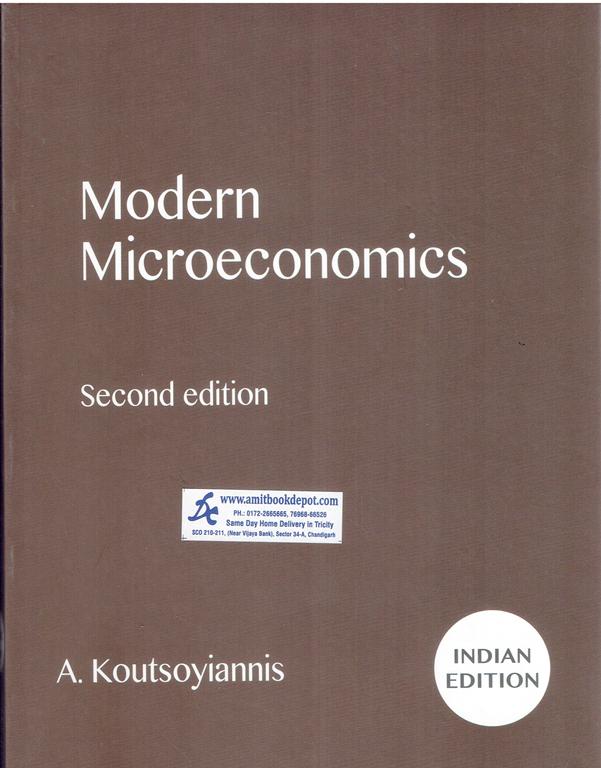
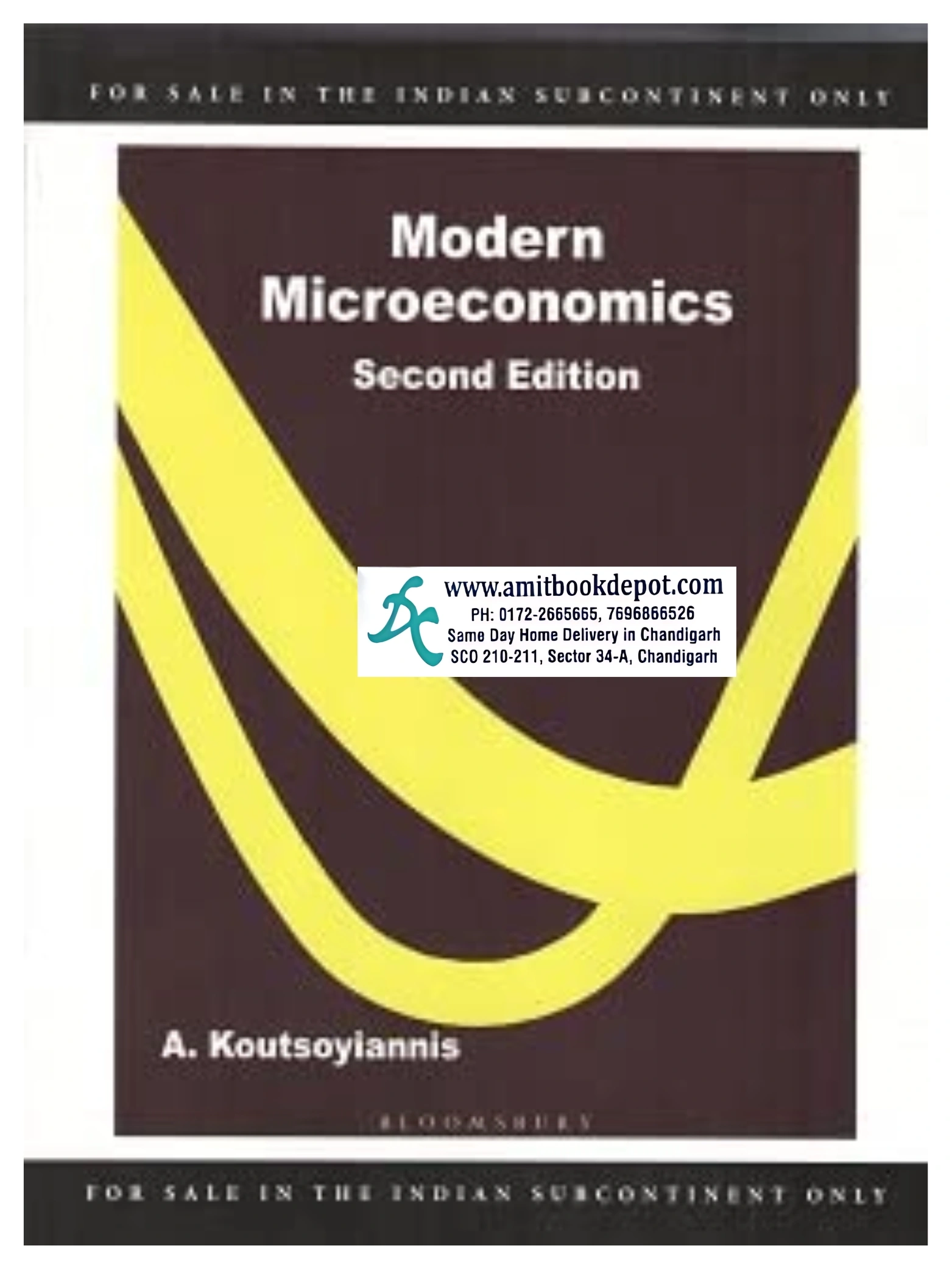
Yes, this second edition is explicitly designed to cover the microeconomics syllabus for MA students across all semesters, providing a comprehensive progression from foundational to advanced topics.
It offers exceptionally detailed coverage, with separate chapters on non-collusive and collusive oligopoly, and includes classical models (Cournot, Stackelberg) as well as discussions on cartels and price leadership models.
Yes, it dedicates an entire section (Section E) to managerial theories, including detailed chapters on Baumol's sales revenue maximization, Marris's growth model, and Williamson's managerial discretion model.
Yes, Part Two concludes with dedicated chapters on the Theory of Games (including zero-sum and non-zero-sum games) and Linear Programming (including the simplex method and duality), providing essential analytical tools.
Section D covers entry-preventing pricing in depth, starting with Bain's early model and barriers to entry, followed by recent developments from Sylos-Labini, Modigliani, and others.
Yes, Chapter 11 is a dedicated critique of neoclassical theory covering the Hall and Hitch report on 'full-cost' pricing and the ensuing marginalist debate.
Part Three provides thorough chapters on both. General Equilibrium covers the Walrasian system and a detailed 2x2x2 model. Welfare Economics examines various social welfare criteria and their maximization.
Yes, it concludes with a Select Bibliography and a detailed Subject Index, making it a valuable reference tool for academic research and essay writing.
Absolutely. Its depth on core theories, clear exposition of model assumptions and critiques, and coverage of diverse theoretical approaches make it an excellent resource for solidifying advanced microeconomic concepts required for PhD entrance exams and preliminary research work.
Yes, the book frequently references empirical evidence, such as in the chapter on the shape of costs (using statistical studies, survivor technique) and in evaluating various theories like sales maximization.
No Description Added
Yes, this second edition is explicitly designed to cover the microeconomics syllabus for MA students across all semesters, providing a comprehensive progression from foundational to advanced topics.
It offers exceptionally detailed coverage, with separate chapters on non-collusive and collusive oligopoly, and includes classical models (Cournot, Stackelberg) as well as discussions on cartels and price leadership models.
Yes, it dedicates an entire section (Section E) to managerial theories, including detailed chapters on Baumol's sales revenue maximization, Marris's growth model, and Williamson's managerial discretion model.
Yes, Part Two concludes with dedicated chapters on the Theory of Games (including zero-sum and non-zero-sum games) and Linear Programming (including the simplex method and duality), providing essential analytical tools.
Section D covers entry-preventing pricing in depth, starting with Bain's early model and barriers to entry, followed by recent developments from Sylos-Labini, Modigliani, and others.
Yes, Chapter 11 is a dedicated critique of neoclassical theory covering the Hall and Hitch report on 'full-cost' pricing and the ensuing marginalist debate.
Part Three provides thorough chapters on both. General Equilibrium covers the Walrasian system and a detailed 2x2x2 model. Welfare Economics examines various social welfare criteria and their maximization.
Yes, it concludes with a Select Bibliography and a detailed Subject Index, making it a valuable reference tool for academic research and essay writing.
Absolutely. Its depth on core theories, clear exposition of model assumptions and critiques, and coverage of diverse theoretical approaches make it an excellent resource for solidifying advanced microeconomic concepts required for PhD entrance exams and preliminary research work.
Yes, the book frequently references empirical evidence, such as in the chapter on the shape of costs (using statistical studies, survivor technique) and in evaluating various theories like sales maximization.