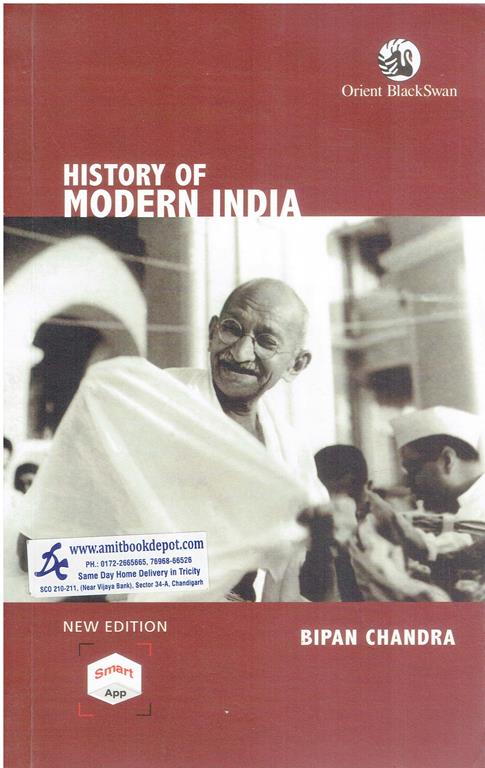
Yes, it is considered one of the core and most comprehensive textbooks for the Modern History section. However, for the Mains examination, aspirants are advised to supplement it with additional reading on specific themes and answer writing practice.
Yes, the book systematically covers the period from the decline of the Mughal Empire after Aurangzeb's death, through the entire period of British rule, up to India's Independence in 1947.
Yes, the book is written in clear, concise, and accessible prose, making it suitable for beginners. It builds concepts logically, making it an ideal starting point.
While it covers the broader participation of masses and leaders, for a detailed, dedicated study on women's contributions, supplementary books or resources focusing on gender history are recommended.
Yes, the chapters on economic policies and impact are written with clarity, explaining complex concepts like deindustrialization, drain of wealth, and land revenue systems in an understandable way.
Yes, there is a dedicated chapter that analyzes the Revolt of 1857, examining its causes, nature, leadership, and reasons for its failure, beyond just describing the events.
Absolutely. It forms an essential base for the Modern India portion of the History Optional syllabus. Optional candidates will need to deepen their study with more specialized texts, but this is a critical starting point.
Gandhi's role is extensively covered across multiple chapters detailing the Struggle for Swaraj (1919-27 and 1927-47), analyzing his methods, ideologies, and impact on the movement.
The Orient Black Swan edition is the original and standard publisher. It is known for its high-quality printing, clear typesetting, and durability, making it the preferred choice for serious students.
The book itself provides a "Books for Further Reading" list. Commonly recommended next steps include Sumit Sarkar's Modern India, Sekhar Bandyopadhyay's From Plassey to Partition, and specific biographies of key leaders.
No Description Added
Yes, it is considered one of the core and most comprehensive textbooks for the Modern History section. However, for the Mains examination, aspirants are advised to supplement it with additional reading on specific themes and answer writing practice.
Yes, the book systematically covers the period from the decline of the Mughal Empire after Aurangzeb's death, through the entire period of British rule, up to India's Independence in 1947.
Yes, the book is written in clear, concise, and accessible prose, making it suitable for beginners. It builds concepts logically, making it an ideal starting point.
While it covers the broader participation of masses and leaders, for a detailed, dedicated study on women's contributions, supplementary books or resources focusing on gender history are recommended.
Yes, the chapters on economic policies and impact are written with clarity, explaining complex concepts like deindustrialization, drain of wealth, and land revenue systems in an understandable way.
Yes, there is a dedicated chapter that analyzes the Revolt of 1857, examining its causes, nature, leadership, and reasons for its failure, beyond just describing the events.
Absolutely. It forms an essential base for the Modern India portion of the History Optional syllabus. Optional candidates will need to deepen their study with more specialized texts, but this is a critical starting point.
Gandhi's role is extensively covered across multiple chapters detailing the Struggle for Swaraj (1919-27 and 1927-47), analyzing his methods, ideologies, and impact on the movement.
The Orient Black Swan edition is the original and standard publisher. It is known for its high-quality printing, clear typesetting, and durability, making it the preferred choice for serious students.
The book itself provides a "Books for Further Reading" list. Commonly recommended next steps include Sumit Sarkar's Modern India, Sekhar Bandyopadhyay's From Plassey to Partition, and specific biographies of key leaders.