Categories
College Bookssss >
BA PU Chandigarh
BSC PU Chandigarh
MSC PU Chandigarh
BBA PU Chandigarh
MA PU Chandigarh
Medical Books
Engineering Books
Management Books
PGDCA Books
BCOM PU Chandigarh
MCOM PU Chandigarh
BCA PU Chandigarh
MCA PU Chandigarh
animate-books

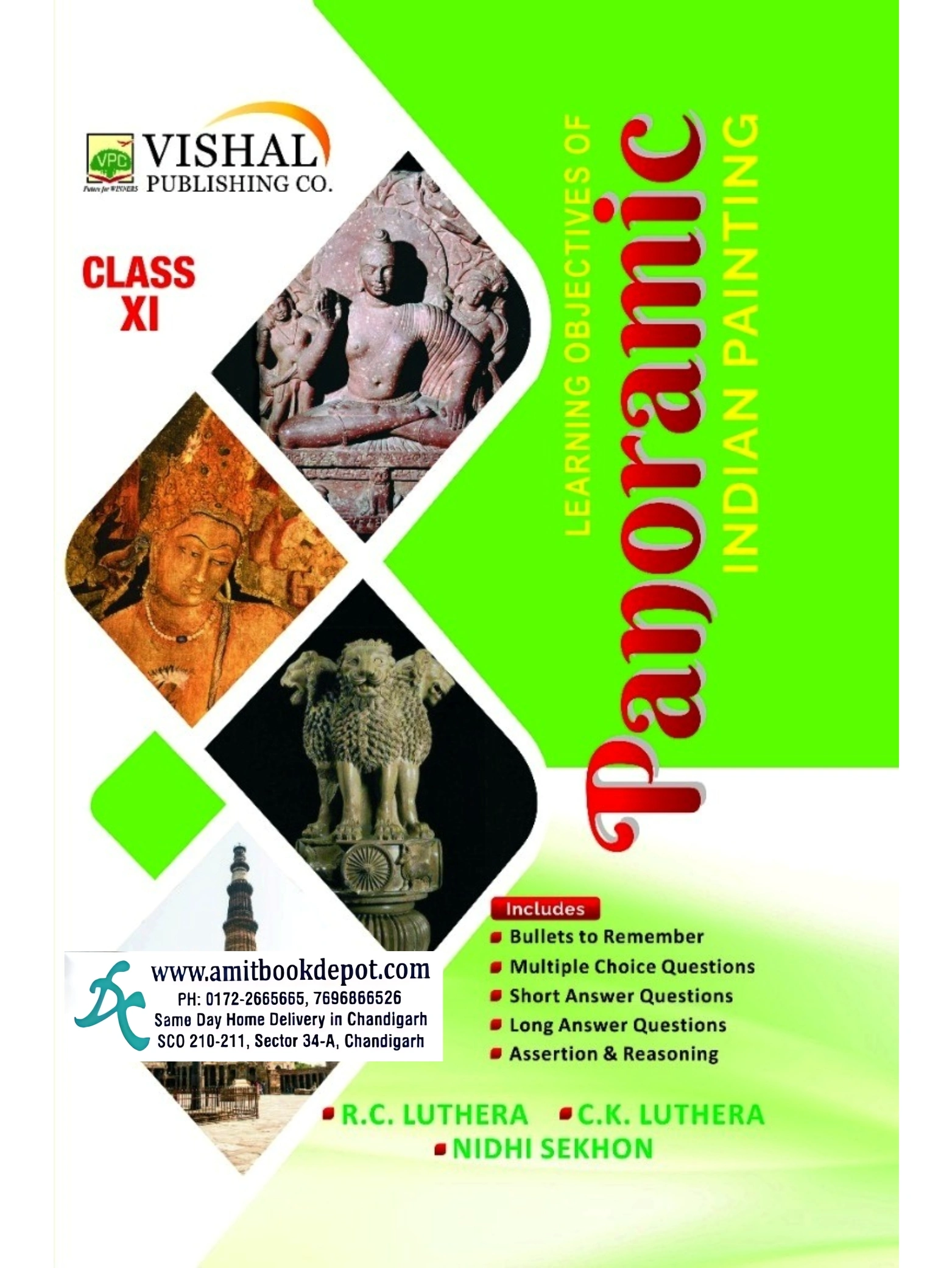
Learning Objectives of Panoramic Indian Painting for Class 11th (ENGLISH)

by Madhurima
₹180 ₹200.00(-/ off)

Rating & Reviews

23 Customer Review

Learning Objectives of Panoramic Indian Painting for Class 11th (ENGLISH) by R. C. Luthera, C. K. Luthera, and Nidhi Sekhon, published by Vishal Publishing Co., is a complete guide to the Class 11 Fine Arts syllabus. The book covers prehistoric rock paintings, Indus Valley art, Buddhist, Jain, and Hindu art, including the art of Ajanta, temple sculptures, Indian bronzes, and Indo-Islamic architecture. It introduces students to the elements and principles of art before progressing through the Mauryan, Shunga, Kushana, and Gupta periods. Key exam-oriented features include “Bullets to Remember", a question bank, and model question papers. Designed in clear English, this book helps students master both theory and visual analysis for high-scoring results. Perfect for CBSE and state board students, it replaces multiple reference books with its focused, panoramic coverage of India’s artistic heritage.

Have Doubts Regarding This Product ? Ask Your Question

  • Q1
    What are the two main sites of Prehistoric Rock Paintings in India?
    A1

    Bhimbetka (Madhya Pradesh) and Kupgallu (Karnataka) are the primary sites, with Bhimbetka being a UNESCO World Heritage site.

  • Q2
    Name the dancing girl sculpture from the Indus Valley Civilisation.
    A2

    The bronze “Dancing Girl” from Mohenjo-Daro, circa 2500 BCE, showcases lost-wax casting and naturalistic posture.

  • Q3
    What is the primary theme of Ajanta’s mural paintings?
    A3

    Jataka tales depicting previous lives of the Buddha, along with scenes of courtly and daily life.

  • Q4
    Name two important stupas from the Shunga period.
    A4

    Bharhut Stupa and the toranas of Sanchi Stupa (Shunga period additions) are key examples.

  • Q5
    Which Gupta period painting site is known as the “Ajanta of the East”?
    A5

    Bagh Caves in Madhya Pradesh, though damaged, show Gupta mural style similar to Ajanta.

  • Q6
    Name the first known Indian king to issue gold coins with royal portraits.
    A6

    Kanishka of the Kushana dynasty issued gold coins depicting himself and various deities.

  • Q7
    What is the main feature of Indo-Islamic architecture?
    A7

    Fusion of Islamic arches, domes, and calligraphy with Indian trabeate construction and decorative motifs.

  • Q8
    Which temple sculpture style is known for the “Bodhisattva Padmapani” from Ajanta?
    A8

    It is a Gupta period fresco, not a temple sculpture, showing idealised spiritual beauty and line work.

  • Q9
    What is the difference between a rock-cut cave and a structural temple?
    A9

    Rock-cut caves are carved from living rock; structural temples use separate building blocks like stone or brick.

  • Q10
    Which Mughal monument is an example of Indo-Islamic architecture from the syllabus?
    A10

    Although Mughal is later, Qutub Minar (13th century) is a key Indo-Islamic example for Class 11.

0.00

0 Overall Rating
  • 5
    0
  • 4
    0
  • 3
    0
  • 2
    0
  • 1
    0

Try this product & share your review & thoughts

Syllabus
Introduction: The Elements and Principles of Art.

UNIT I – Prehistoric Rock Paintings and Art of the Indus Valley

1. Pre-historic Rock Paintings
2. Art of Indus Valley Civilisation

UNIT II - Buddhist, Jain and Hindu Art

3. General Introduction of Art during Mauryan, Shunga, Kushana and Gupta Period
4. Art of Ajanta

UNIT III – Temple Sculptures, Bronzes and Indo-Islamic Architecture

5. Indian Temple Sculptures
6. Indian Bronzes
7. Indo-Islamic Architecture

- Bullets to Remember
- Question Bank
- Model Question Papers

Learning Objectives of Panoramic Indian Painting for Class 11th (ENGLISH) is a meticulously crafted book and guide designed to fulfil the academic requirements of senior secondary students. Published by Vishal Publishing Co. and authored by the experienced trio R. C. Luthera, C. K. Luthera, and Nidhi Sekhon, this book systematically covers the entire syllabus of Indian Painting for Grade 11. The content focuses on building a strong foundation in the elements and principles of art, followed by a chronological study of India’s rich visual heritage from prehistoric times to the Indo-Islamic era.

Key Features

1. Syllabus-Aligned Content: Strictly adheres to the latest Class 11 curriculum, ensuring 100% coverage of all units, including Prehistoric Rock Paintings, Indus Valley Art, Buddhist/Jain/Hindu Art, Ajanta, Temple Sculptures, Bronzes, and Indo-Islamic Architecture.
2. Panoramic Approach: The title “Panoramic” reflects the book’s wide-angle view of Indian art history, connecting stylistic developments across periods—Mauryan, Shunga, Kushana, and Gupta.
3. Examination Focus: Includes dedicated sections such as “Bullets to Remember” for quick revision, a comprehensive question bank, and model question papers to simulate real exam conditions.
4. High-Value Visual Descriptions: Provides detailed analytical frameworks for studying Indian temple sculptures, Indian bronzes (e.g., Chola Nataraja), and mural traditions like the Art of Ajanta.
5. Student-Friendly Language: Written in clear, concise English suitable for Class 11 learners, avoiding unnecessary academic jargon while maintaining subject rigour.

Unit-wise Breakdown

1. Introduction: Covers the fundamental elements and principles of art (line, shape, colour, texture, balance, rhythm, etc.) as a prerequisite for analysis.
2. Unit I – Prehistoric Rock Paintings and Art of the Indus Valley: Explores Bhimbetka cave paintings, seal carvings, the dancing girl, and the urban aesthetics of the Indus Valley Civilisation.
3. Unit II – Buddhist, Jain and Hindu Art: Offers a general introduction to art during the Mauryan, Shunga, Kushana and Gupta periods, followed by a deep dive into the art of Ajanta (murals, Jataka tales, and architecture).
4. Unit III – Temple Sculptures, Bronzes and Indo-Islamic Architecture: Discusses stylistic evolution of temple sculptures, lost-wax bronze casting techniques, and major Indo-Islamic architectural monuments.

Why Choose This Book?

For Class 11 students aiming to excel in fine arts, this book functions both as a primary book and a last-minute revision guide. The inclusion of model question papers and a question bank reduces the need for multiple reference books. The “Bullets to Remember” format is ideal for quickly retaining factual information required for objective and short-answer questions. Vishal Publishing Co. is known for quality educational content, and this title lives up to that reputation by balancing historical accuracy with pedagogical effectiveness.

Production Details

- Page Count: Approx. 180–220 pages (typical for this series)
- Dimensions: 24 cm x 18 cm x 1 cm (standard school book size)
- Print Quality: Black-and-white interior with high-contrast grayscale images of paintings and sculptures
- Cover Type: 4-colour glossy paperback cover
- Paper Type: Maplitho paper for durability and reduced weight

Ideal for CBSE, ICSE, and State Board students in Class 11; aspirants of NID and NIFT foundation courses; and any beginner learner of Indian art history.

Syllabus
Introduction: The Elements and Principles of Art.

UNIT I – Prehistoric Rock Paintings and Art of the Indus Valley

1. Pre-historic Rock Paintings
2. Art of Indus Valley Civilisation

UNIT II - Buddhist, Jain and Hindu Art

3. General Introduction of Art during Mauryan, Shunga, Kushana and Gupta Period
4. Art of Ajanta

UNIT III – Temple Sculptures, Bronzes and Indo-Islamic Architecture

5. Indian Temple Sculptures
6. Indian Bronzes
7. Indo-Islamic Architecture

- Bullets to Remember
- Question Bank
- Model Question Papers

Have Doubts Regarding This Product ? Ask Your Question

  • Q1
    What are the two main sites of Prehistoric Rock Paintings in India?
    A1

    Bhimbetka (Madhya Pradesh) and Kupgallu (Karnataka) are the primary sites, with Bhimbetka being a UNESCO World Heritage site.
  • Q2
    Name the dancing girl sculpture from the Indus Valley Civilisation.
    A2

    The bronze “Dancing Girl” from Mohenjo-Daro, circa 2500 BCE, showcases lost-wax casting and naturalistic posture.

  • Q3
    What is the primary theme of Ajanta’s mural paintings?
    A3

    Jataka tales depicting previous lives of the Buddha, along with scenes of courtly and daily life.

  • Q4
    Name two important stupas from the Shunga period.
    A4

    Bharhut Stupa and the toranas of Sanchi Stupa (Shunga period additions) are key examples.

  • Q5
    Which Gupta period painting site is known as the “Ajanta of the East”?
    A5

    Bagh Caves in Madhya Pradesh, though damaged, show Gupta mural style similar to Ajanta.

  • Q6
    Name the first known Indian king to issue gold coins with royal portraits.
    A6

    Kanishka of the Kushana dynasty issued gold coins depicting himself and various deities.

  • Q7
    What is the main feature of Indo-Islamic architecture?
    A7

    Fusion of Islamic arches, domes, and calligraphy with Indian trabeate construction and decorative motifs.

  • Q8
    Which temple sculpture style is known for the “Bodhisattva Padmapani” from Ajanta?
    A8

    It is a Gupta period fresco, not a temple sculpture, showing idealised spiritual beauty and line work.

  • Q9
    What is the difference between a rock-cut cave and a structural temple?
    A9

    Rock-cut caves are carved from living rock; structural temples use separate building blocks like stone or brick.

  • Q10
    Which Mughal monument is an example of Indo-Islamic architecture from the syllabus?
    A10

    Although Mughal is later, Qutub Minar (13th century) is a key Indo-Islamic example for Class 11.

No Syllabus Added

0.00

0 Overall Rating
  • 5
    0
  • 4
    0
  • 3
    0
  • 2
    0
  • 1
    0

Try this product & share your review & thoughts

Top Trending Product

Related Product

Related Product

Related Blog Posts

Latest Blogs

Latest Blogs

blog-img
Classic Literature Reimagined: Discuss modern twists on classic novels.
Lorem ipsum dolor sit amet, consectetur adipiscing elit, sed do eiusmod tempor incididunt ut labore et dolore magna aliqua. Ut enim ad minim veniam, quis nostrud exercitation ullamco Lorem ipsum dolor sit amet, consectetur adipiscing elit, sed do eiusmod tempor incididunt ut labore et dolore magna aliqua. Utenim ad minim veniam, quis nostrud exercitation ullamco Lorem ipsum dolor sit amet, consecte...
Read more
Author name | 10 jan, 2025
blog-img
Classic Literature Reimagined: Discuss modern twists on classic novels.
Lorem ipsum dolor sit amet, consectetur adipiscing elit, sed do eiusmod tempor incididunt ut labore et dolore magna aliqua. Ut enim ad minim veniam, quis nostrud exercitation ullamco Lorem ipsum dolor sit amet, consectetur adipiscing elit, sed do eiusmod tempor incididunt ut labore et dolore magna aliqua. Utenim ad minim veniam, quis nostrud exercitation ullamco Lorem ipsum dolor sit amet, consecte...
Read more
Author name | 10 jan, 2025
blog-img
Classic Literature Reimagined: Discuss modern twists on classic novels.
Lorem ipsum dolor sit amet, consectetur adipiscing elit, sed do eiusmod tempor incididunt ut labore et dolore magna aliqua. Ut enim ad minim veniam, quis nostrud exercitation ullamco Lorem ipsum dolor sit amet, consectetur adipiscing elit, sed do eiusmod tempor incididunt ut labore et dolore magna aliqua. Utenim ad minim veniam, quis nostrud exercitation ullamco Lorem ipsum dolor sit amet, consecte...
Read more
Author name | 10 jan, 2025
blog-img
Classic Literature Reimagined: Discuss modern twists on classic novels.
Lorem ipsum dolor sit amet, consectetur adipiscing elit...
Read more
Author Name | 10 Jan, 2025
blog-img
Classic Literature Reimagined: Discuss modern twists on classic novels.
Lorem ipsum dolor sit amet, consectetur adipiscing elit...
Read more
Author Name | 10 Jan, 2025
blog-img
Classic Literature Reimagined: Discuss modern twists on classic novels.
Lorem ipsum dolor sit amet, consectetur adipiscing elit...
Read more
Author Name | 10 Jan, 2025
blog-img
Classic Literature Reimagined: Discuss modern twists on classic novels.
Lorem ipsum dolor sit amet, consectetur adipiscing elit...
Read more
Author Name | 10 Jan, 2025
blog-img
Classic Literature Reimagined: Discuss modern twists on classic novels.
Lorem ipsum dolor sit amet, consectetur adipiscing elit...
Read more
Author Name | 10 Jan, 2025
blog-img
Classic Literature Reimagined: Discuss modern twists on classic novels.
Lorem ipsum dolor sit amet, consectetur adipiscing elit...
Read more
Author Name | 10 Jan, 2025
blog-img
Classic Literature Reimagined: Discuss modern twists on classic novels.
Lorem ipsum dolor sit amet, consectetur adipiscing elit...
Read more
Author Name | 10 Jan, 2025
blog-img
Classic Literature Reimagined: Discuss modern twists on classic novels.
Lorem ipsum dolor sit amet, consectetur adipiscing elit...
Read more
Author Name | 10 Jan, 2025
blog-img
Classic Literature Reimagined: Discuss modern twists on classic novels.
Lorem ipsum dolor sit amet, consectetur adipiscing elit...
Read more
Author Name | 10 Jan, 2025