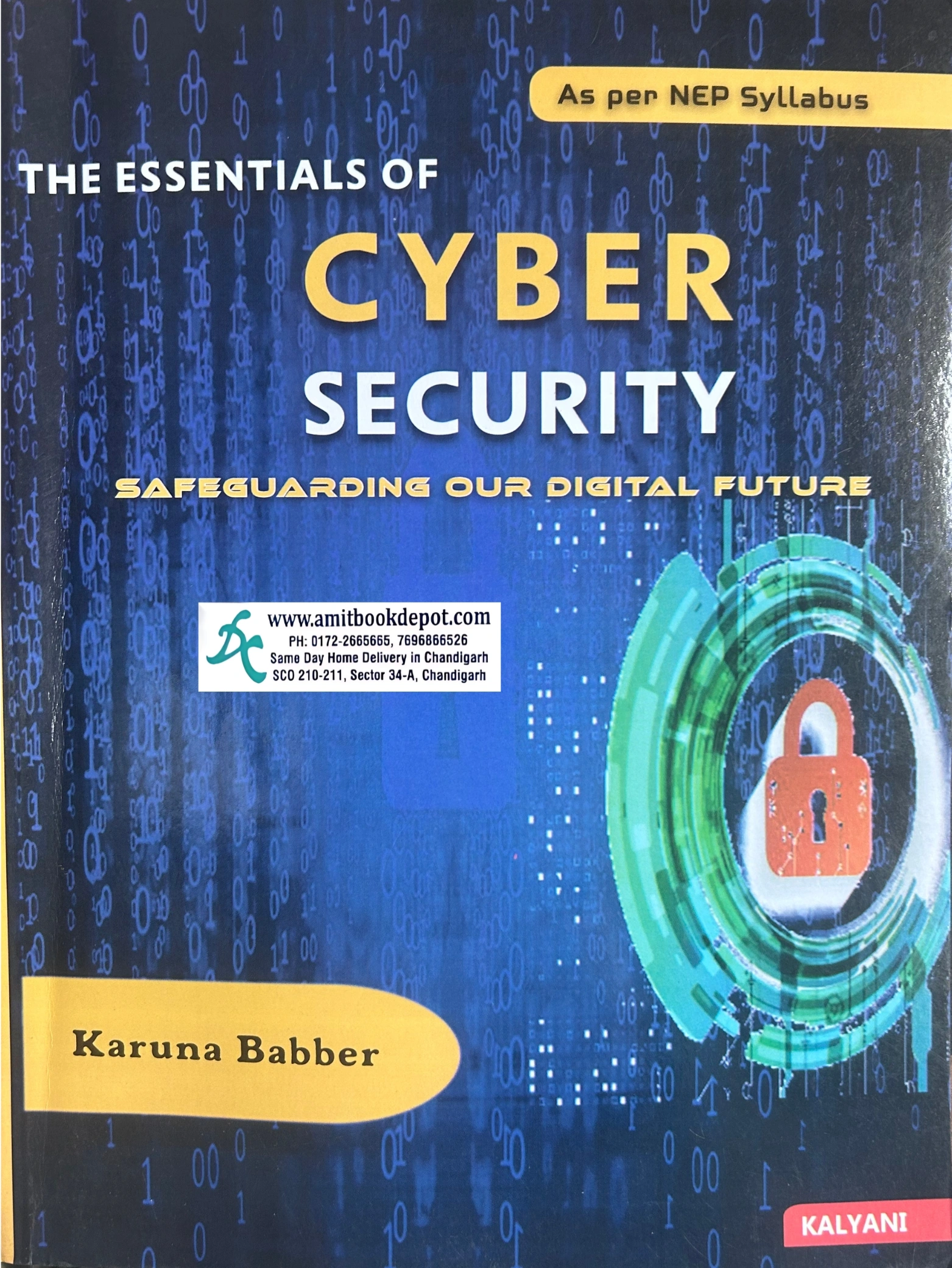


Yes. This book, "The Essentials of Cyber Security," is meticulously crafted to cover 100% of the latest syllabus prescribed for Paper Code BCA-DSC-4(Maj)-404 under the New Education Policy (NEP) for Panjab University, Chandigarh.
Absolutely. The book provides a strong theoretical foundation in concepts like cyberspace architecture and cyber law, while also covering practical tools and techniques such as vulnerability scanning with OpenVAS/Metaspolit and analyzing various network attacks.
Yes, Unit-IV provides dedicated coverage on Data Privacy and Data Security, including detailed discussion on India's Personal Data Protection Bill and international regulations like the General Data Protection Regulation (GDPR).
Yes, Unit-III on Cybercrime and Cyberlaw classifies and explains common and contemporary cybercrimes, including malware and ransomware attacks, social engineering, and zero-day/zero-click attacks.
Certainly. The first unit is dedicated to defining and explaining key cyber security terminologies such as attack vector, threat, vulnerability, exploit, cryptography, and access control, building a strong foundational vocabulary.
Yes. The book details web attacks targeting browsers and users, and in Unit-IV, it explains various attacks on wireless networks, along with SQL injection and buffer overflow attacks.
Yes, Unit-II on Network Vulnerabilities provides an overview and explanation of tools including Netcat, Socat, and vulnerability scanners like OpenVAS, as specified in the syllabus.
Yes, the final part of the syllabus and the book covers Cyber Security—Management, Compliance & Governance, linking technical threats to organizational policies and compliance requirements.
Unit-II provides dedicated chapters on Web Attacks and Network Vulnerabilities, helping students learn to identify and assess browser attacks, email attacks, and methods used to obtain user or website data.
Yes, Computer Forensics is a dedicated chapter within Unit-III, providing students with an introductory understanding of forensic processes in cyber investigations.
No Description Added
Yes. This book, "The Essentials of Cyber Security," is meticulously crafted to cover 100% of the latest syllabus prescribed for Paper Code BCA-DSC-4(Maj)-404 under the New Education Policy (NEP) for Panjab University, Chandigarh.
Absolutely. The book provides a strong theoretical foundation in concepts like cyberspace architecture and cyber law, while also covering practical tools and techniques such as vulnerability scanning with OpenVAS/Metaspolit and analyzing various network attacks.
Yes, Unit-IV provides dedicated coverage on Data Privacy and Data Security, including detailed discussion on India's Personal Data Protection Bill and international regulations like the General Data Protection Regulation (GDPR).
Yes, Unit-III on Cybercrime and Cyberlaw classifies and explains common and contemporary cybercrimes, including malware and ransomware attacks, social engineering, and zero-day/zero-click attacks.
Certainly. The first unit is dedicated to defining and explaining key cyber security terminologies such as attack vector, threat, vulnerability, exploit, cryptography, and access control, building a strong foundational vocabulary.
Yes. The book details web attacks targeting browsers and users, and in Unit-IV, it explains various attacks on wireless networks, along with SQL injection and buffer overflow attacks.
Yes, Unit-II on Network Vulnerabilities provides an overview and explanation of tools including Netcat, Socat, and vulnerability scanners like OpenVAS, as specified in the syllabus.
Yes, the final part of the syllabus and the book covers Cyber Security—Management, Compliance & Governance, linking technical threats to organizational policies and compliance requirements.
Unit-II provides dedicated chapters on Web Attacks and Network Vulnerabilities, helping students learn to identify and assess browser attacks, email attacks, and methods used to obtain user or website data.
Yes, Computer Forensics is a dedicated chapter within Unit-III, providing students with an introductory understanding of forensic processes in cyber investigations.