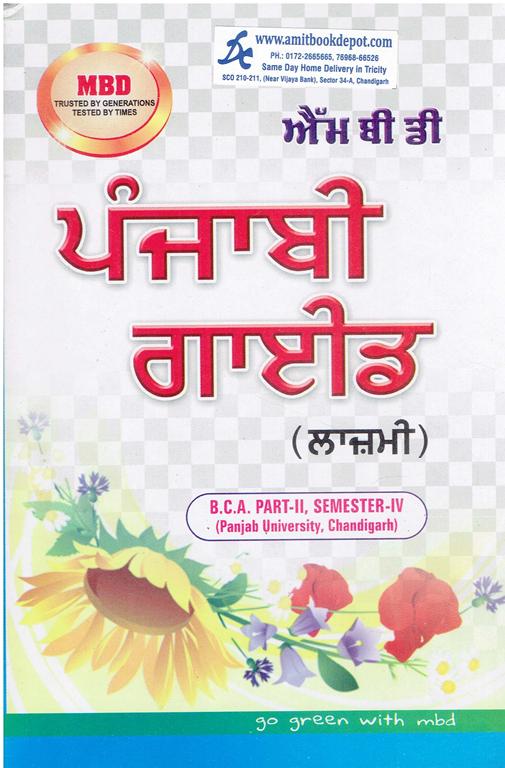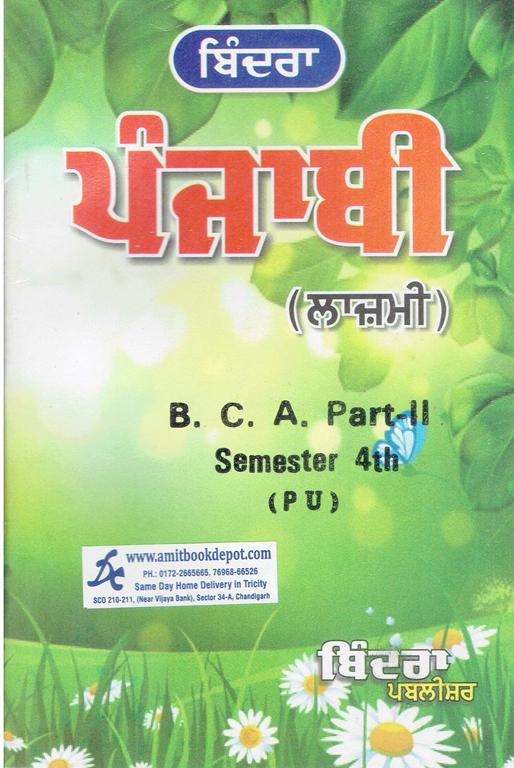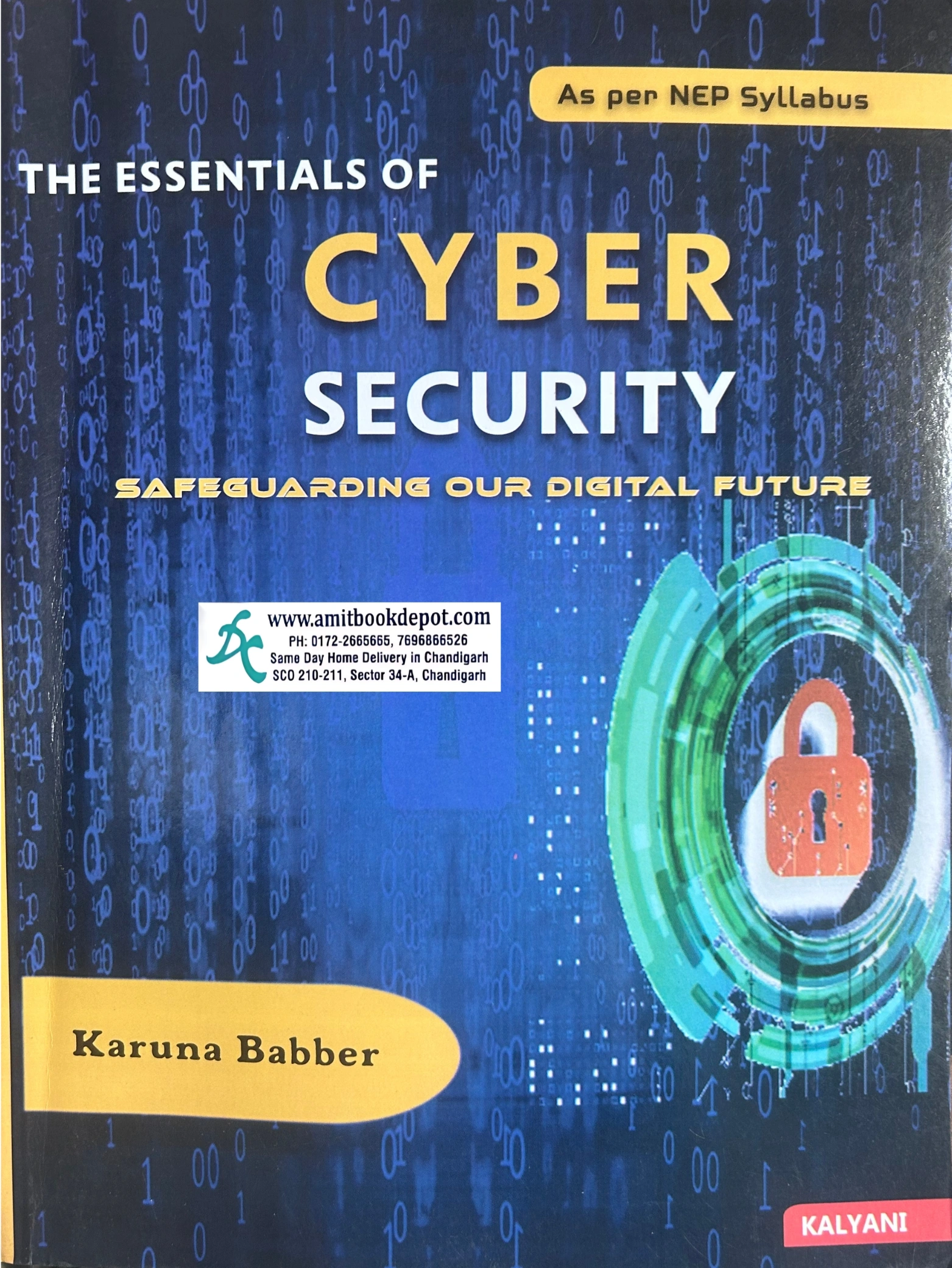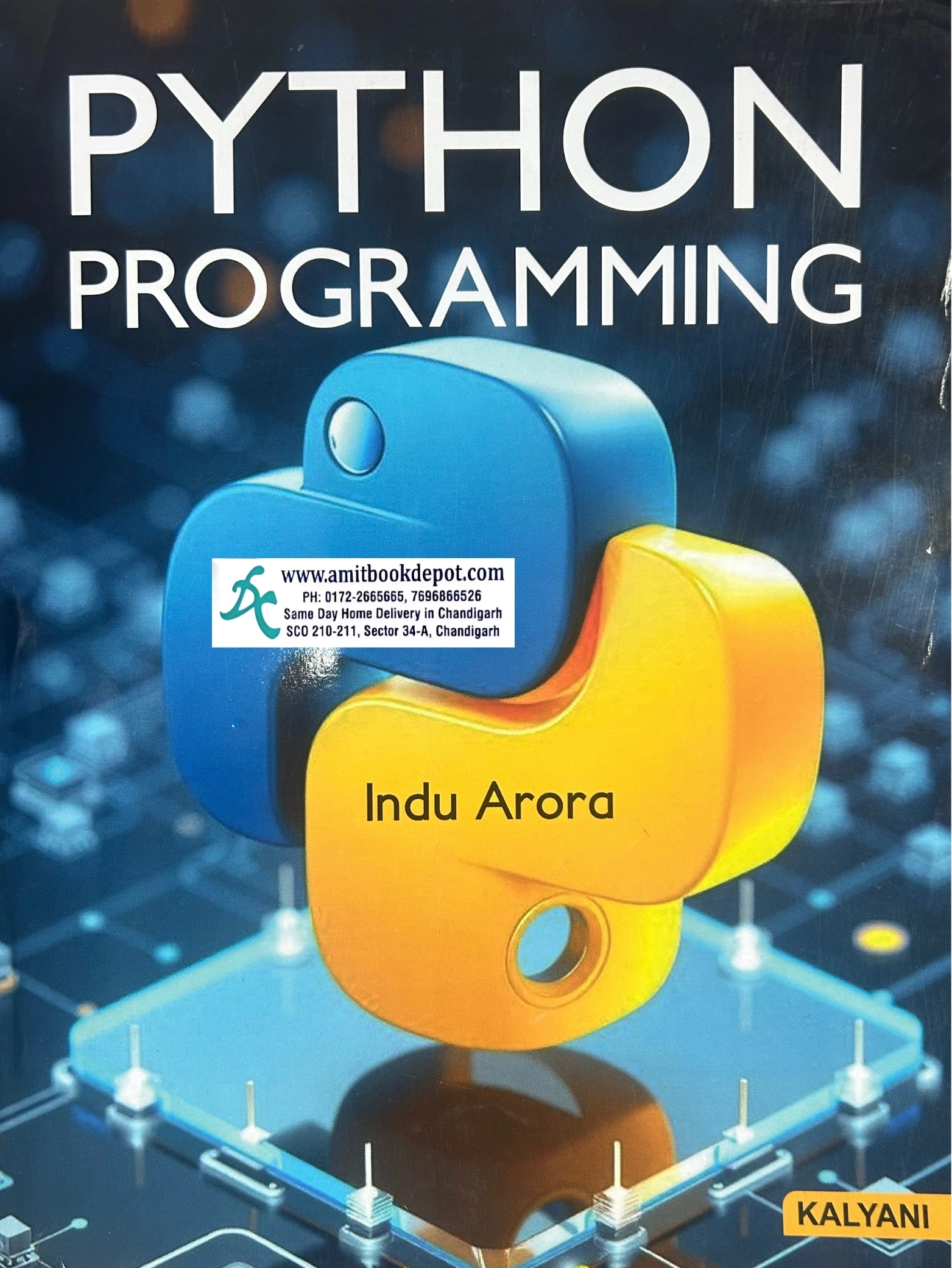

The book is specifically designed to incorporate the principles of the National Education Policy (NEP) and aligns with the BCA 4th semester curriculum at Panjab University. It emphasizes core programming concepts, practical skills, and modern software development practices to meet academic standards.
The book provides an accessible introduction to Object-Oriented Programming (OOP), including classes, objects, inheritance, and encapsulation, making it suitable for beginners and progressing towards more advanced concepts.
Yes, each chapter concludes with practical exercises, review questions, and programming problems designed to strengthen understanding and application of the concepts learned.
Absolutely. The book’s comprehensive coverage, chapter summaries, and practice questions make it a valuable resource for exam preparation and self-study.
Yes, it introduces essential modules such as Time and Datetime, enabling students to handle date, time, scheduling, and data logging tasks.
Yes, it covers conditional statements, loops, nested loops, and control flow mechanisms, complete with examples to develop decision-making skills.
Absolutely. The appendices contain Python syntax summaries, useful references, and additional resources to support ongoing learning and revision.
Yes, it offers an introduction to classes and objects, guiding students through creating classes, working with instances, and importing classes from libraries.
The book emphasizes clarity and step-by-step explanations, focusing on fundamental syntax, semantics, and best practices to build a strong programming foundation.
Yes, with its clear explanations, illustrative examples, and exercises, it is suitable for both self-study students and educators for classroom instruction.
No Description Added
The book is specifically designed to incorporate the principles of the National Education Policy (NEP) and aligns with the BCA 4th semester curriculum at Panjab University. It emphasizes core programming concepts, practical skills, and modern software development practices to meet academic standards.
The book provides an accessible introduction to Object-Oriented Programming (OOP), including classes, objects, inheritance, and encapsulation, making it suitable for beginners and progressing towards more advanced concepts.
Yes, each chapter concludes with practical exercises, review questions, and programming problems designed to strengthen understanding and application of the concepts learned.
Absolutely. The book’s comprehensive coverage, chapter summaries, and practice questions make it a valuable resource for exam preparation and self-study.
Yes, it introduces essential modules such as Time and Datetime, enabling students to handle date, time, scheduling, and data logging tasks.
Yes, it covers conditional statements, loops, nested loops, and control flow mechanisms, complete with examples to develop decision-making skills.
Absolutely. The appendices contain Python syntax summaries, useful references, and additional resources to support ongoing learning and revision.
Yes, it offers an introduction to classes and objects, guiding students through creating classes, working with instances, and importing classes from libraries.
The book emphasizes clarity and step-by-step explanations, focusing on fundamental syntax, semantics, and best practices to build a strong programming foundation.
Yes, with its clear explanations, illustrative examples, and exercises, it is suitable for both self-study students and educators for classroom instruction.