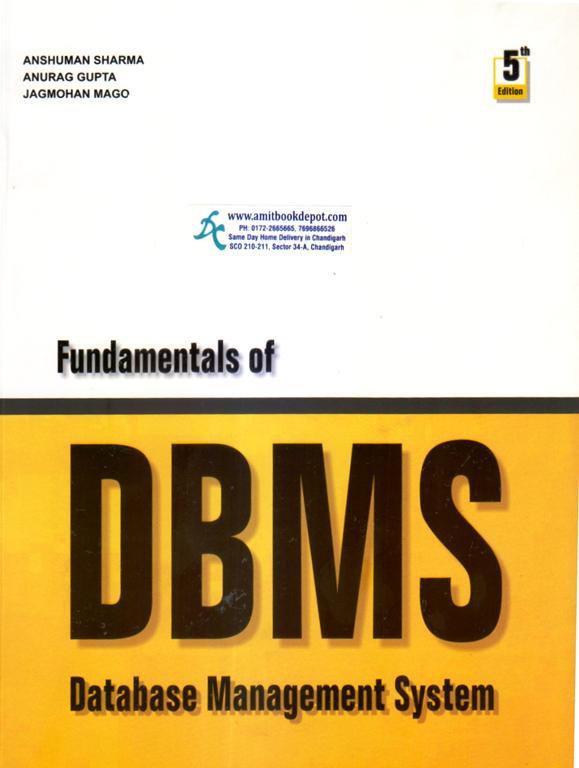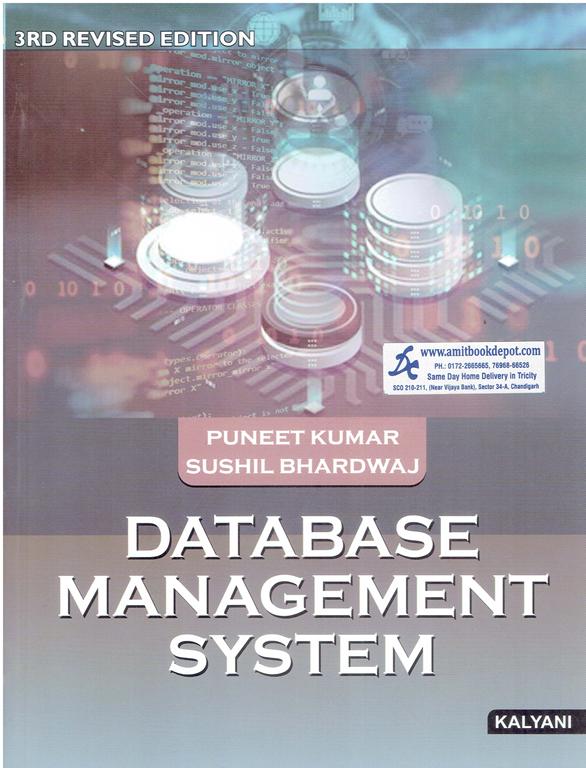
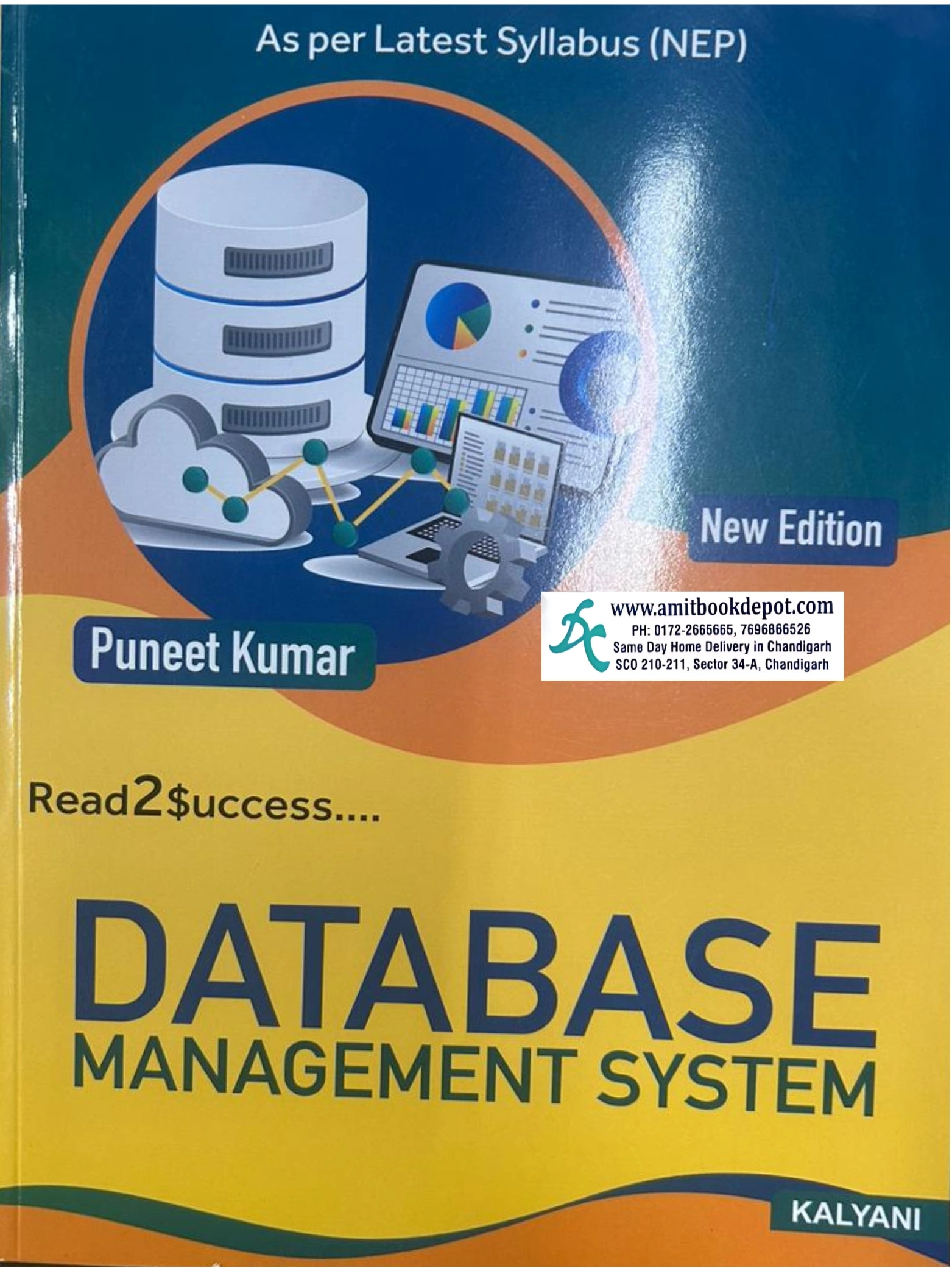

Yes, this book is meticulously crafted to cover the latest syllabus of Database Management System for BCA 4th Semester, Panjab University, Chandigarh, as per the New Education Policy (NEP) for paper code BCA-DSC-4(Maj)-402.
Absolutely. It has dedicated units and chapters covering all aspects of SQL (data definition, manipulation, queries, joins, functions) and a comprehensive introduction to PL/SQL, including block structure, control statements, cursors, exceptions, and triggers.
Yes, Unit II covers Relational Database Design in depth, including Functional Dependencies, Decomposition, and Normal Forms (1NF, 2NF, 3NF, and BCNF) based on primary keys.
Yes, a full chapter is dedicated to the Entity-Relationship Model, covering entity types, attributes, keys, relationships, constraints, weak entities, and the design of E-R database schemas.
The PL/SQL coverage includes introduction and advantages, block structure, data types, variables, control structures, cursor management (implicit/explicit), exception handling (predefined/user-defined), and database triggers.
Yes, a dedicated chapter covers querying multiple tables using Equi-Joins, Cartesian Joins, Outer Joins, Self-Joins, and the use of SET Operators (Union, Intersect, Minus).
Yes, the book includes a section on the 12 Rules (Codd’s Rules) for an RDBMS within the unit on the Relational Data Model.
Yes, the SQL unit covers managing privileges with the GRANT and REVOKE commands, which are fundamental to database security.
Basic transaction control commands COMMIT and ROLLBACK are covered in the SQL section of the book.
This book is not a generic DBMS text. It is specifically tailored to the Panjab University BCA 4th Semester syllabus, ensuring every topic in the prescribed units is covered in the exact sequence and depth required for the exams, complete with syllabus-specific practice material.
No Description Added
Yes, this book is meticulously crafted to cover the latest syllabus of Database Management System for BCA 4th Semester, Panjab University, Chandigarh, as per the New Education Policy (NEP) for paper code BCA-DSC-4(Maj)-402.
Absolutely. It has dedicated units and chapters covering all aspects of SQL (data definition, manipulation, queries, joins, functions) and a comprehensive introduction to PL/SQL, including block structure, control statements, cursors, exceptions, and triggers.
Yes, Unit II covers Relational Database Design in depth, including Functional Dependencies, Decomposition, and Normal Forms (1NF, 2NF, 3NF, and BCNF) based on primary keys.
Yes, a full chapter is dedicated to the Entity-Relationship Model, covering entity types, attributes, keys, relationships, constraints, weak entities, and the design of E-R database schemas.
The PL/SQL coverage includes introduction and advantages, block structure, data types, variables, control structures, cursor management (implicit/explicit), exception handling (predefined/user-defined), and database triggers.
Yes, a dedicated chapter covers querying multiple tables using Equi-Joins, Cartesian Joins, Outer Joins, Self-Joins, and the use of SET Operators (Union, Intersect, Minus).
Yes, the book includes a section on the 12 Rules (Codd’s Rules) for an RDBMS within the unit on the Relational Data Model.
Yes, the SQL unit covers managing privileges with the GRANT and REVOKE commands, which are fundamental to database security.
Basic transaction control commands COMMIT and ROLLBACK are covered in the SQL section of the book.
This book is not a generic DBMS text. It is specifically tailored to the Panjab University BCA 4th Semester syllabus, ensuring every topic in the prescribed units is covered in the exact sequence and depth required for the exams, complete with syllabus-specific practice material.