-
Mon-Fri: 10AM to 8PM 01722665665
-
My Account
-
-
0
Total :
₹ 0.00

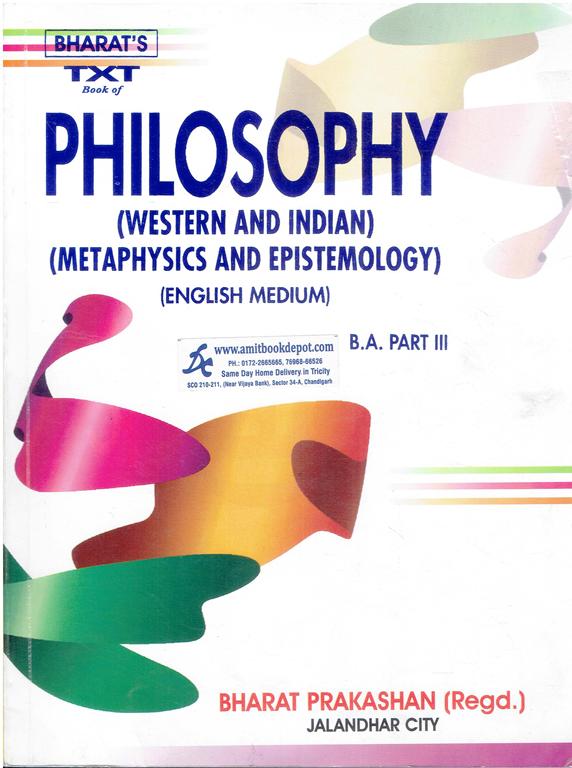
Yes, the book is specifically designed for the BA 3rd Year program and covers the standard curriculum for Western and Indian Metaphysics and Epistemology followed by most Indian universities. It is advisable to cross-check with your university's specific reading list.
Absolutely. The book's structure itself encourages comparison. Specific chapters, such as those on "Theories of Causation" and "Space and Time," are presented in both sections, allowing students to directly compare and contrast the Western and Indian viewpoints.
The author introduces and explains key Sanskrit terms like Pramana, Jiva, Ajiva, and Advaita within the text, ensuring that students unfamiliar with the language can grasp their meanings in the context of philosophical discourse.
These topics are increasingly included in many university syllabi. This book provides a dedicated section on them, ensuring students have access to this essential content, making it a more comprehensive resource than other textbooks.
Yes, the chapter on Logical Positivism is written with the undergraduate student in mind, breaking down its principles, verification theory, and critique in a clear and understandable manner.
Yes, it comprehensively covers both. The heterodox schools of Charvaka, Buddha, and Jainism are detailed, alongside the orthodox systems of Nyaya, Vaisesika, Sankhya, Yoga, and Vedanta.
While primarily designed for undergraduate studies, the book provides a strong foundational understanding of core topics in Metaphysics and Epistemology, which can be highly beneficial for initial preparation for competitive exams like NET/JRF.
The chapter provides a solid foundation on the key debates in the Philosophy of Science, such as the nature of scientific explanation and the relationship between theory and observation, which are fundamental and timeless for undergraduate study.
Yes, the chapter on Advaita Vedanta dedicates significant space to explaining foundational concepts like Brahman (the ultimate reality), Atman (the self), and Maya (the illusory world) in a structured and student-friendly manner.
This book is designed as a comprehensive and primary textbook. For most students, it will serve as a sufficient core resource. However, for deeper research or specific university requirements, consulting additional recommended texts is always beneficial.
No Description Added
Yes, the book is specifically designed for the BA 3rd Year program and covers the standard curriculum for Western and Indian Metaphysics and Epistemology followed by most Indian universities. It is advisable to cross-check with your university's specific reading list.
Absolutely. The book's structure itself encourages comparison. Specific chapters, such as those on "Theories of Causation" and "Space and Time," are presented in both sections, allowing students to directly compare and contrast the Western and Indian viewpoints.
The author introduces and explains key Sanskrit terms like Pramana, Jiva, Ajiva, and Advaita within the text, ensuring that students unfamiliar with the language can grasp their meanings in the context of philosophical discourse.
These topics are increasingly included in many university syllabi. This book provides a dedicated section on them, ensuring students have access to this essential content, making it a more comprehensive resource than other textbooks.
Yes, the chapter on Logical Positivism is written with the undergraduate student in mind, breaking down its principles, verification theory, and critique in a clear and understandable manner.
Yes, it comprehensively covers both. The heterodox schools of Charvaka, Buddha, and Jainism are detailed, alongside the orthodox systems of Nyaya, Vaisesika, Sankhya, Yoga, and Vedanta.
While primarily designed for undergraduate studies, the book provides a strong foundational understanding of core topics in Metaphysics and Epistemology, which can be highly beneficial for initial preparation for competitive exams like NET/JRF.
The chapter provides a solid foundation on the key debates in the Philosophy of Science, such as the nature of scientific explanation and the relationship between theory and observation, which are fundamental and timeless for undergraduate study.
Yes, the chapter on Advaita Vedanta dedicates significant space to explaining foundational concepts like Brahman (the ultimate reality), Atman (the self), and Maya (the illusory world) in a structured and student-friendly manner.
This book is designed as a comprehensive and primary textbook. For most students, it will serve as a sufficient core resource. However, for deeper research or specific university requirements, consulting additional recommended texts is always beneficial.