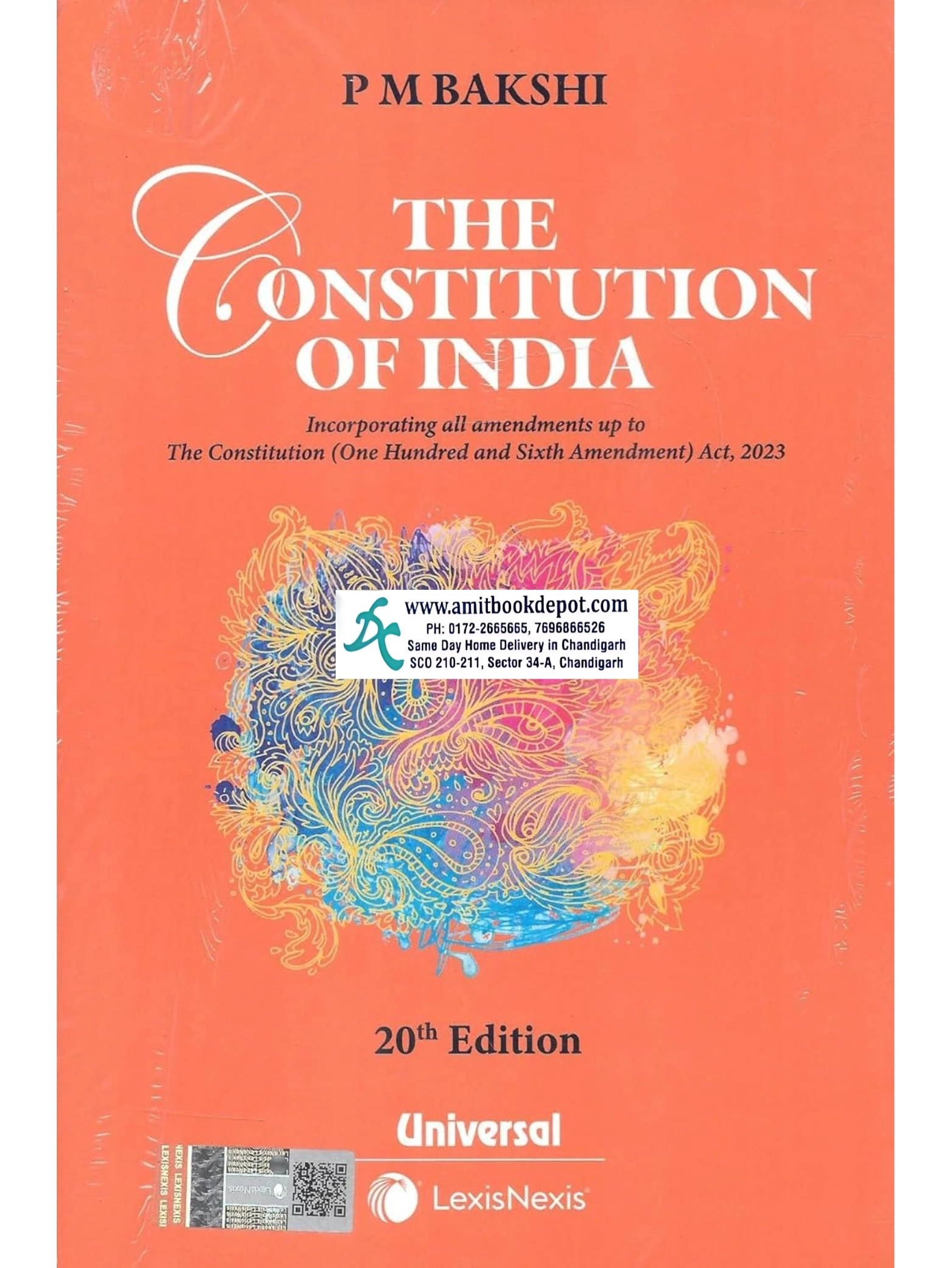
The Constitution of India, 20th Edition, by P.M. Bakshi, is the definitive and authoritative reference work for legal professionals, students, academics, and anyone seeking an in-depth understanding of the supreme law of India. Published by Universal Law Publishing Co. Pvt. Ltd., this 20th edition continues the legacy of being an indispensable resource, meticulously updated to incorporate all constitutional amendments, landmark Supreme Court judgments, and recent legislative changes.
This comprehensive volume is renowned for its clear, article-by-article commentary that demystifies complex constitutional provisions. P.M. Bakshi’s expert analysis provides critical insights into the interpretation and application of each article, making it an essential tool for constitutional law practice, research, and study. The book’s structured presentation aligns perfectly with the actual sequence of the Constitution, allowing for intuitive navigation and quick reference.
The content begins with the Preamble, setting the philosophical foundation, and proceeds systematically through every Part and Article. It offers exhaustive coverage of Fundamental Rights (Part III) and Directive Principles of State Policy (Part IV), including their interplay and judicial evolution. The edition thoroughly examines the structure and functioning of government through Parts V and VI on The Union and The States, detailing the powers of the President, Parliament, Prime Minister, Governor, and State Legislatures.
This edition provides critical updates on contemporary governance structures, including dedicated sections on the Panchayats (Part IX), Municipalities (Part IXA), and Co-operative Societies (Part IXB), reflecting the Constitution's vision of decentralized governance. It meticulously covers Centre-State Relations (Part XI), Finance and Taxation (Part XII), and the critical Emergency Provisions (Part XVIII). The commentary on the Amendment of the Constitution (Part XX) is particularly valuable for understanding the evolution and flexibility of this living document.
Key features that distinguish this 20th edition include:
1. Updated Text: Incorporates all constitutional amendments up to the date of publication.
2. Landmark Case Laws: References and analyses of pivotal judgments from the Supreme Court of India and High Courts that have shaped constitutional jurisprudence.
3. Comparative Analysis: Offers insights where relevant, comparing provisions with other major constitutions.
4. Clear Commentary: Provides concise, authoritative explanation of the intent, scope, and judicial interpretation of each article.
5. Detailed Contents & Index: Facilitates rapid access to specific articles, topics, and case laws.
Ideal for LLB students, LLM scholars, competitive exam aspirants (including UPSC, Judiciary, and PCS), legal practitioners, judges, law teachers, and policy researchers, this book serves as both a foundational book and an advanced professional reference. Its reliability and depth make it a staple in law libraries, courtrooms, and academic institutions across the country.
"The Constitution of India by P.M. Bakshi" is more than a book; it is a vital companion for engaging with the legal and political framework of the world's largest democracy. This 20th Edition upholds its sterling reputation as the most trusted bare act with commentary, ensuring readers have access to accurate, current, and insightful constitutional knowledge.







.jpg)