Categories
College Bookssss >
BA PU Chandigarh
BSC PU Chandigarh
MSC PU Chandigarh
BBA PU Chandigarh
MA PU Chandigarh
Medical Books
Engineering Books
Management Books
PGDCA Books
BCOM PU Chandigarh
MCOM PU Chandigarh
BCA PU Chandigarh
MCA PU Chandigarh
animate-books

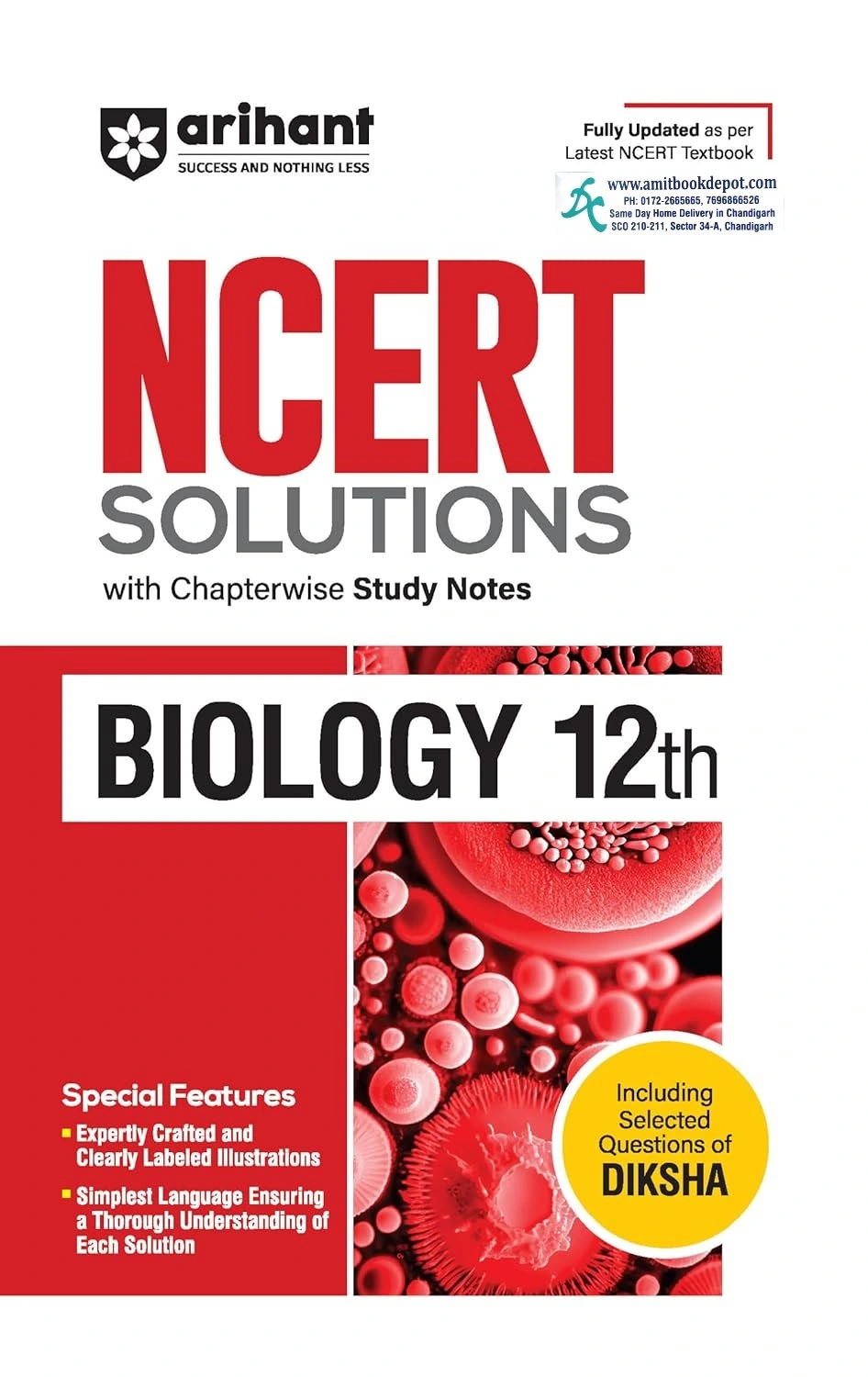
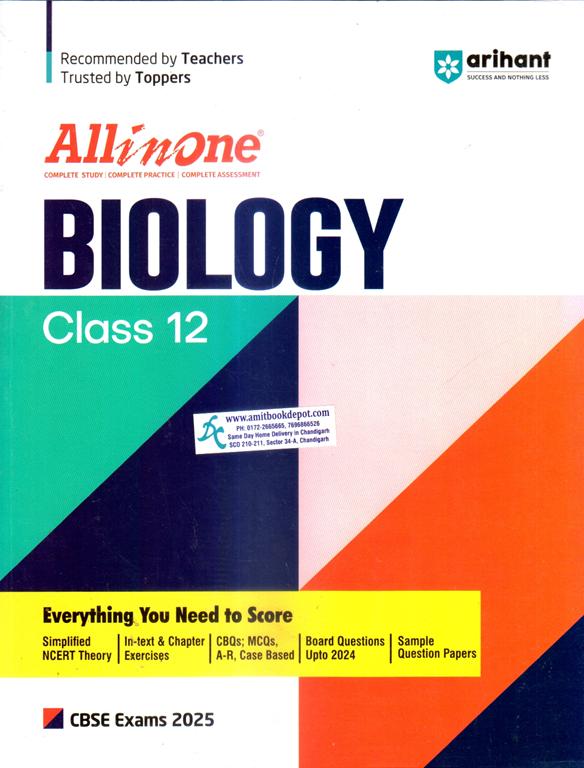
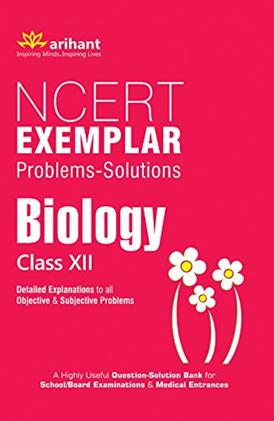
NCERT Solutions Biology for Class 12th

by Madhurima
₹158 ₹175.00(-/ off)

Rating & Reviews

23 Customer Review

NCERT Solutions Biology for Class 12 by Arihant provides complete, error-free solutions to all NCERT book questions, including Exemplar problems. Aligned with the latest CBSE syllabus, it covers reproduction, genetics, evolution, biotechnology, and ecology. Ideal for board exam preparation and NEET foundation, this book by Manvi Sirohi and Anushri Sharma helps students write perfect answers with key terms highlighted. Boost your grasp on DNA replication, Mendelian inheritance, population interactions, and biodiversity conservation. A must-have question bank for scoring high marks in Class 12 Biology. Clear, concise, and exam-focused.

Have Doubts Regarding This Product ? Ask Your Question

  • Q1
    What is the significance of double fertilisation in angiosperms?
    A1

    It produces a diploid zygote and triploid endosperm, ensuring embryo development and nutrient storage, unique to flowering plants.

  • Q2
    Differentiate between spermatogenesis and oogenesis.
    A2

    Spermatogenesis produces four motile sperms continuously; oogenesis produces one ovum and polar bodies, with arrested divisions.

  • Q3
    Name two assisted reproductive technologies and their full forms.
    A3

    IVF (In Vitro Fertilisation) – fusion outside body; ZIFT (Zygote Intrafallopian Transfer) – zygote transferred to fallopian tube.

  • Q4
    Why is the law of independent assortment not always true?
    A4

    Linked genes on same chromosome do not assort independently; crossing over may separate them only partially.

  • Q5
    What is the function of the lac operon’s repressor protein?
    A5

    It binds to the operator region in absence of lactose, blocking RNA polymerase from transcribing structural genes.

  • Q6
    How do biofertilisers differ from chemical fertilisers?
    A6

    Biofertilisers are living microbes (e.g., Rhizobium) that enrich soil naturally, causing no pollution or soil harm.

  • Q7
    What are Bt crops? Give one example.
    A7

    Genetically modified crops producing insecticidal toxin from Bacillus thuringiensis. Example: Bt cotton.

  • Q8
    What is a ‘biopiracy’ in biotechnology context?
    A8

    Patenting or commercialising biological resources or traditional knowledge without permission or compensation to the source.

  • Q9
    Define ‘ecological pyramid’ and state its limitation.
    A9

    Graphical representation of biomass, number or energy at trophic levels. Limitation: does not account for same species at multiple levels.

  • Q10
    Why is DNA fingerprinting used in forensics?
    A10

    It identifies individuals by unique repetitive DNA patterns (VNTRs), solving paternity disputes and crime scenes.
0.00

0 Overall Rating
  • 5
    0
  • 4
    0
  • 3
    0
  • 2
    0
  • 1
    0

Try this product & share your review & thoughts

1. Sexual Reproduction in Flowering Plants
2. Human Reproduction
3. Reproductive Health
4. Principles of Inheritance and Variation
5. Molecular Basis of Inheritance
6. Evolution
7. Human Health and Disease
8. Microbes in Human Welfare
9. Biotechnology: Principles and Processes
10. Biotechnology and its Applications
11. Organisms and Populations
12. Ecosystem
13. Biodiversity and Conservation

CBSE Syllabus: NCERT Biology Textbook For Class 12th


Unit VI: Reproduction

Chapter 1: Sexual Reproduction in Flowering Plants
Flower structure; development of male and female gametophytes; pollination—types, agencies, and examples; outbreeding devices; pollen-pistil interaction; double fertilisation; post-fertilisation events—development of endosperm and embryo, development of seed, and formation of fruit; special modes—apomixis, parthenocarpy, and polyembryony; significance of seed dispersal and fruit formation.

Chapter 2: Human Reproduction
Male and female reproductive systems; microscopic anatomy of testis and ovary; gametogenesis—spermatogenesis and oogenesis; menstrual cycle; fertilisation; embryo development up to blastocyst formation and implantation; pregnancy and placenta formation (elementary idea); parturition (elementary idea); lactation (elementary idea).

Chapter 3: Reproductive Health
Need for reproductive health and prevention of sexually transmitted diseases (STDs); birth control—need and methods, contraception and medical termination of pregnancy (MTP); amniocentesis; infertility and assisted reproductive technologies—IVF, ZIFT, and GIFT (elementary idea for general awareness)

Unit VII: Genetics and Evolution

Chapter 4: Principles of Inheritance and Variation
Heredity and variation: Mendelian inheritance; deviations from Mendelism—incomplete dominance, codominance, multiple alleles, and inheritance of blood groups; pleiotropy; an elementary idea of polygenic inheritance; the chromosome theory of inheritance; chromosomes and genes; sex determination—in humans, birds, and honeybees; linkage and crossing over; sex-linked inheritance—haemophilia, colour blindness; Mendelian disorders in humans: thalassemia, chromosomal disorders in humans, Down's syndrome, Turner's, and Klinefelter's syndromes.

Chapter 5: Molecular Basis of Inheritance
Search for genetic material and DNA as genetic material; structure of DNA and RNA; DNA packaging; DNA replication; central dogma; transcription, genetic code, and translation; gene expression and regulation—lac operon; genome, human and rice genome projects; and DNA fingerprinting.

Chapter 6: Evolution
Origin of life; biological evolution and evidence for biological evolution (palaeontology, comparative anatomy, embryology, and molecular evidence); Darwin's contribution and the modern synthetic theory of evolution; mechanism of evolution—variation (mutation and recombination) and natural selection with examples and types of natural selection; gene flow and genetic drift; Hardy-Weinberg's principle; adaptive radiation; and human evolution.

Unit VIII: Biology and Human Welfare

Chapter 7: Human Health and Diseases
Pathogens: parasites causing human diseases (malaria, dengue, chikungunya, filariasis, ascariasis, typhoid, pneumonia, the common cold, amoebiasis, and ringworm) and their control; Basic concepts of immunology—vaccines, cancer, HIV, and AIDS. Adolescence—drug and alcohol abuse.

Chapter 8: Microbes in Human Welfare
Microbes in food processing, industrial production, sewage treatment, and energy generation, and microbes as biocontrol agents and biofertilisers. Antibiotics: production and judicious use.

Unit IX: Biotechnology and its Applications

Chapter 9: Biotechnology—Principles and Processes
Genetic Engineering (Recombinant DNA Technology).

Chapter 10: Biotechnology and its Applications
Application of biotechnology in health and agriculture: human insulin and vaccine production, stem cell technology, gene therapy, genetically modified organisms (Bt crops), transgenic animals, biosafety issues, biopiracy, and patents.

Unit-X Ecology and Environment

Chapter 11: Organisms and Populations
Population interactions—mutualism, competition, predation, and parasitism; population attributes—growth, birth rate and death rate, and age distribution. (Topics excluded: organism and its environment, major abiotic factors, responses to abiotic factors, and adaptations)

Chapter 12: Ecosystem
Ecosystems: Patterns and components; productivity and decomposition; energy flow; pyramids of number, biomass, and energy (topics excluded: ecological succession and nutrient cycles).

Chapter 13: Biodiversity and its Conservation
Biodiversity: concept, patterns, and importance; loss of biodiversity; biodiversity conservation; hotspots, endangered organisms, extinction, Red Data Book, sacred groves, biosphere reserves, national parks, wildlife sanctuaries, and Ramsar sites.

Master the NCERT with Comprehensive Solutions for Class 12 Biology

Arihant’s NCERT Solutions Biology for Class 12 is a definitive guide designed exclusively for CBSE students aiming to excel in their board examinations and competitive entrance tests like NEET. Authored by Manvi Sirohi and Anushri Sharma, this book provides 100% accurate, step-by-step solutions to all questions present in the Class 12 NCERT Biology book. It serves as a complete question bank and revision tool, ensuring no concept is left unaddressed.

The book strictly follows the latest CBSE syllabus and NCERT pattern, covering all crucial units from Reproduction, Genetics and Evolution, Biology and Human Welfare, and Biotechnology to Ecology. Each chapter includes NCERT Exemplar problems and additional conceptual questions, helping students move beyond rote learning to application-based understanding.

Complete Coverage of Class 12 Biology Chapters:
The solutions manual covers every chapter in detail:

- Sexual Reproduction in Flowering Plants – Pollination, double fertilisation, seed formation.
- Human Reproduction – Gametogenesis, the menstrual cycle, and embryonic development.
- Reproductive Health – STDs, contraception, MTP, IVF, ZIFT, GIFT.
- Principles of Inheritance and Variation – Mendelian genetics, incomplete dominance, chromosomal disorders.
- Molecular Basis of Inheritance – DNA replication, transcription, translation, the lac operon, and the human genome project.
- Evolution – Darwin’s theory, natural selection, Hardy-Weinberg principle.
- Human Health and Disease – Pathogens, immunity, cancer, HIV, AIDS, and substance abuse.
- Microbes in Human Welfare – Biofertilisers, sewage treatment, antibiotic production.
- Biotechnology: Principles and Processes – Recombinant DNA technology and gene cloning.
- Biotechnology and its Applications – Bt crops, gene therapy, transgenic animals, and biopiracy.
- Organisms and Populations – Population interactions and growth models.
- Ecosystem – Energy flow, ecological pyramids, productivity.
- Biodiversity and Conservation – Hotspots, Red Data Book, sacred groves, and Ramsar sites.

Key Features & Benefits for Exam Success:

- NCERT book solutions – Exact answers to all exercise questions.
- Exemplar Problems Solved – Enhances problem-solving speed for NEET.
- Chapter-wise Topic-wise Presentation – Easy navigation and revision.
- Important Keywords Highlighted – Boosts memory for board exam terminology.
- Error-free Explanations – Written in simple, exam-appropriate language.

This CBSE reference book is more than just a solution guide; it is a self-study companion that bridges the gap between the NCERT book and board exam expectations. It clarifies complex topics like the lac operon, DNA fingerprinting, population interactions, and assisted reproductive technologies with clarity and precision. Whether you are preparing for the Class 12 Biology board exam or competitive exams like NEET, this book ensures you have the right answers every time.

Why choose this book? Because board exam questions are increasingly conceptual. Simply reading the NCERT is not enough—you need to see how to frame answers. This manual teaches you the art of writing high-scoring, to-the-point answers as expected by CBSE examiners.

1. Sexual Reproduction in Flowering Plants
2. Human Reproduction
3. Reproductive Health
4. Principles of Inheritance and Variation
5. Molecular Basis of Inheritance
6. Evolution
7. Human Health and Disease
8. Microbes in Human Welfare
9. Biotechnology: Principles and Processes
10. Biotechnology and its Applications
11. Organisms and Populations
12. Ecosystem
13. Biodiversity and Conservation

Have Doubts Regarding This Product ? Ask Your Question

  • Q1
    What is the significance of double fertilisation in angiosperms?
    A1

    It produces a diploid zygote and triploid endosperm, ensuring embryo development and nutrient storage, unique to flowering plants.

  • Q2
    Differentiate between spermatogenesis and oogenesis.
    A2

    Spermatogenesis produces four motile sperms continuously; oogenesis produces one ovum and polar bodies, with arrested divisions.

  • Q3
    Name two assisted reproductive technologies and their full forms.
    A3

    IVF (In Vitro Fertilisation) – fusion outside body; ZIFT (Zygote Intrafallopian Transfer) – zygote transferred to fallopian tube.

  • Q4
    Why is the law of independent assortment not always true?
    A4

    Linked genes on same chromosome do not assort independently; crossing over may separate them only partially.

  • Q5
    What is the function of the lac operon’s repressor protein?
    A5

    It binds to the operator region in absence of lactose, blocking RNA polymerase from transcribing structural genes.

  • Q6
    How do biofertilisers differ from chemical fertilisers?
    A6

    Biofertilisers are living microbes (e.g., Rhizobium) that enrich soil naturally, causing no pollution or soil harm.

  • Q7
    What are Bt crops? Give one example.
    A7

    Genetically modified crops producing insecticidal toxin from Bacillus thuringiensis. Example: Bt cotton.

  • Q8
    What is a ‘biopiracy’ in biotechnology context?
    A8

    Patenting or commercialising biological resources or traditional knowledge without permission or compensation to the source.

  • Q9
    Define ‘ecological pyramid’ and state its limitation.
    A9

    Graphical representation of biomass, number or energy at trophic levels. Limitation: does not account for same species at multiple levels.

  • Q10
    Why is DNA fingerprinting used in forensics?
    A10

    It identifies individuals by unique repetitive DNA patterns (VNTRs), solving paternity disputes and crime scenes.

CBSE Syllabus: NCERT Biology Textbook For Class 12th


Unit VI: Reproduction

Chapter 1: Sexual Reproduction in Flowering Plants
Flower structure; development of male and female gametophytes; pollination—types, agencies, and examples; outbreeding devices; pollen-pistil interaction; double fertilisation; post-fertilisation events—development of endosperm and embryo, development of seed, and formation of fruit; special modes—apomixis, parthenocarpy, and polyembryony; significance of seed dispersal and fruit formation.

Chapter 2: Human Reproduction
Male and female reproductive systems; microscopic anatomy of testis and ovary; gametogenesis—spermatogenesis and oogenesis; menstrual cycle; fertilisation; embryo development up to blastocyst formation and implantation; pregnancy and placenta formation (elementary idea); parturition (elementary idea); lactation (elementary idea).

Chapter 3: Reproductive Health
Need for reproductive health and prevention of sexually transmitted diseases (STDs); birth control—need and methods, contraception and medical termination of pregnancy (MTP); amniocentesis; infertility and assisted reproductive technologies—IVF, ZIFT, and GIFT (elementary idea for general awareness)

Unit VII: Genetics and Evolution

Chapter 4: Principles of Inheritance and Variation
Heredity and variation: Mendelian inheritance; deviations from Mendelism—incomplete dominance, codominance, multiple alleles, and inheritance of blood groups; pleiotropy; an elementary idea of polygenic inheritance; the chromosome theory of inheritance; chromosomes and genes; sex determination—in humans, birds, and honeybees; linkage and crossing over; sex-linked inheritance—haemophilia, colour blindness; Mendelian disorders in humans: thalassemia, chromosomal disorders in humans, Down's syndrome, Turner's, and Klinefelter's syndromes.

Chapter 5: Molecular Basis of Inheritance
Search for genetic material and DNA as genetic material; structure of DNA and RNA; DNA packaging; DNA replication; central dogma; transcription, genetic code, and translation; gene expression and regulation—lac operon; genome, human and rice genome projects; and DNA fingerprinting.

Chapter 6: Evolution
Origin of life; biological evolution and evidence for biological evolution (palaeontology, comparative anatomy, embryology, and molecular evidence); Darwin's contribution and the modern synthetic theory of evolution; mechanism of evolution—variation (mutation and recombination) and natural selection with examples and types of natural selection; gene flow and genetic drift; Hardy-Weinberg's principle; adaptive radiation; and human evolution.

Unit VIII: Biology and Human Welfare

Chapter 7: Human Health and Diseases
Pathogens: parasites causing human diseases (malaria, dengue, chikungunya, filariasis, ascariasis, typhoid, pneumonia, the common cold, amoebiasis, and ringworm) and their control; Basic concepts of immunology—vaccines, cancer, HIV, and AIDS. Adolescence—drug and alcohol abuse.

Chapter 8: Microbes in Human Welfare
Microbes in food processing, industrial production, sewage treatment, and energy generation, and microbes as biocontrol agents and biofertilisers. Antibiotics: production and judicious use.

Unit IX: Biotechnology and its Applications

Chapter 9: Biotechnology—Principles and Processes
Genetic Engineering (Recombinant DNA Technology).

Chapter 10: Biotechnology and its Applications
Application of biotechnology in health and agriculture: human insulin and vaccine production, stem cell technology, gene therapy, genetically modified organisms (Bt crops), transgenic animals, biosafety issues, biopiracy, and patents.

Unit-X Ecology and Environment

Chapter 11: Organisms and Populations
Population interactions—mutualism, competition, predation, and parasitism; population attributes—growth, birth rate and death rate, and age distribution. (Topics excluded: organism and its environment, major abiotic factors, responses to abiotic factors, and adaptations)

Chapter 12: Ecosystem
Ecosystems: Patterns and components; productivity and decomposition; energy flow; pyramids of number, biomass, and energy (topics excluded: ecological succession and nutrient cycles).

Chapter 13: Biodiversity and its Conservation
Biodiversity: concept, patterns, and importance; loss of biodiversity; biodiversity conservation; hotspots, endangered organisms, extinction, Red Data Book, sacred groves, biosphere reserves, national parks, wildlife sanctuaries, and Ramsar sites.

0.00

0 Overall Rating
  • 5
    0
  • 4
    0
  • 3
    0
  • 2
    0
  • 1
    0

Try this product & share your review & thoughts

Top Trending Product

Related Product

Related Product

Related Blog Posts

Latest Blogs

Latest Blogs

blog-img
Classic Literature Reimagined: Discuss modern twists on classic novels.
Lorem ipsum dolor sit amet, consectetur adipiscing elit, sed do eiusmod tempor incididunt ut labore et dolore magna aliqua. Ut enim ad minim veniam, quis nostrud exercitation ullamco Lorem ipsum dolor sit amet, consectetur adipiscing elit, sed do eiusmod tempor incididunt ut labore et dolore magna aliqua. Utenim ad minim veniam, quis nostrud exercitation ullamco Lorem ipsum dolor sit amet, consecte...
Read more
Author name | 10 jan, 2025
blog-img
Classic Literature Reimagined: Discuss modern twists on classic novels.
Lorem ipsum dolor sit amet, consectetur adipiscing elit, sed do eiusmod tempor incididunt ut labore et dolore magna aliqua. Ut enim ad minim veniam, quis nostrud exercitation ullamco Lorem ipsum dolor sit amet, consectetur adipiscing elit, sed do eiusmod tempor incididunt ut labore et dolore magna aliqua. Utenim ad minim veniam, quis nostrud exercitation ullamco Lorem ipsum dolor sit amet, consecte...
Read more
Author name | 10 jan, 2025
blog-img
Classic Literature Reimagined: Discuss modern twists on classic novels.
Lorem ipsum dolor sit amet, consectetur adipiscing elit, sed do eiusmod tempor incididunt ut labore et dolore magna aliqua. Ut enim ad minim veniam, quis nostrud exercitation ullamco Lorem ipsum dolor sit amet, consectetur adipiscing elit, sed do eiusmod tempor incididunt ut labore et dolore magna aliqua. Utenim ad minim veniam, quis nostrud exercitation ullamco Lorem ipsum dolor sit amet, consecte...
Read more
Author name | 10 jan, 2025
blog-img
Classic Literature Reimagined: Discuss modern twists on classic novels.
Lorem ipsum dolor sit amet, consectetur adipiscing elit...
Read more
Author Name | 10 Jan, 2025
blog-img
Classic Literature Reimagined: Discuss modern twists on classic novels.
Lorem ipsum dolor sit amet, consectetur adipiscing elit...
Read more
Author Name | 10 Jan, 2025
blog-img
Classic Literature Reimagined: Discuss modern twists on classic novels.
Lorem ipsum dolor sit amet, consectetur adipiscing elit...
Read more
Author Name | 10 Jan, 2025
blog-img
Classic Literature Reimagined: Discuss modern twists on classic novels.
Lorem ipsum dolor sit amet, consectetur adipiscing elit...
Read more
Author Name | 10 Jan, 2025
blog-img
Classic Literature Reimagined: Discuss modern twists on classic novels.
Lorem ipsum dolor sit amet, consectetur adipiscing elit...
Read more
Author Name | 10 Jan, 2025
blog-img
Classic Literature Reimagined: Discuss modern twists on classic novels.
Lorem ipsum dolor sit amet, consectetur adipiscing elit...
Read more
Author Name | 10 Jan, 2025
blog-img
Classic Literature Reimagined: Discuss modern twists on classic novels.
Lorem ipsum dolor sit amet, consectetur adipiscing elit...
Read more
Author Name | 10 Jan, 2025
blog-img
Classic Literature Reimagined: Discuss modern twists on classic novels.
Lorem ipsum dolor sit amet, consectetur adipiscing elit...
Read more
Author Name | 10 Jan, 2025
blog-img
Classic Literature Reimagined: Discuss modern twists on classic novels.
Lorem ipsum dolor sit amet, consectetur adipiscing elit...
Read more
Author Name | 10 Jan, 2025