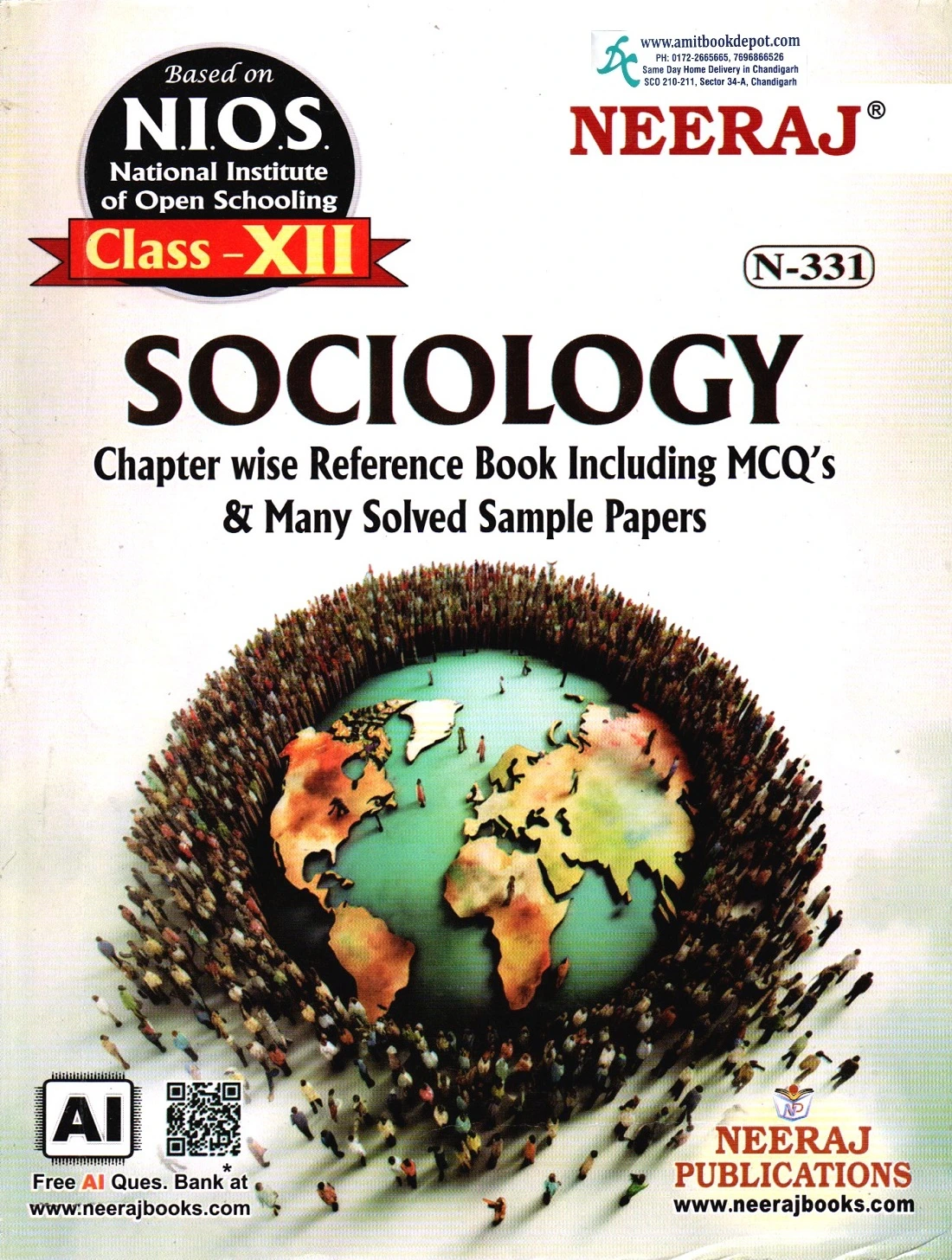
Chapter 1 provides an introduction to sociology, defining its scope, origin, and significance as a social science discipline for understanding human society.
It differentiates sociology from economics, political science, and anthropology, highlighting their unique methods while showing their interconnectedness in studying social behaviour.
Chapter 4 explains observation, interview, questionnaire, case study, and sampling methods used for scientific data collection in sociology.
Norms are specific behavioural rules, while values are abstract moral standards. Both maintain social order and guide individual actions in society.
Chapter 17 lists demographic shifts, technological innovations, cultural diffusion, economic transformations, and ideological movements as key factors of social change.
Socialisation is lifelong learning through family, school, peers, and media, enabling individuals to internalise societal norms, values, and roles.
Chapter 30 covers untouchability, economic exploitation, educational backwardness, and social discrimination faced by SCs and STs in India.
Gender discrimination is unequal treatment based on sex, seen in wage gaps, son preference, and limited access to education, health, and decision-making.
Unity in diversity refers to India's ability to maintain national cohesion and shared identity despite vast differences in religion, language, caste, and culture.
Chapter 35B describes media as both a preserver and transformer of culture, influencing values, lifestyle, language, and creating global cultural hybridisation.
No Description Added
Chapter 1 provides an introduction to sociology, defining its scope, origin, and significance as a social science discipline for understanding human society.
It differentiates sociology from economics, political science, and anthropology, highlighting their unique methods while showing their interconnectedness in studying social behaviour.
Chapter 4 explains observation, interview, questionnaire, case study, and sampling methods used for scientific data collection in sociology.
Norms are specific behavioural rules, while values are abstract moral standards. Both maintain social order and guide individual actions in society.
Chapter 17 lists demographic shifts, technological innovations, cultural diffusion, economic transformations, and ideological movements as key factors of social change.
Socialisation is lifelong learning through family, school, peers, and media, enabling individuals to internalise societal norms, values, and roles.
Chapter 30 covers untouchability, economic exploitation, educational backwardness, and social discrimination faced by SCs and STs in India.
Gender discrimination is unequal treatment based on sex, seen in wage gaps, son preference, and limited access to education, health, and decision-making.
Unity in diversity refers to India's ability to maintain national cohesion and shared identity despite vast differences in religion, language, caste, and culture.
Chapter 35B describes media as both a preserver and transformer of culture, influencing values, lifestyle, language, and creating global cultural hybridisation.