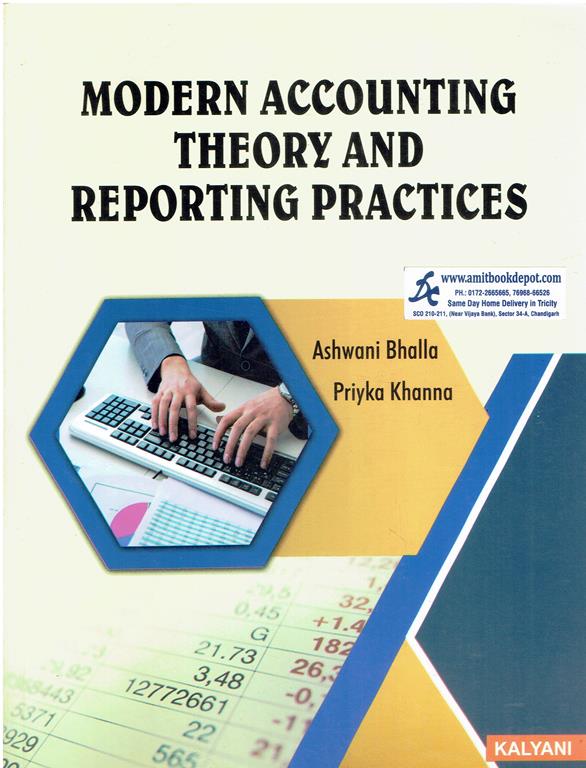



Yes, the book's content and chapter structure are meticulously designed to cover all units and topics prescribed in the syllabus for MC. 103 - Modern Accounting Theory & Reporting Practices.
The book is based on the syllabus and includes the core IFRS standards as mandated. For the most recent, highly specific amendments post-publication, students are advised to cross-reference with the official IASB website.
Yes, the book includes practical examples and illustrations to explain the application of various IFRS, particularly in chapters like Consolidated Financial Statements, Cash Flow Statements, and Financial Instruments.
While its primary audience is MCom students, the comprehensive coverage of IFRS can serve as a valuable supplementary reference for CA, CMA, and other professional courses that include international accounting in their curriculum.
The book's objective, as per the syllabus, is to provide a clear conceptual understanding of IFRS, which forms the foundation of Ind AS. While it focuses on IFRS, the knowledge directly applies to the converged Indian standards.
The product description highlights a content-focused structure. You may find theoretical explanations and practical applications, but for specific pedagogical elements like summaries or question banks, please check the physical book or contact the publisher.
Absolutely. This book is written specifically for the Panjab University syllabus, making it an excellent and sufficient primary resource for both regular and distance learning MCom students.
The book provides detailed coverage of key standards like IAS 1, 2, 7, 16, 37, 38, IFRS 9, 15, and 16, among others, as listed in the detailed table of contents, including complex areas like financial instruments and consolidation.
Yes, the book is designed with a student-centric approach, building from the fundamental conceptual framework to more advanced reporting practices, making it accessible for students beginning their IFRS journey.
Yes, Fair Value Accounting is a dedicated chapter (Chapter 28) and is also discussed as a basis of measurement within the conceptual framework unit.
No Description Added
Yes, the book's content and chapter structure are meticulously designed to cover all units and topics prescribed in the syllabus for MC. 103 - Modern Accounting Theory & Reporting Practices.
The book is based on the syllabus and includes the core IFRS standards as mandated. For the most recent, highly specific amendments post-publication, students are advised to cross-reference with the official IASB website.
Yes, the book includes practical examples and illustrations to explain the application of various IFRS, particularly in chapters like Consolidated Financial Statements, Cash Flow Statements, and Financial Instruments.
While its primary audience is MCom students, the comprehensive coverage of IFRS can serve as a valuable supplementary reference for CA, CMA, and other professional courses that include international accounting in their curriculum.
The book's objective, as per the syllabus, is to provide a clear conceptual understanding of IFRS, which forms the foundation of Ind AS. While it focuses on IFRS, the knowledge directly applies to the converged Indian standards.
The product description highlights a content-focused structure. You may find theoretical explanations and practical applications, but for specific pedagogical elements like summaries or question banks, please check the physical book or contact the publisher.
Absolutely. This book is written specifically for the Panjab University syllabus, making it an excellent and sufficient primary resource for both regular and distance learning MCom students.
The book provides detailed coverage of key standards like IAS 1, 2, 7, 16, 37, 38, IFRS 9, 15, and 16, among others, as listed in the detailed table of contents, including complex areas like financial instruments and consolidation.
Yes, the book is designed with a student-centric approach, building from the fundamental conceptual framework to more advanced reporting practices, making it accessible for students beginning their IFRS journey.
Yes, Fair Value Accounting is a dedicated chapter (Chapter 28) and is also discussed as a basis of measurement within the conceptual framework unit.