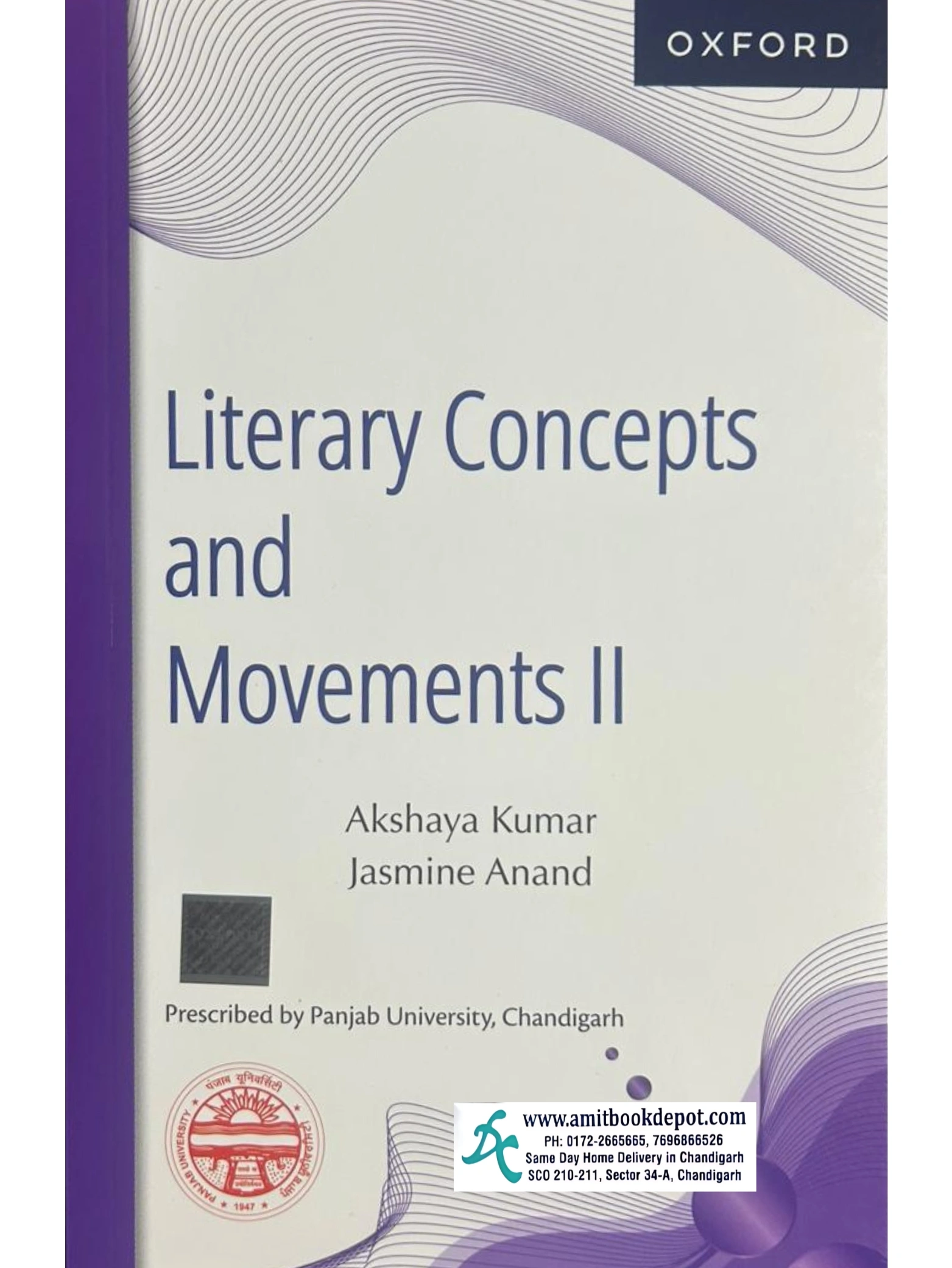
Yes, this volume, authored by Akshaya Kumar and Jasmine Anand and published by Oxford University Press, is the prescribed and most current edition as mandated by the Panjab University, Chandigarh syllabus for the BA English (Honours) 4th Semester program.
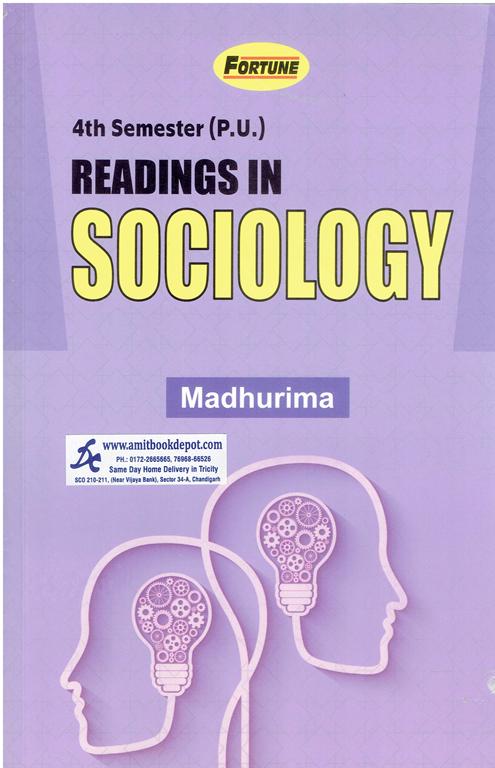
Yes, all poems and the selected prose excerpts are presented in their complete, unabridged form as required for detailed study and textual analysis.
The book’s structured units allow for direct comparison. Unit I (Romanticism) focuses on emotion, nature, and individualism, while Unit II (Realism) presents works critiquing industrial society and exploring psychological realism, with the editorial framework highlighting this ideological shift.
The Imagism unit includes the essential and commonly studied excerpt from Pound's manifesto, which outlines the core principles of the Imagist movement, providing a theoretical foundation for the poems that follow.
The book is primarily a curated anthology of primary texts with critical context. It is designed for in-depth study. For exam-specific guides or question banks, students may need to consult separate, supplementary resources.
The book includes the complete poem. Eliot's own original footnotes for the poem are a standard part of its publication and are typically included in the presented text.
Yes, the authors provide introductory material for each unit and author, offering concise but essential historical, biographical, and literary context to facilitate a deeper understanding of the works.
The editorial commentary within the book integrates and explains key concepts relevant to the texts and movements, aiding students in applying critical terminology to their analysis.
The selected excerpt from Book I, Chapters I-II ("Sowing") is the prescribed portion for the syllabus. The book provides this exact text. Reading the full novel can enrich understanding but is not mandatory for the semester examination.
Both poems are included in full in the Romanticism unit. The juxtaposition invites comparative study on how two Romantic writers approached the same social issue—one with ironic essay (Lamb) and the other with visionary lyric (Blake)—showcasing the diversity within the movement. The editorial notes often highlight this contrast.
No Description Added
Yes, this volume, authored by Akshaya Kumar and Jasmine Anand and published by Oxford University Press, is the prescribed and most current edition as mandated by the Panjab University, Chandigarh syllabus for the BA English (Honours) 4th Semester program.
Yes, all poems and the selected prose excerpts are presented in their complete, unabridged form as required for detailed study and textual analysis.
The book’s structured units allow for direct comparison. Unit I (Romanticism) focuses on emotion, nature, and individualism, while Unit II (Realism) presents works critiquing industrial society and exploring psychological realism, with the editorial framework highlighting this ideological shift.
The Imagism unit includes the essential and commonly studied excerpt from Pound's manifesto, which outlines the core principles of the Imagist movement, providing a theoretical foundation for the poems that follow.
The book is primarily a curated anthology of primary texts with critical context. It is designed for in-depth study. For exam-specific guides or question banks, students may need to consult separate, supplementary resources.
The book includes the complete poem. Eliot's own original footnotes for the poem are a standard part of its publication and are typically included in the presented text.
Yes, the authors provide introductory material for each unit and author, offering concise but essential historical, biographical, and literary context to facilitate a deeper understanding of the works.
The editorial commentary within the book integrates and explains key concepts relevant to the texts and movements, aiding students in applying critical terminology to their analysis.
The selected excerpt from Book I, Chapters I-II ("Sowing") is the prescribed portion for the syllabus. The book provides this exact text. Reading the full novel can enrich understanding but is not mandatory for the semester examination.
Both poems are included in full in the Romanticism unit. The juxtaposition invites comparative study on how two Romantic writers approached the same social issue—one with ironic essay (Lamb) and the other with visionary lyric (Blake)—showcasing the diversity within the movement. The editorial notes often highlight this contrast.