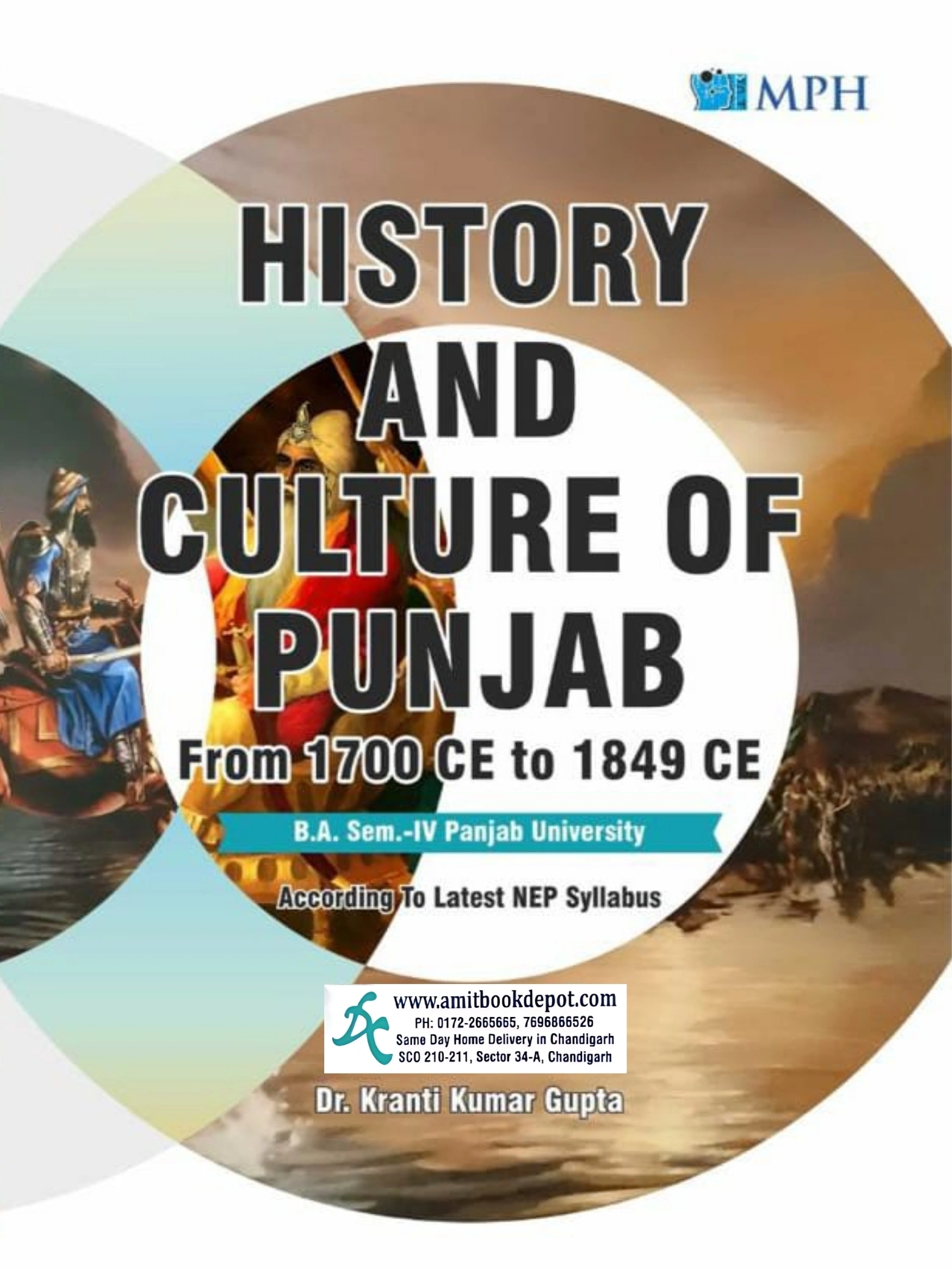

Yes, it is meticulously crafted to align 100% with the latest syllabus for the Ability Enhancement Course (AEC-HCP-401) as per the New Education Policy.
Absolutely. The book covers all topics in Unit I (18th Century) and Unit II (19th Century), and includes a dedicated section on Important Historical Places for map-based learning.
Yes, the comprehensive coverage of all syllabus topics provides the necessary content for assignments, projects, and semester tests that form part of the 10-mark internal assessment.
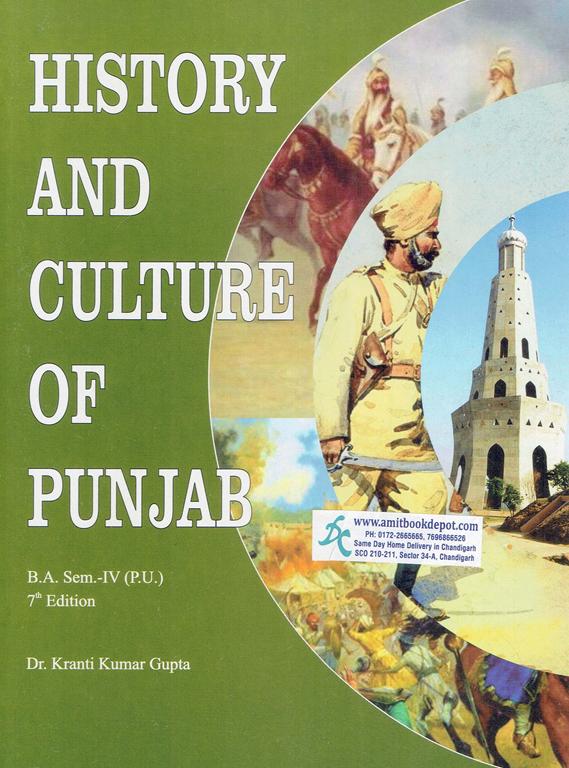
It covers the crucial period from 1700 CE to 1849 CE, from Banda Bahadur's era through the Sikh Misls and Empire to the annexation by the British.
Yes, the book breaks down these key 18th-century Sikh institutions with clarity, making them easy for undergraduate students to understand.
This book is designed as a comprehensive primary text that covers the entire syllabus. Coupled with consistent study, it is a robust resource for exam preparation.
While structured for PU students, anyone seeking a structured overview of Punjab's history from 1700-1849 will find this book academically valuable.
The book presents a balanced and factual account of the Anglo-Sikh Wars and the subsequent annexation, based on historical analysis.
The list (e.g., Lohgarh, Sirhind, Lahore, Amritsar, etc.) and relevant contextual information are provided in the "Important Historical Places" section of the book.
Yes, there is a dedicated chapter analyzing various aspects of Maharaja Ranjit Singh’s administration, including its military, civil, and economic dimensions.
No Description Added
Yes, it is meticulously crafted to align 100% with the latest syllabus for the Ability Enhancement Course (AEC-HCP-401) as per the New Education Policy.
Absolutely. The book covers all topics in Unit I (18th Century) and Unit II (19th Century), and includes a dedicated section on Important Historical Places for map-based learning.
Yes, the comprehensive coverage of all syllabus topics provides the necessary content for assignments, projects, and semester tests that form part of the 10-mark internal assessment.
It covers the crucial period from 1700 CE to 1849 CE, from Banda Bahadur's era through the Sikh Misls and Empire to the annexation by the British.
Yes, the book breaks down these key 18th-century Sikh institutions with clarity, making them easy for undergraduate students to understand.
This book is designed as a comprehensive primary text that covers the entire syllabus. Coupled with consistent study, it is a robust resource for exam preparation.
While structured for PU students, anyone seeking a structured overview of Punjab's history from 1700-1849 will find this book academically valuable.
The book presents a balanced and factual account of the Anglo-Sikh Wars and the subsequent annexation, based on historical analysis.
The list (e.g., Lohgarh, Sirhind, Lahore, Amritsar, etc.) and relevant contextual information are provided in the "Important Historical Places" section of the book.
Yes, there is a dedicated chapter analyzing various aspects of Maharaja Ranjit Singh’s administration, including its military, civil, and economic dimensions.