-
Mon-Fri: 10AM to 8PM 01722665665
-
My Account
-
-
0
Total :
₹ 0.00

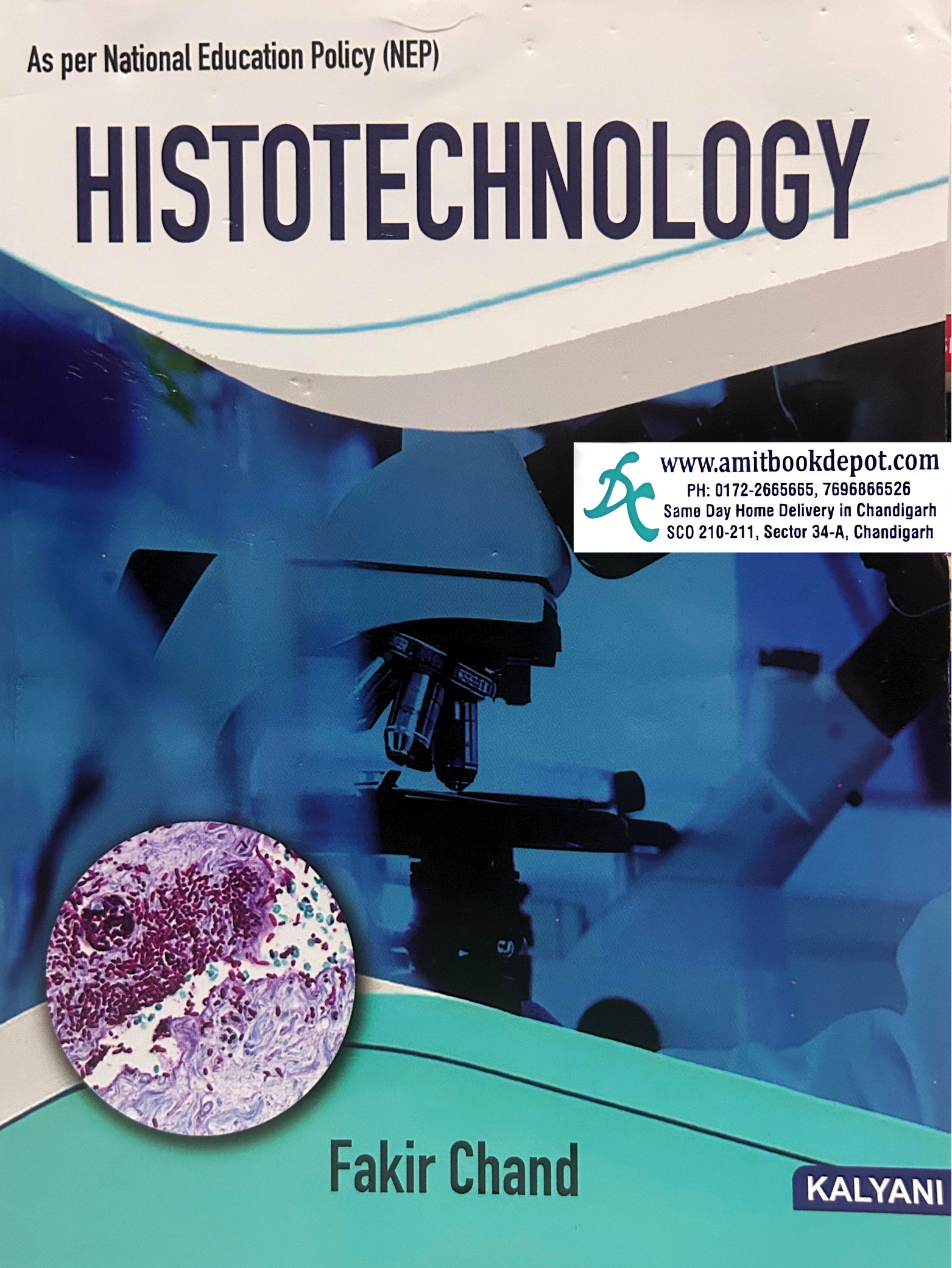
While this book is specifically designed forMaharaja Ranjit Singh Punjab Technical University (MRSPTU), the core topics in histotechnology are universal. MRSPTU students (Subject Code: BMLS1-426) will find it highly relevant as it covers all fundamental units like tissue processing, decalcification, section cutting, and staining.
Yes, Unit I includes a dedicated section on the "Care and Maintenance of Laboratory Equipment," which is crucial for practical knowledge and laboratory safety.
Yes, the book covers the "Routine Timing Schedule for Manual or Automatic Tissue" processing and discusses the "Components and Principles of Various Types of Automatic Tissue Processors."
Absolutely. Unit III specifically details "Faults in Paraffin Section Cutting with Reasons and Remedies," providing practical solutions to common problems faced during sectioning.
Yes, the book provides detailed instructions on "Sharpening of Microtome Knives," including the techniques of "Honing and Stropping."
The book goes beyond mere steps. Unit IV covers the "Principles of Staining," helping students understand the science behind why and how stains work on tissues.
Yes, the role and "Types of Impregnation" are covered in Unit IV. Impregnation is a critical step where paraffin wax replaces clearing agents to support the tissue for sectioning.
Yes, equipment like the "Freezing Microtome" and "Cryostats" are discussed in the "Section Cutting" unit (Unit III).
While its primary focus is the undergraduate syllabus, the strong foundational knowledge in core histotechnology makes it a good starting resource for competitive exam preparation.
Yes, the final unit covers "Commonly Used Mountants and Mounting the Slides," which is the final step in preparing a tissue slide for microscopy.
No Description Added
While this book is specifically designed forMaharaja Ranjit Singh Punjab Technical University (MRSPTU), the core topics in histotechnology are universal. MRSPTU students (Subject Code: BMLS1-426) will find it highly relevant as it covers all fundamental units like tissue processing, decalcification, section cutting, and staining.
Yes, Unit I includes a dedicated section on the "Care and Maintenance of Laboratory Equipment," which is crucial for practical knowledge and laboratory safety.
Yes, the book covers the "Routine Timing Schedule for Manual or Automatic Tissue" processing and discusses the "Components and Principles of Various Types of Automatic Tissue Processors."
Absolutely. Unit III specifically details "Faults in Paraffin Section Cutting with Reasons and Remedies," providing practical solutions to common problems faced during sectioning.
Yes, the book provides detailed instructions on "Sharpening of Microtome Knives," including the techniques of "Honing and Stropping."
The book goes beyond mere steps. Unit IV covers the "Principles of Staining," helping students understand the science behind why and how stains work on tissues.
Yes, the role and "Types of Impregnation" are covered in Unit IV. Impregnation is a critical step where paraffin wax replaces clearing agents to support the tissue for sectioning.
Yes, equipment like the "Freezing Microtome" and "Cryostats" are discussed in the "Section Cutting" unit (Unit III).
While its primary focus is the undergraduate syllabus, the strong foundational knowledge in core histotechnology makes it a good starting resource for competitive exam preparation.
Yes, the final unit covers "Commonly Used Mountants and Mounting the Slides," which is the final step in preparing a tissue slide for microscopy.