-
Mon-Fri: 10AM to 8PM 01722665665
-
My Account
-
-
0
Total :
₹ 0.00

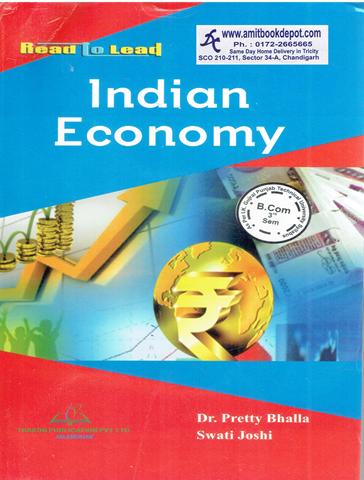

Yes, this book is meticulously crafted to cover 100% of the prescribed syllabus for course code B.COMGE 301-18, including all units and topics as outlined by PTU.
Yes, Unit 3 of the book contains a dedicated section that explains the features, objectives, and key differences between the former Planning Commission and the current NITI Aayog.
Unit 1 provides a clear, conceptual explanation with distinct points, highlighting the qualitative versus quantitative differences, which is a fundamental part of the syllabus.
Absolutely. Unit 3 offers a comprehensive analysis of the LPG policies of 1991, including their causes, components, and a critical assessment of their impact on the Indian economy.
Yes, Unit 2 contains a specific chapter on MSMEs (Micro, Small, and Medium Enterprises) and cottage industries, detailing their significance, challenges, and contributions to industrial development.
The book covers the major agriculture policies of India, including historical context and significant recent initiatives, providing a balanced view of the sector's policy framework.
Yes, each of the four units concludes with an "Exercise" section designed to help students revise the concepts and practice for their semester examinations.
Unit 4 breaks down the Balance of Payments (BOP) into manageable components, clearly distinguishes it from Balance of Trade, and explains the causes and types of disequilibrium in a student-friendly manner.
While focused on the core syllabus, the book provides relevant context and examples to illustrate theoretical concepts, making them relatable to the current Indian economic scenario.
Yes, Unit 3 includes a chapter on the Finance Commission in India, detailing its constitution, functions, and its critical role in regulating center-state financial relations.
No Description Added
Yes, this book is meticulously crafted to cover 100% of the prescribed syllabus for course code B.COMGE 301-18, including all units and topics as outlined by PTU.
Yes, Unit 3 of the book contains a dedicated section that explains the features, objectives, and key differences between the former Planning Commission and the current NITI Aayog.
Unit 1 provides a clear, conceptual explanation with distinct points, highlighting the qualitative versus quantitative differences, which is a fundamental part of the syllabus.
Absolutely. Unit 3 offers a comprehensive analysis of the LPG policies of 1991, including their causes, components, and a critical assessment of their impact on the Indian economy.
Yes, Unit 2 contains a specific chapter on MSMEs (Micro, Small, and Medium Enterprises) and cottage industries, detailing their significance, challenges, and contributions to industrial development.
The book covers the major agriculture policies of India, including historical context and significant recent initiatives, providing a balanced view of the sector's policy framework.
Yes, each of the four units concludes with an "Exercise" section designed to help students revise the concepts and practice for their semester examinations.
Unit 4 breaks down the Balance of Payments (BOP) into manageable components, clearly distinguishes it from Balance of Trade, and explains the causes and types of disequilibrium in a student-friendly manner.
While focused on the core syllabus, the book provides relevant context and examples to illustrate theoretical concepts, making them relatable to the current Indian economic scenario.
Yes, Unit 3 includes a chapter on the Finance Commission in India, detailing its constitution, functions, and its critical role in regulating center-state financial relations.