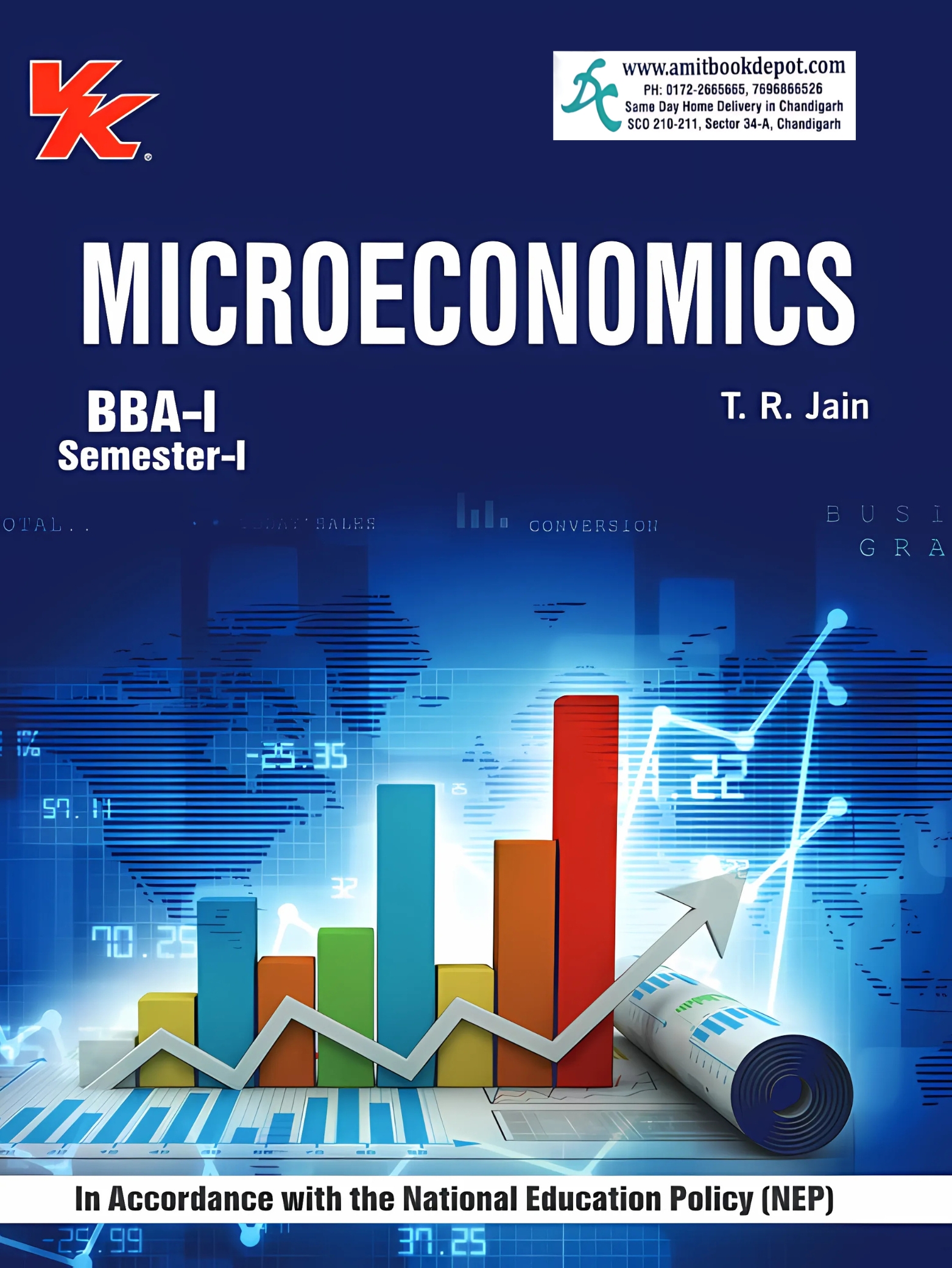
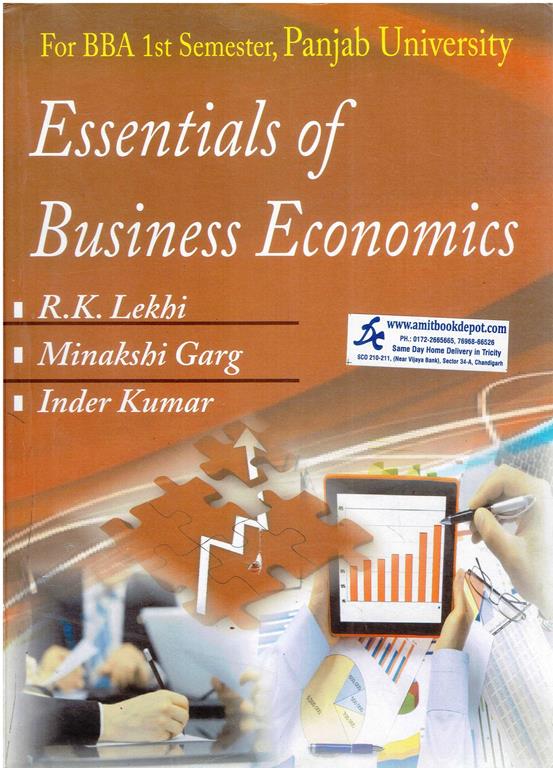
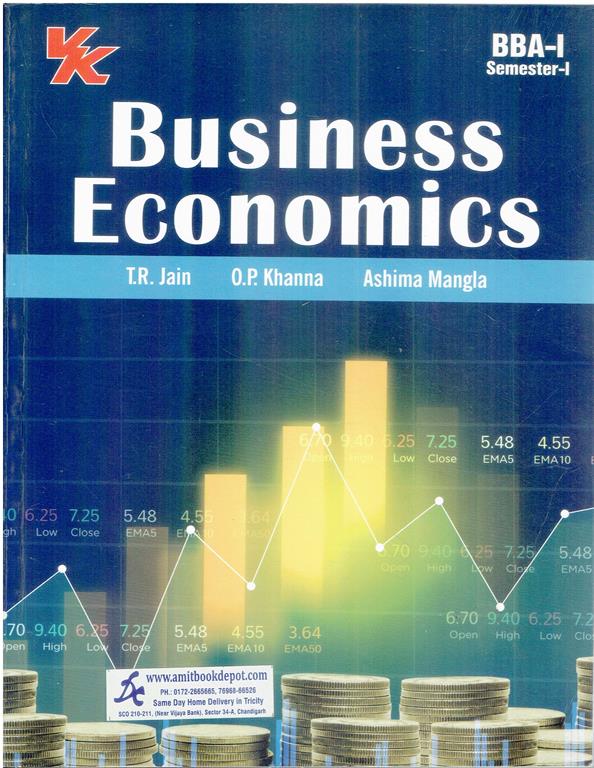
Yes, this book is meticulously crafted to align 100% with the latest prescribed syllabus for Course Code NBBA-102 at Panjab University, Chandigarh.
Absolutely. The book's table of contents is structured to comprehensively cover all topics from both Unit I (Demand, Production) and Unit II (Costs, Market Structures) as per the university's division.
The book's content and structure are designed keeping the exam pattern in mind, helping you differentiate between short-answer type questions (Section A) and detailed essay-type questions (Sections B & C).
Yes, the book provides a detailed explanation of Monopoly, including the types, conditions, and equilibrium under price discrimination, as required by the syllabus.
Yes, the chapter on market forms covers Monopolistic Competition, including features, equilibrium, and a dedicated section on the meaning, effects, and equilibrium concerning selling costs.
Yes, the book uses clear graphical representations and diagrams to explain key economic concepts like cost curves, demand and supply curves, and firm equilibrium, which are crucial for understanding and exams.
Yes, there is a dedicated chapter on Demand Forecasting that covers its need, objectives, and various methods as outlined in the syllabus.
Yes, the "Concepts of Revenue" chapter thoroughly covers the relationship between AR, MR, and Price Elasticity of Demand, a key topic in the syllabus.
Yes, T.R. Jain and O.P. Khanna are highly reputed and established authors in the field of economics education in India, known for their clear and student-friendly approach.
The book primarily focuses on explaining concepts as per the syllabus. While it illustrates concepts with examples, it may not contain a dedicated solved question bank, as the PU syllabus is largely theoretical for this paper.
No Description Added
Yes, this book is meticulously crafted to align 100% with the latest prescribed syllabus for Course Code NBBA-102 at Panjab University, Chandigarh.
Absolutely. The book's table of contents is structured to comprehensively cover all topics from both Unit I (Demand, Production) and Unit II (Costs, Market Structures) as per the university's division.
The book's content and structure are designed keeping the exam pattern in mind, helping you differentiate between short-answer type questions (Section A) and detailed essay-type questions (Sections B & C).
Yes, the book provides a detailed explanation of Monopoly, including the types, conditions, and equilibrium under price discrimination, as required by the syllabus.
Yes, the chapter on market forms covers Monopolistic Competition, including features, equilibrium, and a dedicated section on the meaning, effects, and equilibrium concerning selling costs.
Yes, the book uses clear graphical representations and diagrams to explain key economic concepts like cost curves, demand and supply curves, and firm equilibrium, which are crucial for understanding and exams.
Yes, there is a dedicated chapter on Demand Forecasting that covers its need, objectives, and various methods as outlined in the syllabus.
Yes, the "Concepts of Revenue" chapter thoroughly covers the relationship between AR, MR, and Price Elasticity of Demand, a key topic in the syllabus.
Yes, T.R. Jain and O.P. Khanna are highly reputed and established authors in the field of economics education in India, known for their clear and student-friendly approach.
The book primarily focuses on explaining concepts as per the syllabus. While it illustrates concepts with examples, it may not contain a dedicated solved question bank, as the PU syllabus is largely theoretical for this paper.