-
Mon-Fri: 10AM to 8PM 01722665665
-
My Account
-
-
0
Total :
₹ 0.00

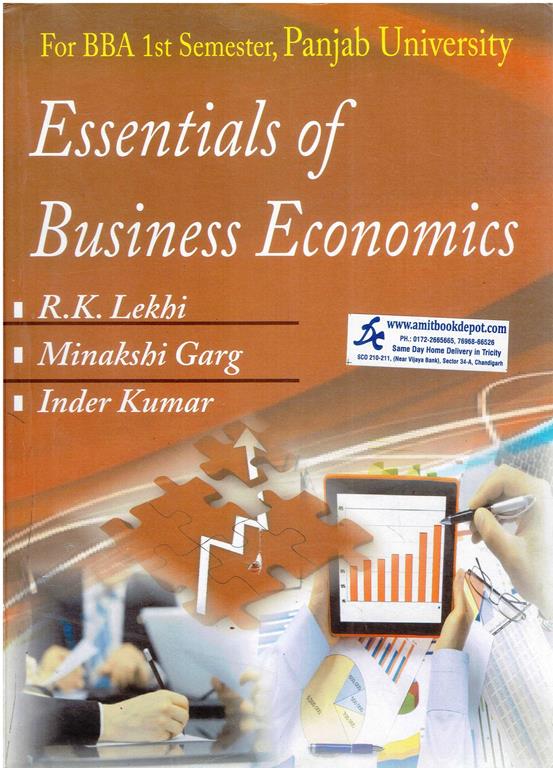

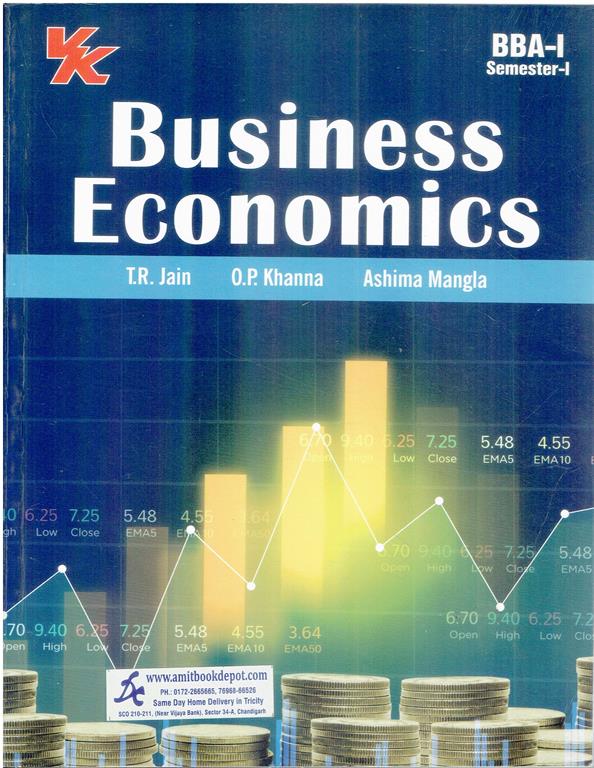
Yes, this edition is the most recent one available and is meticulously aligned with the prescribed BBA106 syllabus for Panjab University, Chandigarh. We recommend checking the publication date on the product page for specific details.
Yes, the book provides explanations and applications of cost and revenue concepts, including the relationship between AR, MR, and elasticity, which are essential for solving practical business problems.
This is a key concept covered in detail in Unit I. The book provides clear explanations and diagrams to help students distinguish between changes in quantity demanded (movement along) and changes in demand (shift) effectively.
Absolutely. The book includes numerous graphs and diagrams, such as short-run and long-run cost curves and firm equilibrium under different market structures, which are clearly labeled to aid visual learning and comprehension.
Yes, Unit II includes a dedicated section on Selling Costs within the chapter on Monopolistic Competition, explaining its meaning and effects on a firm's equilibrium, as outlined in the syllabus.
Yes, the fundamental concepts section in Unit I covers the Equi-Marginal Principle along with other key principles like Opportunity Cost and Incremental Analysis, explaining their relevance to managerial decisions.
Yes, the book breaks down the need, objectives, and various methods of Demand Forecasting in a structured and student-friendly manner, making a complex topic accessible.
Yes, Unit I provides a distinct and detailed analysis of both the Law of Variable Proportions (short-run) and Returns to a Scale (long-run) within the Theory of Production.
The book covers the fundamental features and pricing concepts under an oligopoly market structure, providing a solid foundation as required for a first-semester BBA course.
Yes, the authors have taken care to present complex economic theories in a clear, straightforward language, making it suitable for students who are new to the subject of economics.
No Description Added
Yes, this edition is the most recent one available and is meticulously aligned with the prescribed BBA106 syllabus for Panjab University, Chandigarh. We recommend checking the publication date on the product page for specific details.
Yes, the book provides explanations and applications of cost and revenue concepts, including the relationship between AR, MR, and elasticity, which are essential for solving practical business problems.
This is a key concept covered in detail in Unit I. The book provides clear explanations and diagrams to help students distinguish between changes in quantity demanded (movement along) and changes in demand (shift) effectively.
Absolutely. The book includes numerous graphs and diagrams, such as short-run and long-run cost curves and firm equilibrium under different market structures, which are clearly labeled to aid visual learning and comprehension.
Yes, Unit II includes a dedicated section on Selling Costs within the chapter on Monopolistic Competition, explaining its meaning and effects on a firm's equilibrium, as outlined in the syllabus.
Yes, the fundamental concepts section in Unit I covers the Equi-Marginal Principle along with other key principles like Opportunity Cost and Incremental Analysis, explaining their relevance to managerial decisions.
Yes, the book breaks down the need, objectives, and various methods of Demand Forecasting in a structured and student-friendly manner, making a complex topic accessible.
Yes, Unit I provides a distinct and detailed analysis of both the Law of Variable Proportions (short-run) and Returns to a Scale (long-run) within the Theory of Production.
The book covers the fundamental features and pricing concepts under an oligopoly market structure, providing a solid foundation as required for a first-semester BBA course.
Yes, the authors have taken care to present complex economic theories in a clear, straightforward language, making it suitable for students who are new to the subject of economics.