-
Mon-Fri: 10AM to 8PM 01722665665
-
My Account
-
-
0
Total :
₹ 0.00

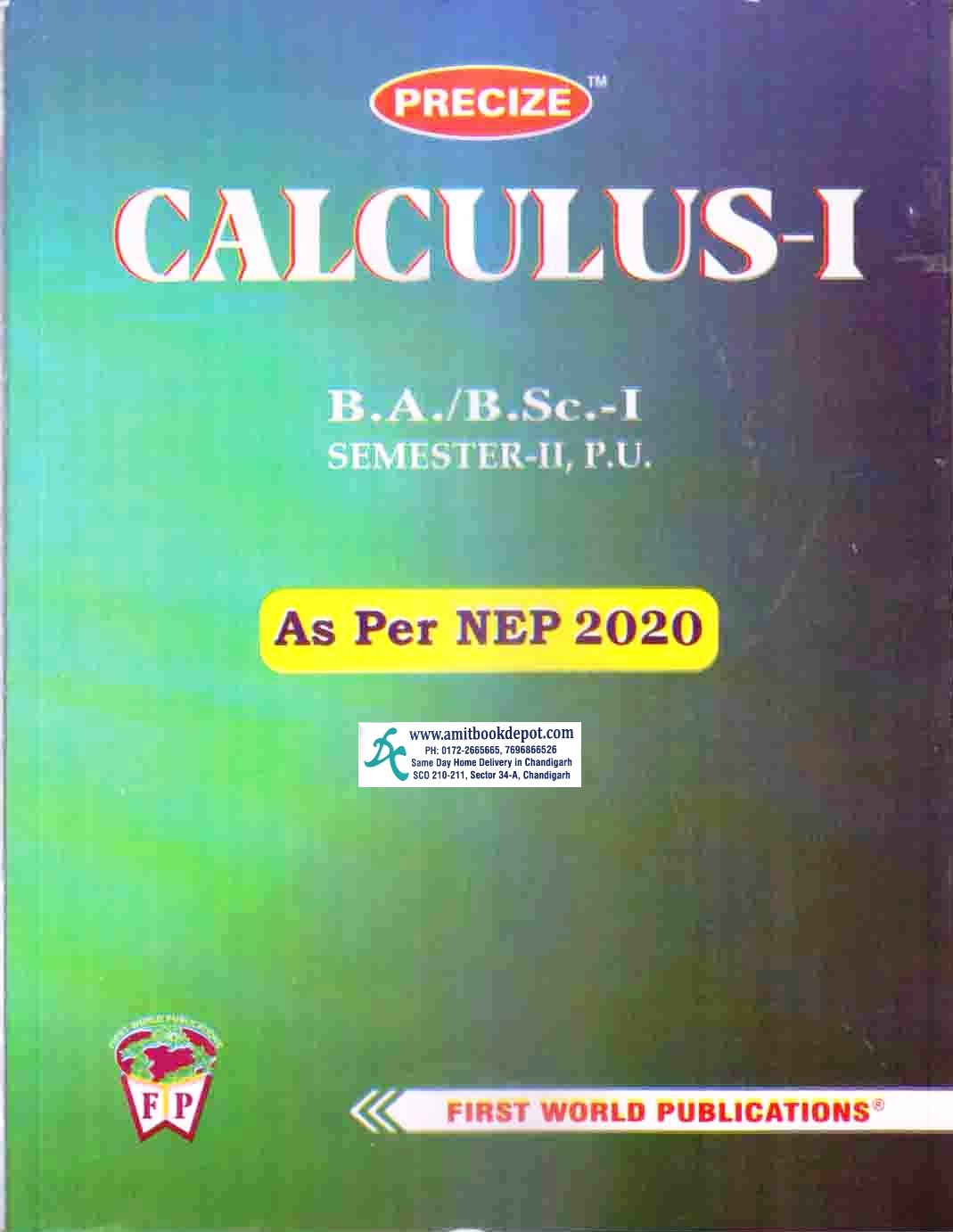
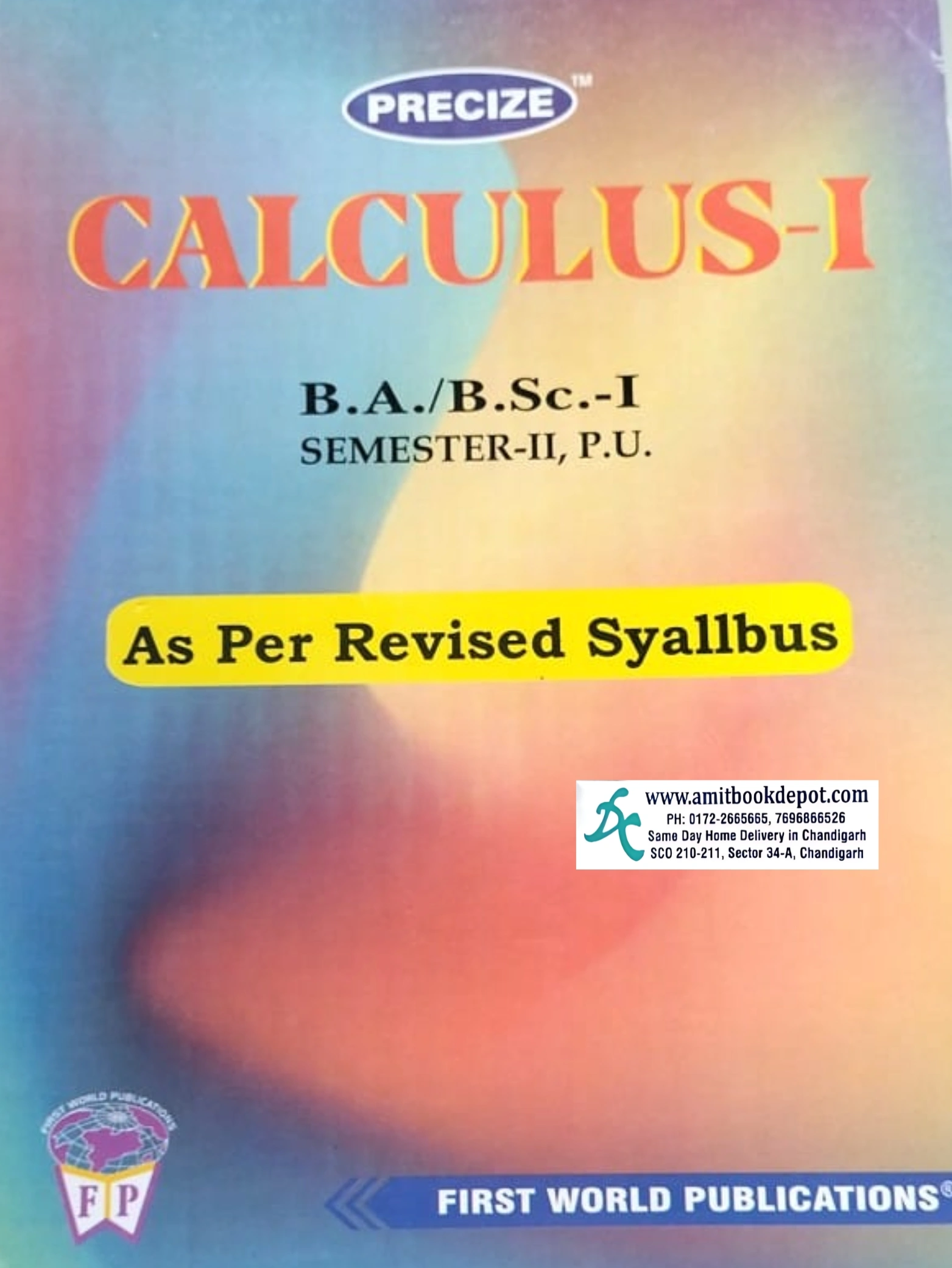
Yes, this book is meticulously crafted to cover 100% of the latest syllabus for MAT-DSC2 (MAJ/MIN)-201: Calculus-I as prescribed by Panjab University, Chandigarh, under the New Education Policy (NEP).
Absolutely. Unit III contains a dedicated and detailed chapter on the differentiation of Hyperbolic and Inverse Hyperbolic Functions, including their domains, ranges, and derivatives, which is a specific requirement of the PU syllabus.
Yes, the book provides a comprehensive explanation of the ε-δ definitions for both the limit of a function and continuity, as mandated in Units I and II of the syllabus.
Yes, Chapter 1 thoroughly covers the Properties of Real Numbers, including bounds, least upper bound (l.u.b.), greatest lower bound (g.l.b.), and the order completeness property, forming a crucial foundation for calculus.
Yes, Unit IV provides complete coverage of all Mean Value Theorems—Rolle's, Lagrange's, Cauchy's, Taylor's, and Maclaurin's—including their geometric interpretations and applications.
Yes, the book is written in clear, academic English. The language is precise yet accessible, making complex calculus concepts easier to grasp for undergraduate students.
While it is specifically tailored for Panjab University, BA/BSc 2nd Semester students, the core topics of Calculus I are universal. Students from other universities with similar syllabi may find it beneficial, but should cross-check their specific curriculum.
Yes, Chapter 8 (Unit IV) is entirely dedicated to the Applications of Derivatives, including finding equations of Tangents and Normals, and using Differentials for Approximations and Errors.
Yes, both are covered in detail. Leibnitz’s Theorem is covered under Successive Differentiation (Chapter 7), and L'Hospital's Rule for evaluating Indeterminate Forms is covered in Chapter 6.
Definitely. By covering the entire syllabus in depth, the book prepares you for all components of internal assessment, including mid-semester exams, assignments/projects, and the concepts needed for classroom participation.
No Description Added
Yes, this book is meticulously crafted to cover 100% of the latest syllabus for MAT-DSC2 (MAJ/MIN)-201: Calculus-I as prescribed by Panjab University, Chandigarh, under the New Education Policy (NEP).
Absolutely. Unit III contains a dedicated and detailed chapter on the differentiation of Hyperbolic and Inverse Hyperbolic Functions, including their domains, ranges, and derivatives, which is a specific requirement of the PU syllabus.
Yes, the book provides a comprehensive explanation of the ε-δ definitions for both the limit of a function and continuity, as mandated in Units I and II of the syllabus.
Yes, Chapter 1 thoroughly covers the Properties of Real Numbers, including bounds, least upper bound (l.u.b.), greatest lower bound (g.l.b.), and the order completeness property, forming a crucial foundation for calculus.
Yes, Unit IV provides complete coverage of all Mean Value Theorems—Rolle's, Lagrange's, Cauchy's, Taylor's, and Maclaurin's—including their geometric interpretations and applications.
Yes, the book is written in clear, academic English. The language is precise yet accessible, making complex calculus concepts easier to grasp for undergraduate students.
While it is specifically tailored for Panjab University, BA/BSc 2nd Semester students, the core topics of Calculus I are universal. Students from other universities with similar syllabi may find it beneficial, but should cross-check their specific curriculum.
Yes, Chapter 8 (Unit IV) is entirely dedicated to the Applications of Derivatives, including finding equations of Tangents and Normals, and using Differentials for Approximations and Errors.
Yes, both are covered in detail. Leibnitz’s Theorem is covered under Successive Differentiation (Chapter 7), and L'Hospital's Rule for evaluating Indeterminate Forms is covered in Chapter 6.
Definitely. By covering the entire syllabus in depth, the book prepares you for all components of internal assessment, including mid-semester exams, assignments/projects, and the concepts needed for classroom participation.