-
Mon-Fri: 10AM to 8PM 01722665665
-
My Account
-
-
0
Total :
₹ 0.00

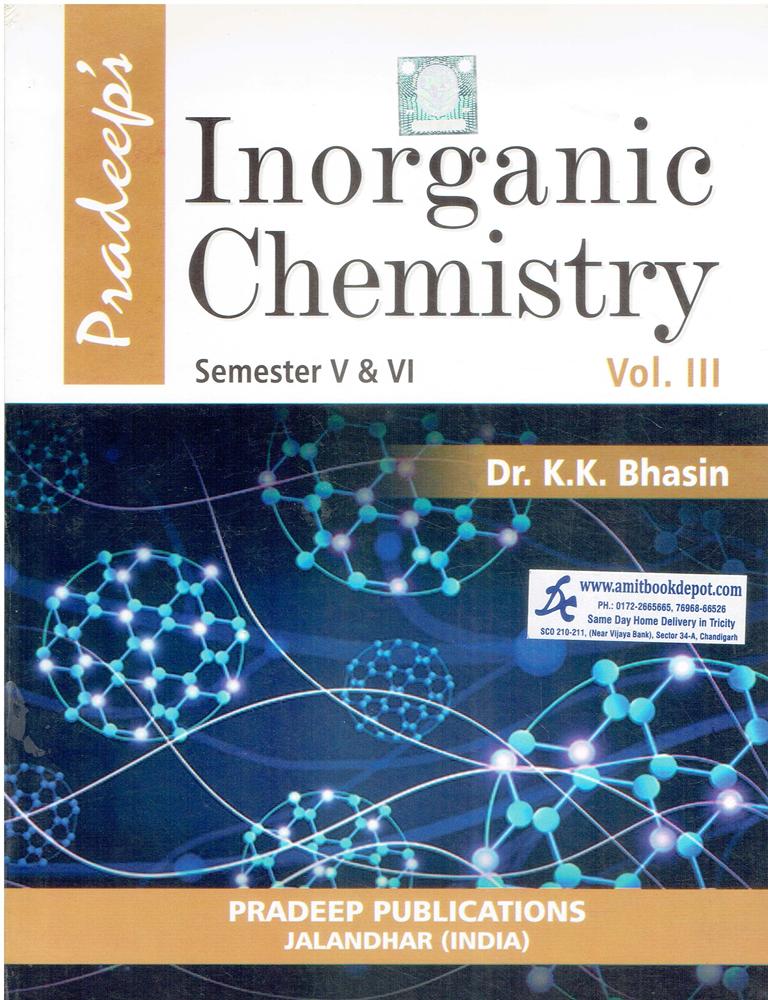

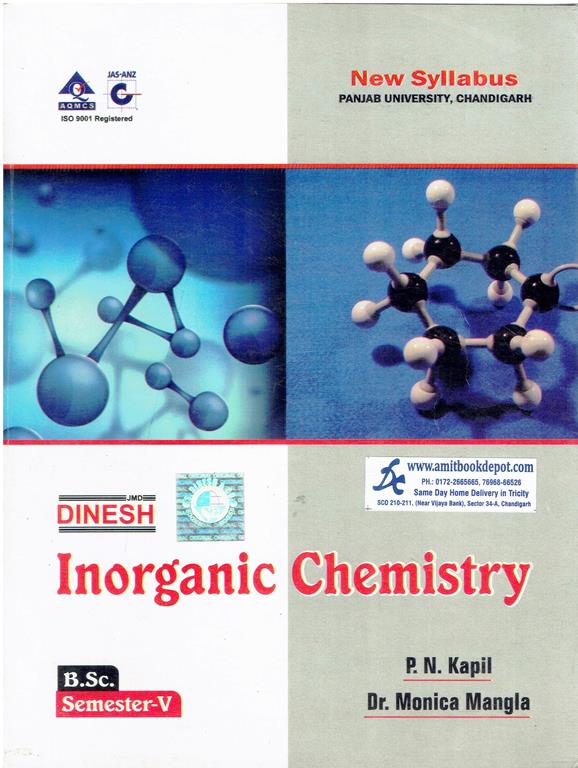
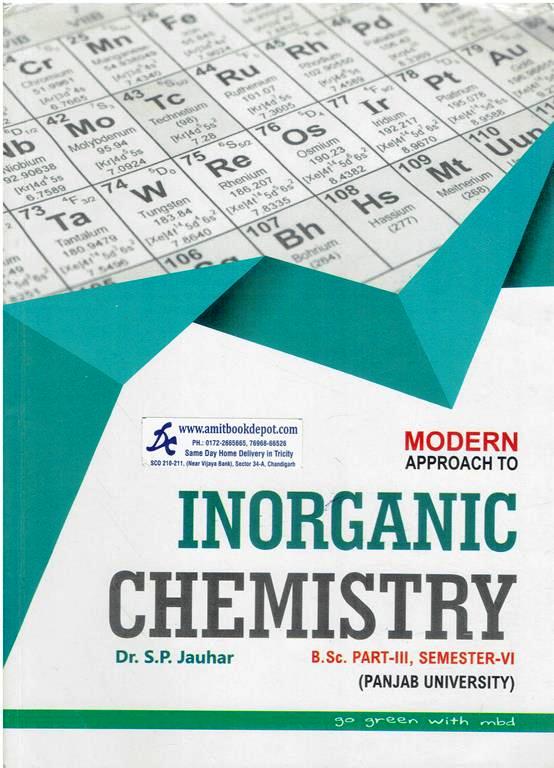
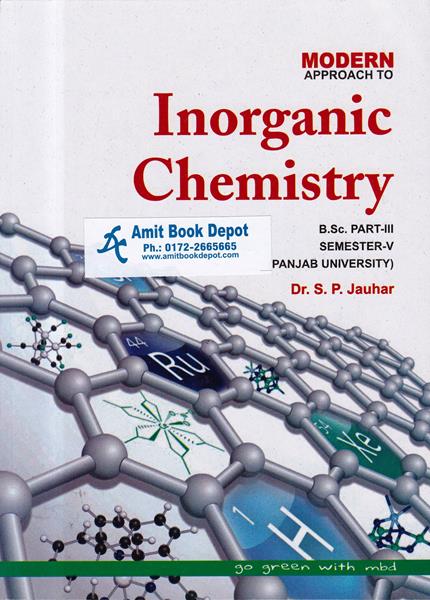
This book is specifically designed for the B.Sc. 5th and 6th semester syllabi of Panjab University (P.U.), Punjabi University (Pbi.U.), Kurukshetra University (K.U.), Maharshi Dayanand University (M.D.U.), Guru Nanak Dev University (G.N.D.U.), and universities in U.P., Bihar, Jharkhand, and Odisha.
Yes, it contains a detailed chapter on Bioinorganic Chemistry, covering essential and trace elements, metalloporphyrins, hemoglobin, myoglobin, and biological nitrogen fixation as per the syllabus.
Yes, Chapter 1 provides a comprehensive explanation of crystal field splitting in octahedral, tetrahedral, and square planar complexes, including calculations for Crystal Field Stabilization Energy (CFSE).
Absolutely. Chapter 2 is dedicated to Magnetic Properties, detailing experimental methods like Faraday’s method, the spin-only formula, orbital contributions, and the application of magnetic moment data for 3d-metal complexes.
Yes, Chapter 7 covers Electronic Spectra in depth, including term symbols, selection rules, Orgel energy level diagrams for d¹ and d⁹ states, and a discussion on the spectrum of the [Ti(H₂O)₆]³⁺ complex.
Yes, Chapter 8 details the preparation, properties, bonding, and applications of organometallic compounds of Lithium, Aluminum, Mercury, Tin, and Titanium, along with metal carbonyls and ferrocene.
Yes, Chapter 6 covers Silicones and Phosphazenes as key examples of inorganic polymers, including their preparation, properties, and the bonding in phosphazenes.
Yes, the book’s content is meticulously structured according to the unit-wise breakdown of papers like Paper-XVII (Inorganic Chemistry-A) and Paper-XXI (Inorganic Chemistry-B) for Semesters V and VI, respectively.
Yes, the biological process of Nitrogen Fixation is covered under the Bioinorganic Chemistry chapter as required by the syllabus.
Yes, it comprehensively covers all units prescribed for G.N.D.U. Semester V, Paper: Inorganic Chemistry-A, including Metal-Ligand Bonding, Magnetic Properties, Electronic Spectra, and Organometallic Compounds.
No Description Added
This book is specifically designed for the B.Sc. 5th and 6th semester syllabi of Panjab University (P.U.), Punjabi University (Pbi.U.), Kurukshetra University (K.U.), Maharshi Dayanand University (M.D.U.), Guru Nanak Dev University (G.N.D.U.), and universities in U.P., Bihar, Jharkhand, and Odisha.
Yes, it contains a detailed chapter on Bioinorganic Chemistry, covering essential and trace elements, metalloporphyrins, hemoglobin, myoglobin, and biological nitrogen fixation as per the syllabus.
Yes, Chapter 1 provides a comprehensive explanation of crystal field splitting in octahedral, tetrahedral, and square planar complexes, including calculations for Crystal Field Stabilization Energy (CFSE).
Absolutely. Chapter 2 is dedicated to Magnetic Properties, detailing experimental methods like Faraday’s method, the spin-only formula, orbital contributions, and the application of magnetic moment data for 3d-metal complexes.
Yes, Chapter 7 covers Electronic Spectra in depth, including term symbols, selection rules, Orgel energy level diagrams for d¹ and d⁹ states, and a discussion on the spectrum of the [Ti(H₂O)₆]³⁺ complex.
Yes, Chapter 8 details the preparation, properties, bonding, and applications of organometallic compounds of Lithium, Aluminum, Mercury, Tin, and Titanium, along with metal carbonyls and ferrocene.
Yes, Chapter 6 covers Silicones and Phosphazenes as key examples of inorganic polymers, including their preparation, properties, and the bonding in phosphazenes.
Yes, the book’s content is meticulously structured according to the unit-wise breakdown of papers like Paper-XVII (Inorganic Chemistry-A) and Paper-XXI (Inorganic Chemistry-B) for Semesters V and VI, respectively.
Yes, the biological process of Nitrogen Fixation is covered under the Bioinorganic Chemistry chapter as required by the syllabus.
Yes, it comprehensively covers all units prescribed for G.N.D.U. Semester V, Paper: Inorganic Chemistry-A, including Metal-Ligand Bonding, Magnetic Properties, Electronic Spectra, and Organometallic Compounds.