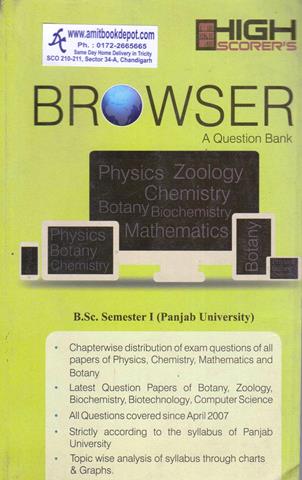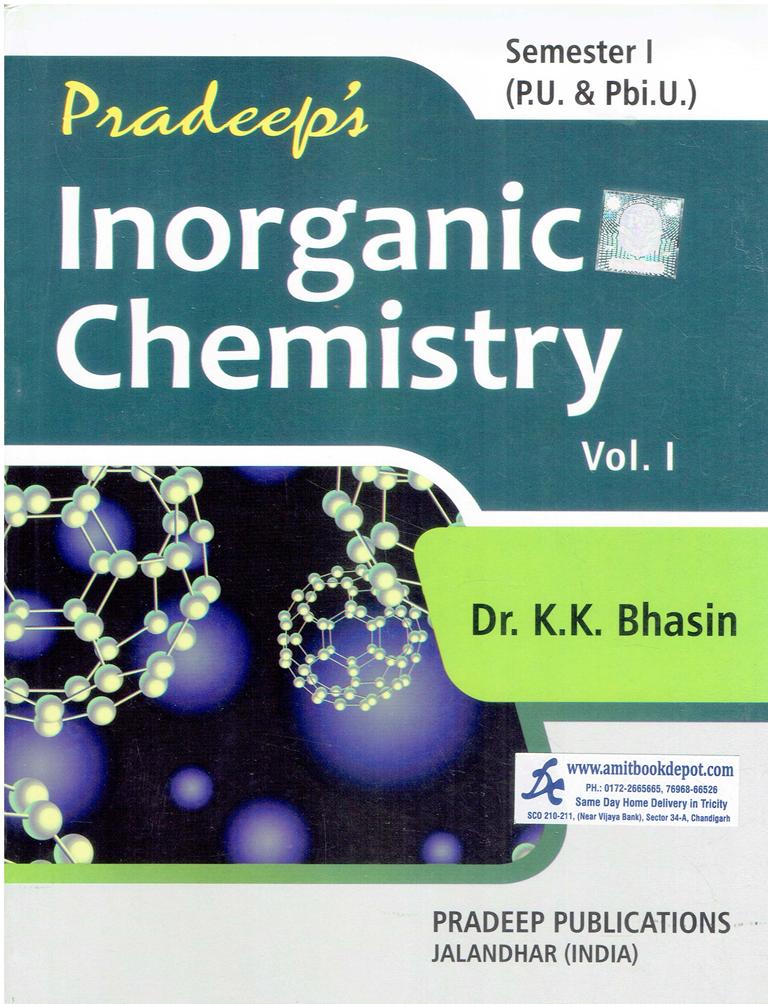

Yes, the content, chapter sequence, and depth of coverage are meticulously designed to match the latest prescribed syllabus for Paper 1: Inorganic Chemistry-A.
Absolutely. The book comprehensively covers all topics listed in Section A and Section B of Paper-I (Inorganic Chemistry) for Punjabi University's BSc 1st Semester.
It uses a dual approach: first through the concept of Hybridization (Valence Bond Theory) and then through the Valence Shell Electron Pair Repulsion (VSEPR) Theory, with specific examples for each.
Yes, the book includes detailed Molecular Orbital Energy Level Diagrams for both homonuclear (like N₂, O₂) and key heteronuclear (like CO, CN⁻) diatomic molecules.
Yes, it includes a specific section on the role of alkali metal and alkaline earth metal ions in biological systems.
Yes, Chapter 1 on Atomic Structure extensively covers radial and angular probability distribution curves and the detailed shapes of s, p, and d orbitals.
The diagonal relationship is explained, with a focused discussion on the similarities between Lithium and Magnesium.
It builds a very strong foundation for undergraduate-level inorganic chemistry, which is crucial for competitive exams. However, dedicated guides for those exams will cover a broader and more advanced range of topics.
As per the provided syllabus, the book covers electron-deficient compounds, which includes the concept relevant to understanding bonding in molecules like boranes.
Yes, Chapter 3 is dedicated to Noble Gases and covers the structure, bonding, and preparation of various xenon compounds (fluorides, oxides) in detail.
No Description Added
Yes, the content, chapter sequence, and depth of coverage are meticulously designed to match the latest prescribed syllabus for Paper 1: Inorganic Chemistry-A.
Absolutely. The book comprehensively covers all topics listed in Section A and Section B of Paper-I (Inorganic Chemistry) for Punjabi University's BSc 1st Semester.
It uses a dual approach: first through the concept of Hybridization (Valence Bond Theory) and then through the Valence Shell Electron Pair Repulsion (VSEPR) Theory, with specific examples for each.
Yes, the book includes detailed Molecular Orbital Energy Level Diagrams for both homonuclear (like N₂, O₂) and key heteronuclear (like CO, CN⁻) diatomic molecules.
Yes, it includes a specific section on the role of alkali metal and alkaline earth metal ions in biological systems.
Yes, Chapter 1 on Atomic Structure extensively covers radial and angular probability distribution curves and the detailed shapes of s, p, and d orbitals.
The diagonal relationship is explained, with a focused discussion on the similarities between Lithium and Magnesium.
It builds a very strong foundation for undergraduate-level inorganic chemistry, which is crucial for competitive exams. However, dedicated guides for those exams will cover a broader and more advanced range of topics.
As per the provided syllabus, the book covers electron-deficient compounds, which includes the concept relevant to understanding bonding in molecules like boranes.
Yes, Chapter 3 is dedicated to Noble Gases and covers the structure, bonding, and preparation of various xenon compounds (fluorides, oxides) in detail.