-
Mon-Fri: 10AM to 8PM 01722665665
-
My Account
-
-
0
Total :
₹ 0.00

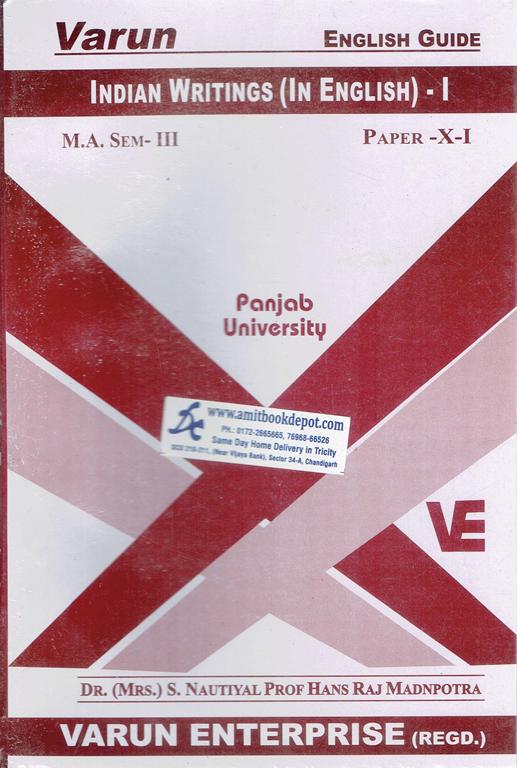
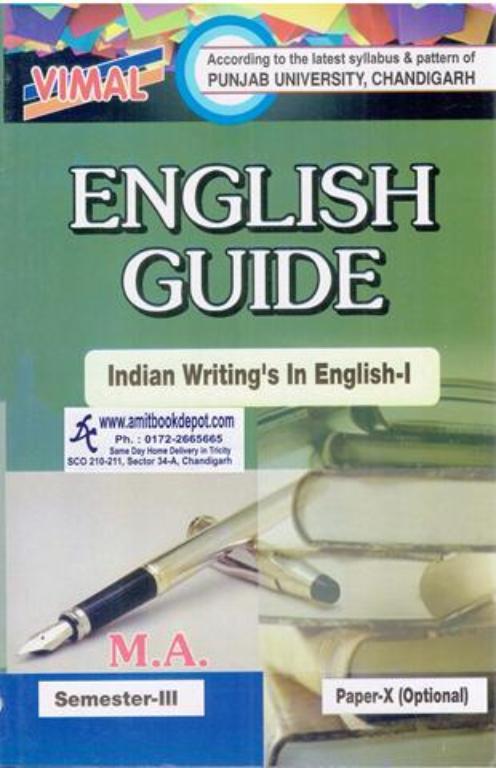
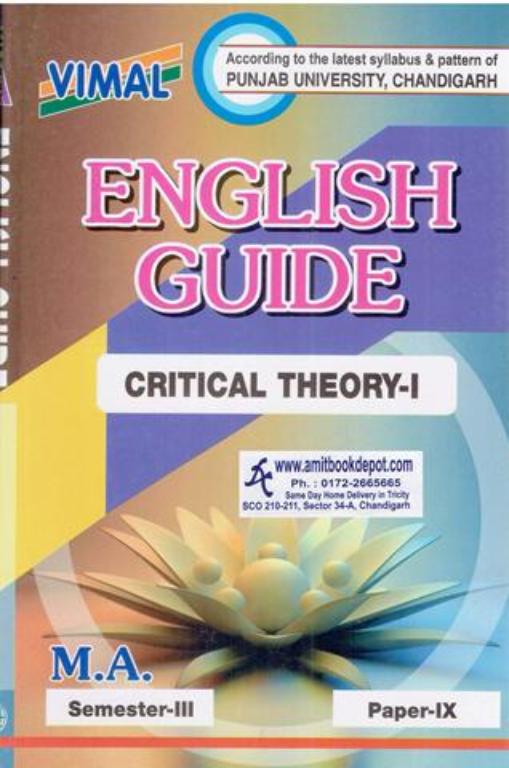
The Varun English Guide for MA 3rd Semester, Paper 10 (1) is the essential study resource for Panjab University students. Authored by Dr. S. Nautiyal, this guide provides comprehensive coverage of the Indian Writings in English syllabus. It includes detailed critical analyses of works by Raja Rao (Kanthapura), Githa Hariharan, Mahesh Dattani (Final Solutions), and poets like A.K. Ramanujan and Agha Shahid Ali. With focused explanations, thematic discussions, and exam-oriented content, this guide is meticulously designed to help students decode complex texts and excel in their examinations. Keywords: MA English Guide, Panjab University, Indian Writings in English, Raja Rao, Kanthapura, Final Solutions, Syllabus-specific.

While the guide is structured to help answer exam-style questions, it may not contain full, compiled previous years' papers. Its primary focus is on providing critical analysis and content that enables students to formulate their own answers.
It dedicates a significant section to explaining Raja Rao's use of the 'sthalapurana' (legend-of-a-place) technique, the grandmother narrator, and how the English language is Indianized to suit the storytelling, making the novel's structure more accessible.
Yes, Unit 1 provides context and critical frameworks for understanding the essays, explaining their arguments about nationalism, literary criticism, and the evolution of the Indian novel in English.
The guide is designed based on the syllabus-prescribed texts and excerpts. However, for the precise pagination of essays within anthologies, students should cross-reference with their primary texts.
The guide offers a dedicated feminist critique, analyzing how the novel deconstructs traditional myths (like Sita, Gandhari) to explore the constraints and aspirations of its female protagonists in a patriarchal society.
While it is specifically tailored for the Panjab University syllabus, students from other universities studying the same texts (e.g., Kanthapura, Final Solutions, poetry of Ramanujan) will find the critical analyses immensely beneficial.
Absolutely. The guide analyzes the symbolism of the divided set, the characters of the Mob, and the choral interludes, which are central to understanding the play's themes of communalism and duality.
The language is academic yet clear and student-friendly, designed to simplify complex literary concepts without diluting their critical depth.
Yes, the guide provides comprehensive and balanced critical analysis for all the prescribed poems of each poet, as per the university's syllabus requirements.
Each unit provides essential historical and cultural background to situate the text, such as the Gandhian National Movement for Kanthapura and the post-Babri Masjid context for Final Solutions.
While the guide is structured to help answer exam-style questions, it may not contain full, compiled previous years' papers. Its primary focus is on providing critical analysis and content that enables students to formulate their own answers.
It dedicates a significant section to explaining Raja Rao's use of the 'sthalapurana' (legend-of-a-place) technique, the grandmother narrator, and how the English language is Indianized to suit the storytelling, making the novel's structure more accessible.
Yes, Unit 1 provides context and critical frameworks for understanding the essays, explaining their arguments about nationalism, literary criticism, and the evolution of the Indian novel in English.
The guide is designed based on the syllabus-prescribed texts and excerpts. However, for the precise pagination of essays within anthologies, students should cross-reference with their primary texts.
The guide offers a dedicated feminist critique, analyzing how the novel deconstructs traditional myths (like Sita, Gandhari) to explore the constraints and aspirations of its female protagonists in a patriarchal society.
While it is specifically tailored for the Panjab University syllabus, students from other universities studying the same texts (e.g., Kanthapura, Final Solutions, poetry of Ramanujan) will find the critical analyses immensely beneficial.
Absolutely. The guide analyzes the symbolism of the divided set, the characters of the Mob, and the choral interludes, which are central to understanding the play's themes of communalism and duality.
The language is academic yet clear and student-friendly, designed to simplify complex literary concepts without diluting their critical depth.
Yes, the guide provides comprehensive and balanced critical analysis for all the prescribed poems of each poet, as per the university's syllabus requirements.
Each unit provides essential historical and cultural background to situate the text, such as the Gandhian National Movement for Kanthapura and the post-Babri Masjid context for Final Solutions.