-
Mon-Fri: 10AM to 8PM 01722665665
-
My Account
-
-
0
Total :
₹ 0.00

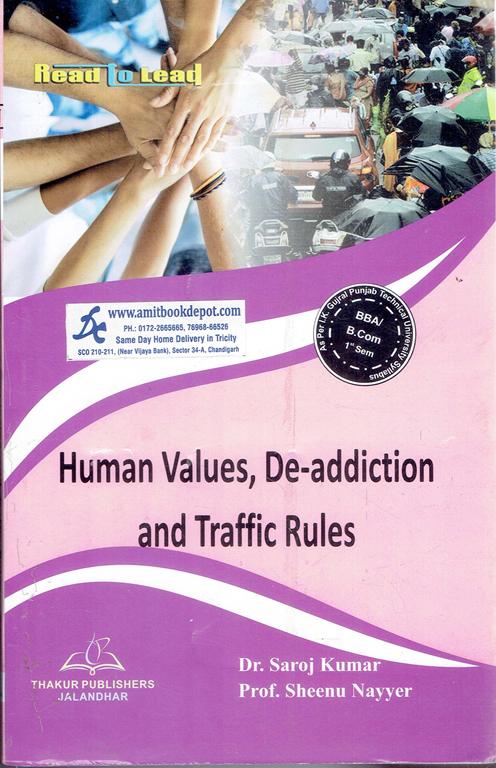


Yes, this book is meticulously crafted to align 100% with the I.K. Gujral Punjab Technical University (IKGPTU) syllabus for the HVPE 101-18 course, ensuring complete coverage of all prescribed modules and topics.
The book strongly emphasizes practical learning. Each module concludes with exercises, and several modules include real-world case studies to help students apply the concepts of human values and ethics.
The book promotes a methodology of self-exploration and dialogue, encouraging students to validate concepts through their own natural acceptance and lived experience, rather than through dogma or lectures.
Yes, Module 2: "Harmony in Human Being" is entirely dedicated to explaining the human as a co-existence of the sentient 'I' and the material 'Body', and how to achieve harmony between them.
Module 5: "Professional Ethics" directly links the understanding of human values to professional life, discussing how to build ethical business practices, people-friendly management systems, and eco-friendly production models.
While the core focus is on human value education, the book addresses de-addiction implicitly under modules discussing Sanyam (self-regulation) and holistic health. Traffic rules are covered as a part of understanding harmony and responsibility in society.
While tailored for PTU, the fundamental principles of human values, harmony, and professional ethics are universal. Students from other universities with similar value education courses will find it highly beneficial.
Yes, the concept of Ubhay-tripti (mutual fulfillment) is explored in Module 3, in the context of ensuring trust and respect in relationships that are fulfilling for both individuals.
Absolutely. The book is written in clear, concise, and student-friendly language, avoiding unnecessary jargon to make complex concepts of value education accessible to all.
Yes, all such important Sanskrit and Hindi terms are clearly defined and explained within their relevant modules (e.g., Sah-astitva in Module 4) to ensure conceptual clarity.
No Description Added
Yes, this book is meticulously crafted to align 100% with the I.K. Gujral Punjab Technical University (IKGPTU) syllabus for the HVPE 101-18 course, ensuring complete coverage of all prescribed modules and topics.
The book strongly emphasizes practical learning. Each module concludes with exercises, and several modules include real-world case studies to help students apply the concepts of human values and ethics.
The book promotes a methodology of self-exploration and dialogue, encouraging students to validate concepts through their own natural acceptance and lived experience, rather than through dogma or lectures.
Yes, Module 2: "Harmony in Human Being" is entirely dedicated to explaining the human as a co-existence of the sentient 'I' and the material 'Body', and how to achieve harmony between them.
Module 5: "Professional Ethics" directly links the understanding of human values to professional life, discussing how to build ethical business practices, people-friendly management systems, and eco-friendly production models.
While the core focus is on human value education, the book addresses de-addiction implicitly under modules discussing Sanyam (self-regulation) and holistic health. Traffic rules are covered as a part of understanding harmony and responsibility in society.
While tailored for PTU, the fundamental principles of human values, harmony, and professional ethics are universal. Students from other universities with similar value education courses will find it highly beneficial.
Yes, the concept of Ubhay-tripti (mutual fulfillment) is explored in Module 3, in the context of ensuring trust and respect in relationships that are fulfilling for both individuals.
Absolutely. The book is written in clear, concise, and student-friendly language, avoiding unnecessary jargon to make complex concepts of value education accessible to all.
Yes, all such important Sanskrit and Hindi terms are clearly defined and explained within their relevant modules (e.g., Sah-astitva in Module 4) to ensure conceptual clarity.