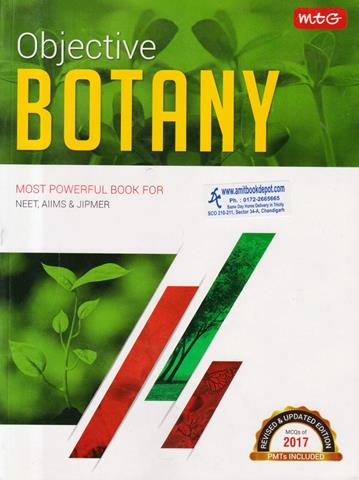
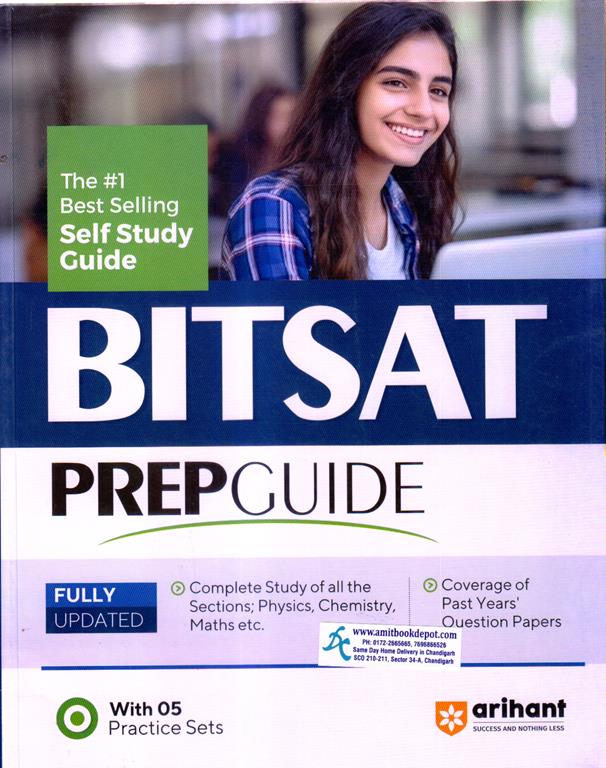
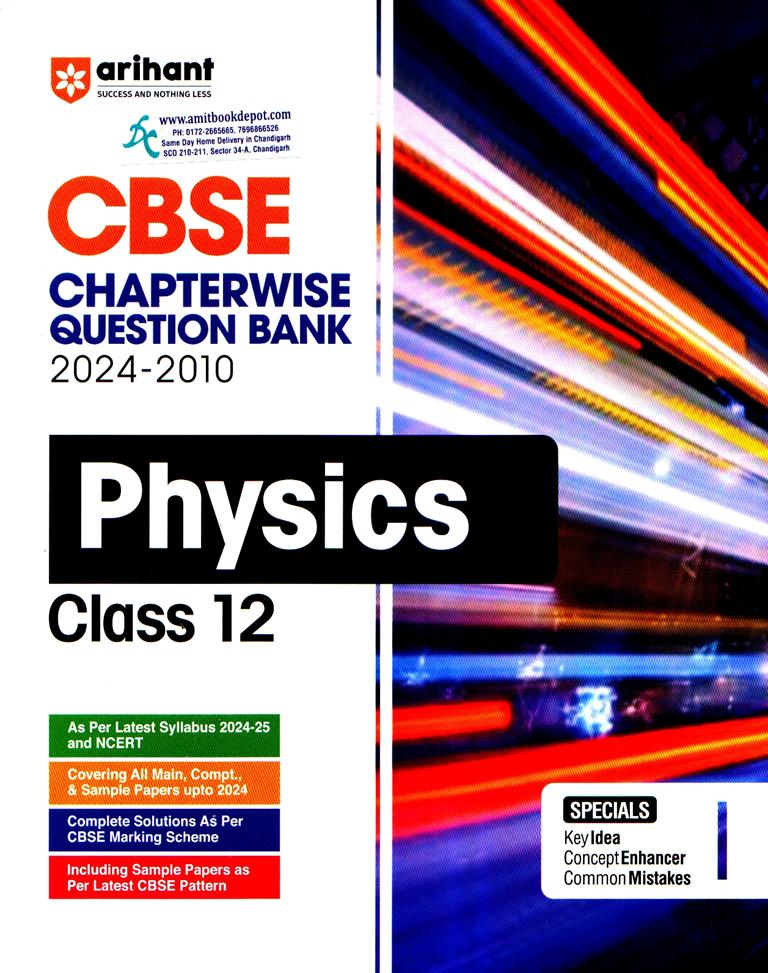
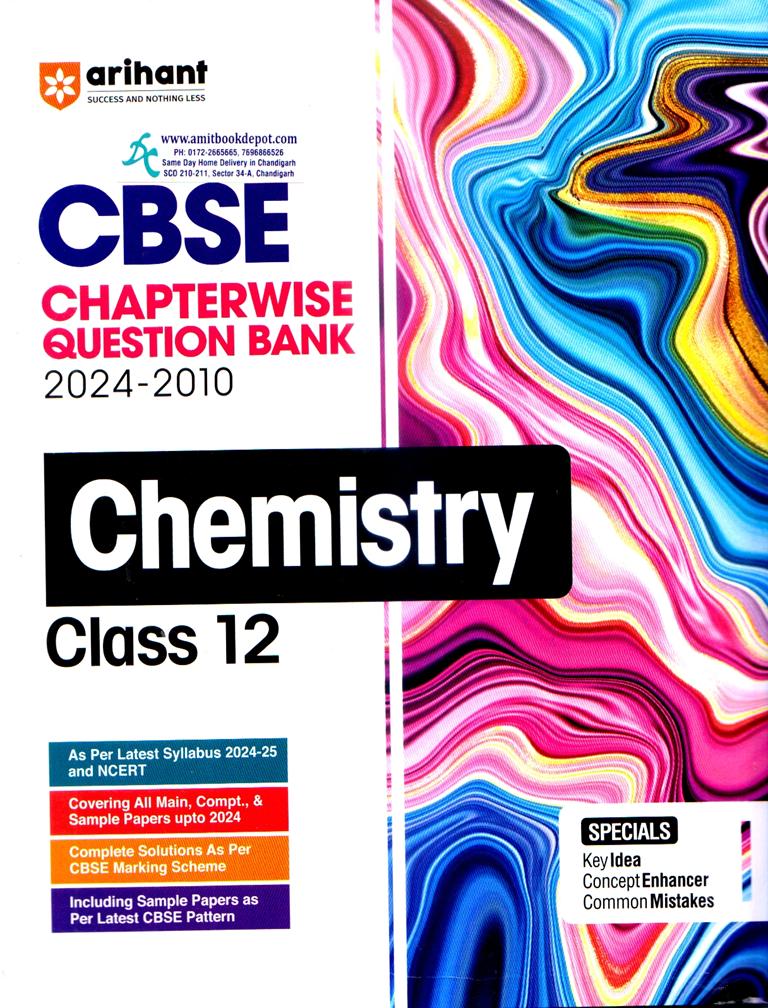
-
Mon-Fri: 10AM to 8PM 01722665665
-
My Account
-
-
0
Total :
₹ 0.00

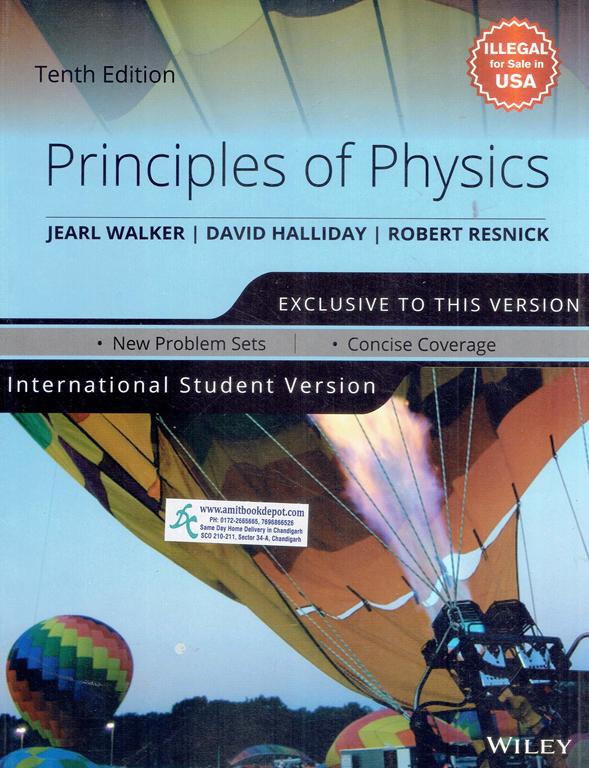
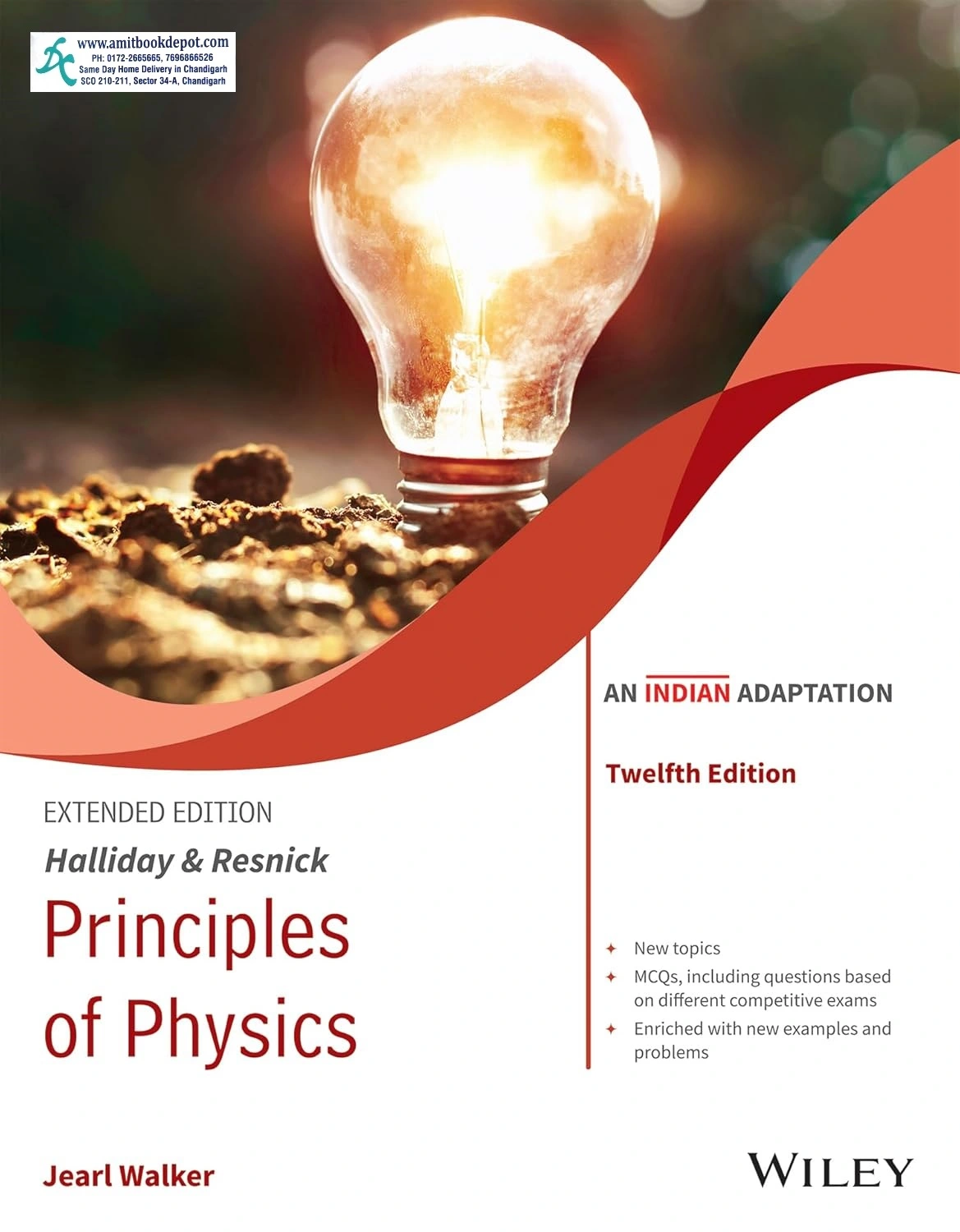

Yes. The 12th edition provides rigorous calculus-based treatment of mechanics, electromagnetism, thermodynamics, and modern physics, tailored for engineering and science undergraduates.
Yes. Chapter 32 comprehensively covers Maxwell’s Equations and magnetism of matter, forming the foundation for electromagnetic waves in Chapter 33.
Yes. Chapters 37–44 cover relativity, photons, matter waves, nuclear physics, solid-state conduction, and quarks/leptons up to the Big Bang.
Three full chapters (18–20) cover temperature, first law, kinetic theory of gases, entropy, and the second law of thermodynamics.
Yes. Chapter 35 focuses on interference (Young’s double slit, thin films), and Chapter 36 on diffraction (single slit, gratings, resolution).
Yes. Chapter 11 combines rolling motion, torque, and angular momentum with conservation principles and sample problems.
Yes. Chapter 24 covers electric potential; Chapter 25 covers capacitance, dielectrics, and energy storage in capacitors.
Yes. Chapter 43 details energy from the nucleus—fission, fusion, reactors, and nuclear power fundamentals.
Yes. Chapter 31 covers LC oscillations, damped/forced oscillations, and alternating current circuits with phasors.
Yes. Appendices include mathematical formulas, physical constants, periodic table, and conversion factors for quick problem-solving.
No Description Added
Yes. The 12th edition provides rigorous calculus-based treatment of mechanics, electromagnetism, thermodynamics, and modern physics, tailored for engineering and science undergraduates.
Yes. Chapter 32 comprehensively covers Maxwell’s Equations and magnetism of matter, forming the foundation for electromagnetic waves in Chapter 33.
Yes. Chapters 37–44 cover relativity, photons, matter waves, nuclear physics, solid-state conduction, and quarks/leptons up to the Big Bang.
Three full chapters (18–20) cover temperature, first law, kinetic theory of gases, entropy, and the second law of thermodynamics.
Yes. Chapter 35 focuses on interference (Young’s double slit, thin films), and Chapter 36 on diffraction (single slit, gratings, resolution).
Yes. Chapter 11 combines rolling motion, torque, and angular momentum with conservation principles and sample problems.
Yes. Chapter 24 covers electric potential; Chapter 25 covers capacitance, dielectrics, and energy storage in capacitors.
Yes. Chapter 43 details energy from the nucleus—fission, fusion, reactors, and nuclear power fundamentals.
Yes. Chapter 31 covers LC oscillations, damped/forced oscillations, and alternating current circuits with phasors.
Yes. Appendices include mathematical formulas, physical constants, periodic table, and conversion factors for quick problem-solving.