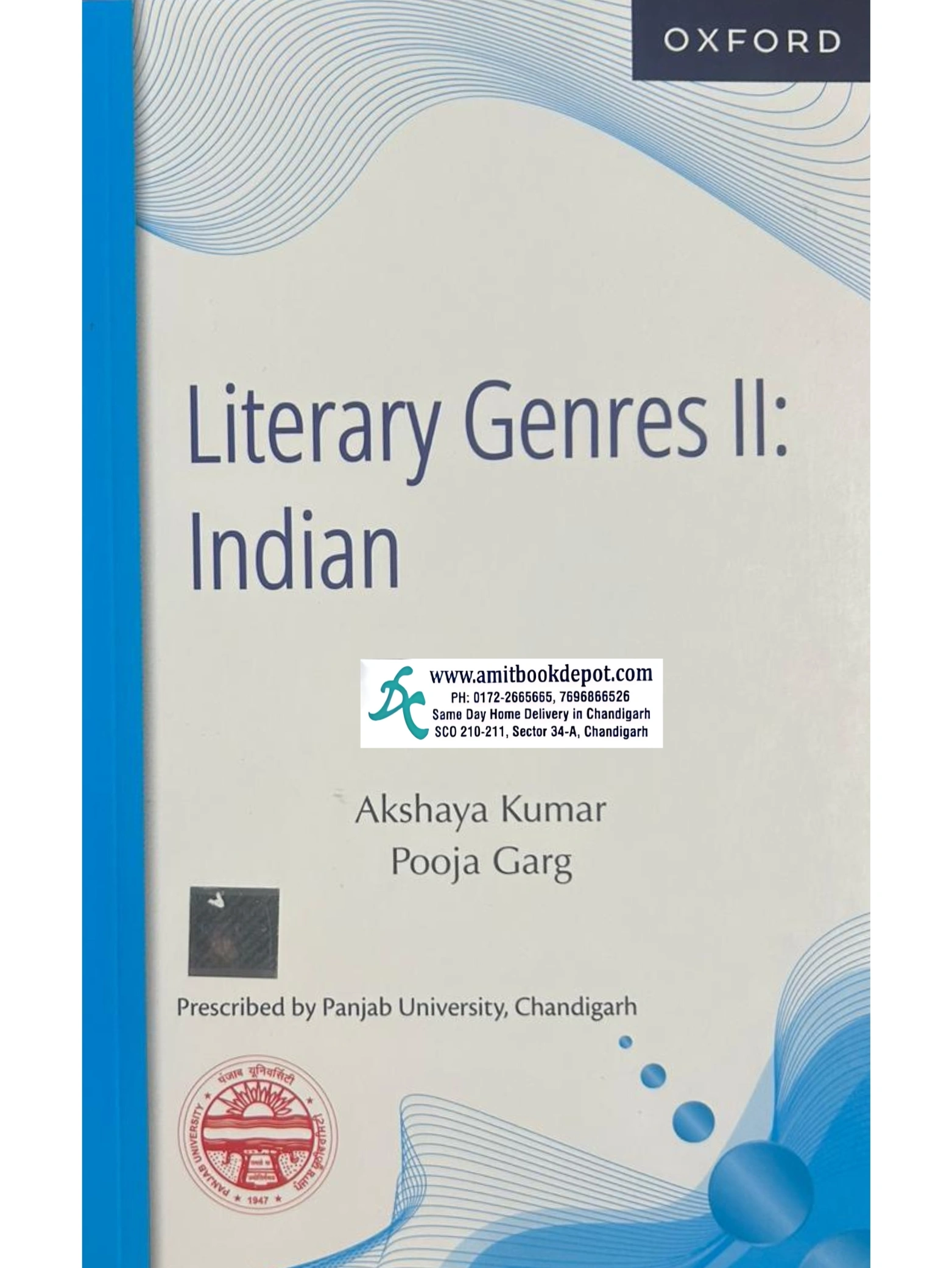
Yes. This book, "Literary Genres II—Indian" by Akshaya Kumar and Pooja Garg (Oxford University Press), is specifically designed and prescribed as the core textbook for the BA 4th Semester syllabus at Panjab University, Chandigarh. You should confirm the exact syllabus code with your department for the current year.
The analysis by Maaz Bin Bilal focuses on the literary and thematic aspects of Ghalib's ghazals in translation. For the original Urdu script, students are typically advised to consult dedicated divans or additional sourcebooks, as this textbook emphasizes critical engagement in English.
The translations strike a balance, maintaining literary merit and authenticity while being accessible to undergraduate students. They are clear and modern but preserve the narrative essence and didactic tone of the original stories.
It is a critical anthology. Each unit and author introduction provides essential context, historical background, and literary significance. The analyses, particularly in the Ghazal unit, offer a scholarly framework for understanding the conventions and themes of each genre.
Yes, Sudeep Sen's works are contemporary English ghazals. The book uses them to demonstrate the adaptation and globalization of the classical ghazal form, illustrating its living tradition beyond Persian and Urdu into modern Indian English poetry.
While its primary focus is the Panjab University syllabus, the book provides a solid, structured foundation in major Indian literary genres (Katha, Qissa, Ghazal), making relevant sections beneficial for the Indian Literature component of competitive exams.
It adopts a trans-regional and trans-linguistic approach, covering texts originating in Pali, Sanskrit, Punjabi, Urdu, and English. This showcases the interconnected, pluralistic nature of the Indian literary tradition rather than focusing on a single language or region.
Key technical and culture-specific terms are typically explained within the text or in footnotes. For extensive glossaries, students may need to supplement with genre-specific reference materials, as the book integrates explanations into its critical commentary.
Published by Oxford University Press, the book is produced with standard academic paperback binding suitable for semester-long use. For enhanced durability, students often opt for protective covers.
It serves excellently as a concise, curated introduction to three pivotal Indian genres. While designed for a specific syllabus, its selective yet representative content, authorial expertise, and critical notes make it a valuable standalone primer for any beginner in Indian literature.
No Description Added
Yes. This book, "Literary Genres II—Indian" by Akshaya Kumar and Pooja Garg (Oxford University Press), is specifically designed and prescribed as the core textbook for the BA 4th Semester syllabus at Panjab University, Chandigarh. You should confirm the exact syllabus code with your department for the current year.
The analysis by Maaz Bin Bilal focuses on the literary and thematic aspects of Ghalib's ghazals in translation. For the original Urdu script, students are typically advised to consult dedicated divans or additional sourcebooks, as this textbook emphasizes critical engagement in English.
The translations strike a balance, maintaining literary merit and authenticity while being accessible to undergraduate students. They are clear and modern but preserve the narrative essence and didactic tone of the original stories.
It is a critical anthology. Each unit and author introduction provides essential context, historical background, and literary significance. The analyses, particularly in the Ghazal unit, offer a scholarly framework for understanding the conventions and themes of each genre.
Yes, Sudeep Sen's works are contemporary English ghazals. The book uses them to demonstrate the adaptation and globalization of the classical ghazal form, illustrating its living tradition beyond Persian and Urdu into modern Indian English poetry.
While its primary focus is the Panjab University syllabus, the book provides a solid, structured foundation in major Indian literary genres (Katha, Qissa, Ghazal), making relevant sections beneficial for the Indian Literature component of competitive exams.
It adopts a trans-regional and trans-linguistic approach, covering texts originating in Pali, Sanskrit, Punjabi, Urdu, and English. This showcases the interconnected, pluralistic nature of the Indian literary tradition rather than focusing on a single language or region.
Key technical and culture-specific terms are typically explained within the text or in footnotes. For extensive glossaries, students may need to supplement with genre-specific reference materials, as the book integrates explanations into its critical commentary.
Published by Oxford University Press, the book is produced with standard academic paperback binding suitable for semester-long use. For enhanced durability, students often opt for protective covers.
It serves excellently as a concise, curated introduction to three pivotal Indian genres. While designed for a specific syllabus, its selective yet representative content, authorial expertise, and critical notes make it a valuable standalone primer for any beginner in Indian literature.