-
Mon-Fri: 10AM to 8PM 01722665665
-
My Account
-
-
0
Total :
₹ 0.00

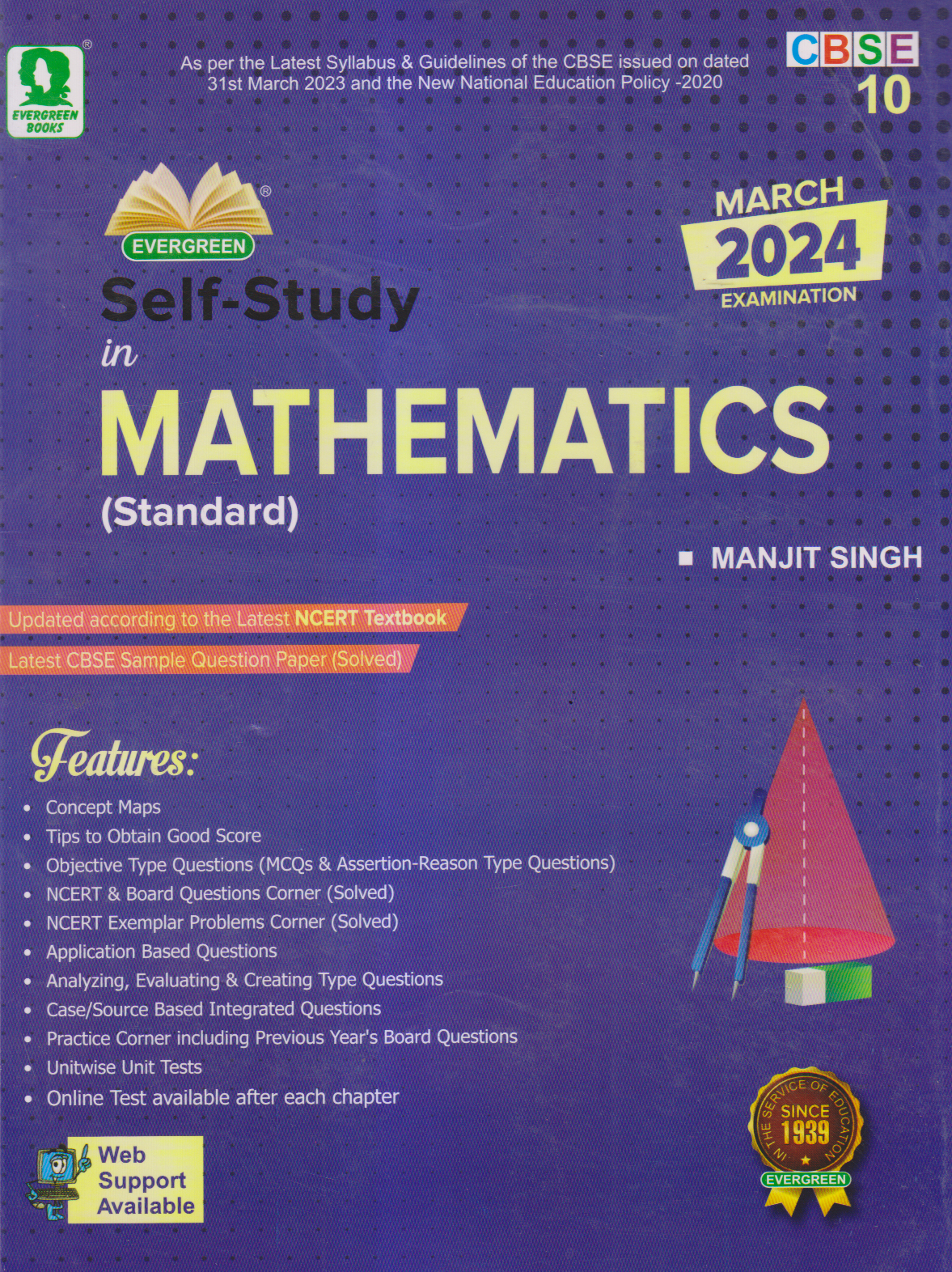
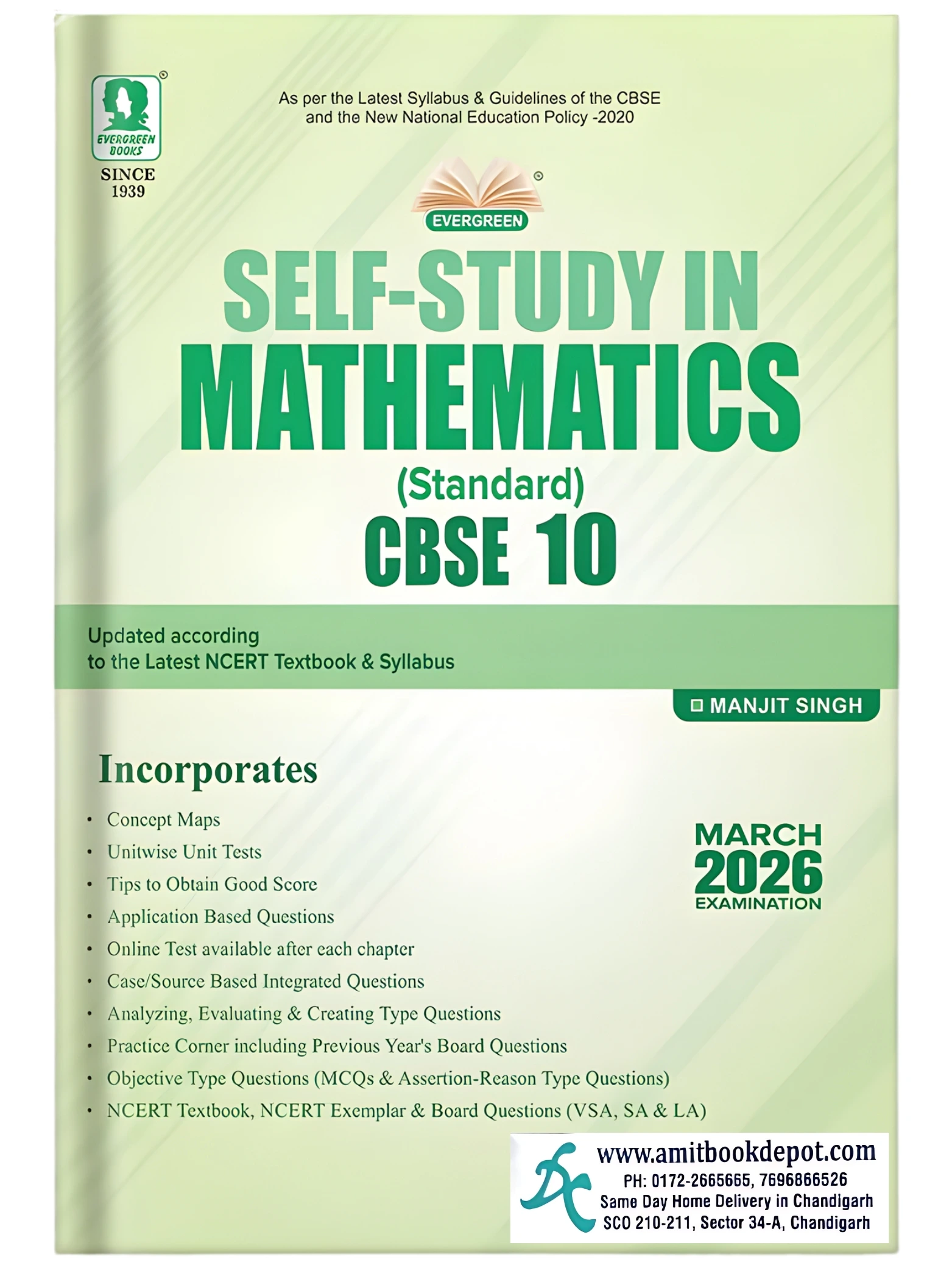


This book is specifically designed and tailored for the Mathematics-Basic (Code 241) syllabus. Students opting for Mathematics-Standard (Code 041) should look for a resource that covers additional and more complex topics.
The "Self Study" format emphasizes a student-centric approach with structured content, clearer and more detailed explanations, learning objectives, and a progression from simple to complex problems, making it easier for a student to learn without constant external guidance.
Yes, the book places a strong emphasis on logical reasoning. Theorems related to Triangles and Circles are broken down with clear proofs (where required) and logical steps, making them easier to understand and remember.
Yes, the chapter "Some Applications of Trigonometry" is dedicated to solving simple problems on Heights and Distances using angles of elevation and depression, strictly as per the syllabus (involving up to two right triangles).
Absolutely. The book is meticulously updated to align with the latest CBSE curriculum for the academic year 2025-26 for Mathematics-Basic (Code 241).
This book is designed specifically for the CBSE Class 10 Board Exam. While it builds a strong foundation, exams like JEE, NEET, or NTSE require a different level of depth and should be prepared for with specialized resources.
Yes, the Probability chapter introduces the classical definition with simple problems on finding the probability of an event, making it easy for beginners to grasp the concept.
Yes, the language is deliberately kept clear, concise, and student-friendly to ensure that the concepts are accessible to all learners, making self-study effective.
As per the CBSE objectives, the book incorporates situational problems in chapters like Quadratic Equations, Arithmetic Progressions, and Trigonometry, showing how mathematical concepts are used in daily life.
The problems range from basic to moderate difficulty, perfectly aligning with the scope of the Mathematics-Basic paper. The focus is on building confidence and fundamental skills rather than on highly complex problems.
No Description Added
This book is specifically designed and tailored for the Mathematics-Basic (Code 241) syllabus. Students opting for Mathematics-Standard (Code 041) should look for a resource that covers additional and more complex topics.
The "Self Study" format emphasizes a student-centric approach with structured content, clearer and more detailed explanations, learning objectives, and a progression from simple to complex problems, making it easier for a student to learn without constant external guidance.
Yes, the book places a strong emphasis on logical reasoning. Theorems related to Triangles and Circles are broken down with clear proofs (where required) and logical steps, making them easier to understand and remember.
Yes, the chapter "Some Applications of Trigonometry" is dedicated to solving simple problems on Heights and Distances using angles of elevation and depression, strictly as per the syllabus (involving up to two right triangles).
Absolutely. The book is meticulously updated to align with the latest CBSE curriculum for the academic year 2025-26 for Mathematics-Basic (Code 241).
This book is designed specifically for the CBSE Class 10 Board Exam. While it builds a strong foundation, exams like JEE, NEET, or NTSE require a different level of depth and should be prepared for with specialized resources.
Yes, the Probability chapter introduces the classical definition with simple problems on finding the probability of an event, making it easy for beginners to grasp the concept.
Yes, the language is deliberately kept clear, concise, and student-friendly to ensure that the concepts are accessible to all learners, making self-study effective.
As per the CBSE objectives, the book incorporates situational problems in chapters like Quadratic Equations, Arithmetic Progressions, and Trigonometry, showing how mathematical concepts are used in daily life.
The problems range from basic to moderate difficulty, perfectly aligning with the scope of the Mathematics-Basic paper. The focus is on building confidence and fundamental skills rather than on highly complex problems.