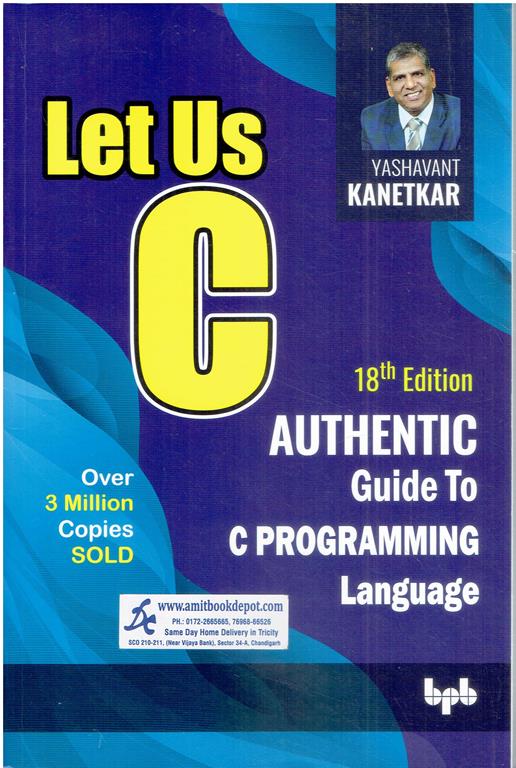
Yes, absolutely. "Let Us C" is specifically designed for true beginners. It starts from the very basic concepts like what a programming language is and gradually builds up your knowledge step-by-step with clear explanations and simple examples.
The book dedicates an entire chapter to pointers, explaining them first conceptually (what they are and why they are used) before diving into syntax. It uses simple analogies and multiple examples to demystify pointer arithmetic, pointers to functions, and their relationship with arrays and strings.
"Let Us C" focuses on teaching the core, timeless ANSI C standard that forms the foundation of all modern C programming. This core knowledge is essential and universally applicable. The later chapters and "The Next Level" section introduce concepts relevant to modern programming environments.
KanNotes are special insets within chapters that contain tips, common pitfalls ("traps"), best practices, and deeper insights from Yashavant Kanetkar's extensive teaching experience. They highlight crucial information often missed by beginners and are a unique feature of this book.
Yes, significantly. Chapter 23, "Interview FAQs," is directly aimed at placement preparation. It compiles common C programming questions asked in interviews. Furthermore, the deep conceptual understanding gained from the book and the practice exercises will build the strong foundation interviewers look for.
The book provides comprehensive coverage of file I/O. It explains opening, reading, writing, and closing files, different file modes, and the distinction between text and binary files. It also covers record I/O and even low-level file operations for a complete understanding.
Definitely. C is the procedural foundation for many modern languages. A strong grasp of C concepts like memory management, pointers, and data structures, as provided by this book, makes learning C++, Java, or similar languages much easier and more intuitive.
The key difference is Yashavant Kanetkar's proven teaching methodology. The book's strength is its logical flow, exceptional clarity in explaining complex topics, and the practical "KanNotes." It's less about just presenting syntax and more about ensuring the reader understands the "why" behind every concept.
"Let Us C" teaches you all the essential tools (like arrays, structures, pointers, dynamic memory allocation concepts) required to implement data structures. It is a prerequisite book that gives you the C language proficiency needed to then study dedicated data structures and algorithms courses.
Yes, dynamic memory allocation is a critical concept covered in detail, typically within the discussion of pointers and their applications. The book explains the functions malloc(), calloc(), realloc(), and free() and their proper usage.
No Description Added
Yes, absolutely. "Let Us C" is specifically designed for true beginners. It starts from the very basic concepts like what a programming language is and gradually builds up your knowledge step-by-step with clear explanations and simple examples.
The book dedicates an entire chapter to pointers, explaining them first conceptually (what they are and why they are used) before diving into syntax. It uses simple analogies and multiple examples to demystify pointer arithmetic, pointers to functions, and their relationship with arrays and strings.
"Let Us C" focuses on teaching the core, timeless ANSI C standard that forms the foundation of all modern C programming. This core knowledge is essential and universally applicable. The later chapters and "The Next Level" section introduce concepts relevant to modern programming environments.
KanNotes are special insets within chapters that contain tips, common pitfalls ("traps"), best practices, and deeper insights from Yashavant Kanetkar's extensive teaching experience. They highlight crucial information often missed by beginners and are a unique feature of this book.
Yes, significantly. Chapter 23, "Interview FAQs," is directly aimed at placement preparation. It compiles common C programming questions asked in interviews. Furthermore, the deep conceptual understanding gained from the book and the practice exercises will build the strong foundation interviewers look for.
The book provides comprehensive coverage of file I/O. It explains opening, reading, writing, and closing files, different file modes, and the distinction between text and binary files. It also covers record I/O and even low-level file operations for a complete understanding.
Definitely. C is the procedural foundation for many modern languages. A strong grasp of C concepts like memory management, pointers, and data structures, as provided by this book, makes learning C++, Java, or similar languages much easier and more intuitive.
The key difference is Yashavant Kanetkar's proven teaching methodology. The book's strength is its logical flow, exceptional clarity in explaining complex topics, and the practical "KanNotes." It's less about just presenting syntax and more about ensuring the reader understands the "why" behind every concept.
"Let Us C" teaches you all the essential tools (like arrays, structures, pointers, dynamic memory allocation concepts) required to implement data structures. It is a prerequisite book that gives you the C language proficiency needed to then study dedicated data structures and algorithms courses.
Yes, dynamic memory allocation is a critical concept covered in detail, typically within the discussion of pointers and their applications. The book explains the functions malloc(), calloc(), realloc(), and free() and their proper usage.