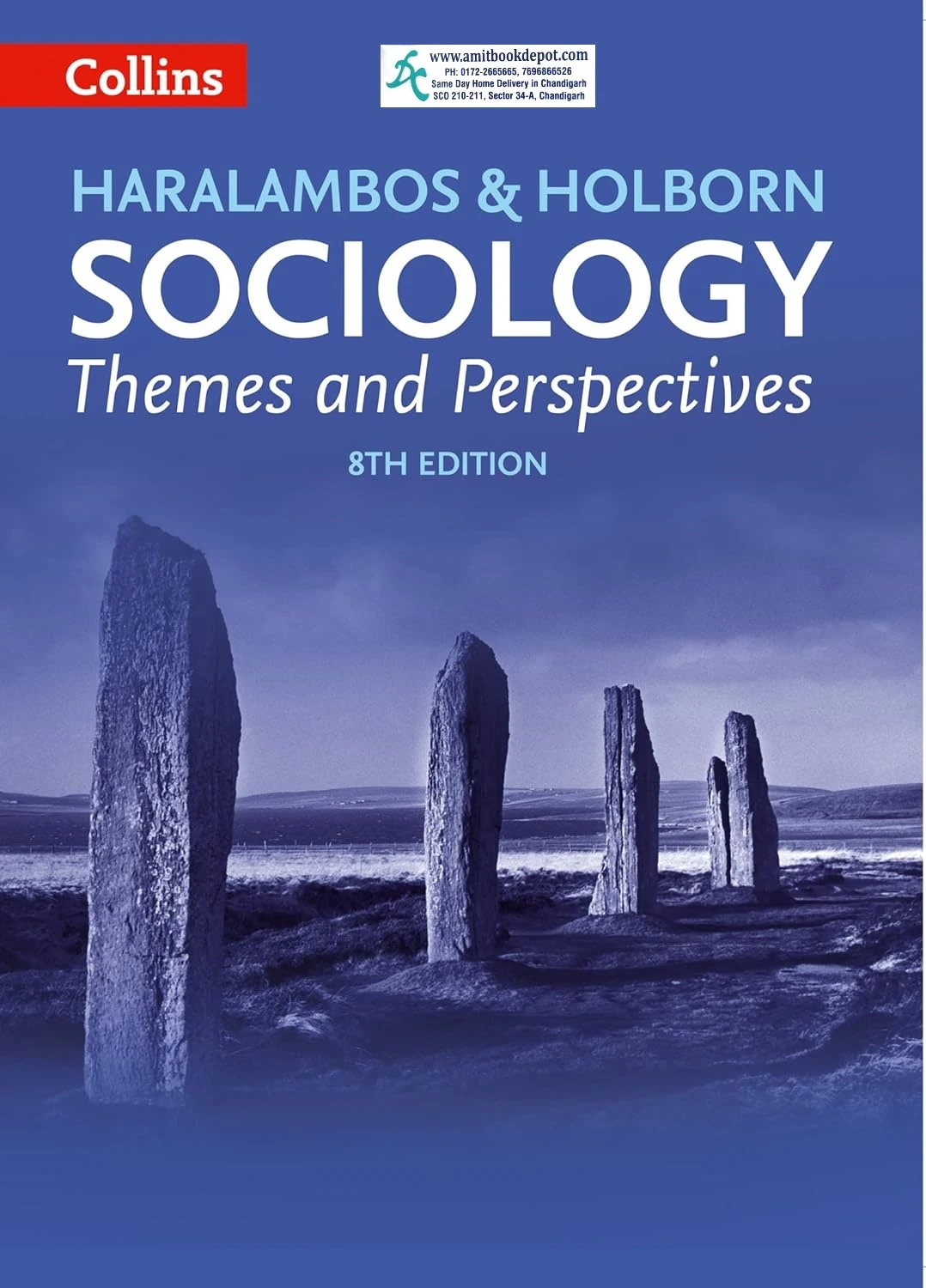
Functionalism, Marxism, feminism, interactionism, postmodernism, and new right perspectives are systematically compared across all thematic chapters.
Yes, Chapter 14 provides detailed coverage of quantitative and qualitative methods, ethics, validity, reliability, and triangulation for sociological research.
Chapter 1 analyses class, status, party, life chances, meritocracy, and inequalities using contemporary UK and global data.
Chapter 5 by Stephen Moore explores the social construction of health, medicalisation, the sick role, and inequalities in healthcare.
Strain theory, labelling, subcultural, Marxist, feminist, left and right realism, and control theory are all fully explained.
Chapter 7 analyses secularisation, fundamentalism, religious participation, and new religious movements using global examples.
Yes, Chapter 10 explores class, gender, and ethnic differences in attainment, plus hidden curriculum and education policies.
Chapter 8 covers family diversity, lone parenthood, same-sex families, personal life perspectives, and childhood socialisation.
Chapter 4 explains absolute/relative poverty, social exclusion, welfare state debates, and New Right versus Marxist critiques.
Each chapter includes key term definitions, summary diagrams, and evaluation points designed for A-level and first-year undergraduate essays.
No Description Added
Functionalism, Marxism, feminism, interactionism, postmodernism, and new right perspectives are systematically compared across all thematic chapters.
Yes, Chapter 14 provides detailed coverage of quantitative and qualitative methods, ethics, validity, reliability, and triangulation for sociological research.
Chapter 1 analyses class, status, party, life chances, meritocracy, and inequalities using contemporary UK and global data.
Chapter 5 by Stephen Moore explores the social construction of health, medicalisation, the sick role, and inequalities in healthcare.
Strain theory, labelling, subcultural, Marxist, feminist, left and right realism, and control theory are all fully explained.
Chapter 7 analyses secularisation, fundamentalism, religious participation, and new religious movements using global examples.
Yes, Chapter 10 explores class, gender, and ethnic differences in attainment, plus hidden curriculum and education policies.
Chapter 8 covers family diversity, lone parenthood, same-sex families, personal life perspectives, and childhood socialisation.
Chapter 4 explains absolute/relative poverty, social exclusion, welfare state debates, and New Right versus Marxist critiques.
Each chapter includes key term definitions, summary diagrams, and evaluation points designed for A-level and first-year undergraduate essays.