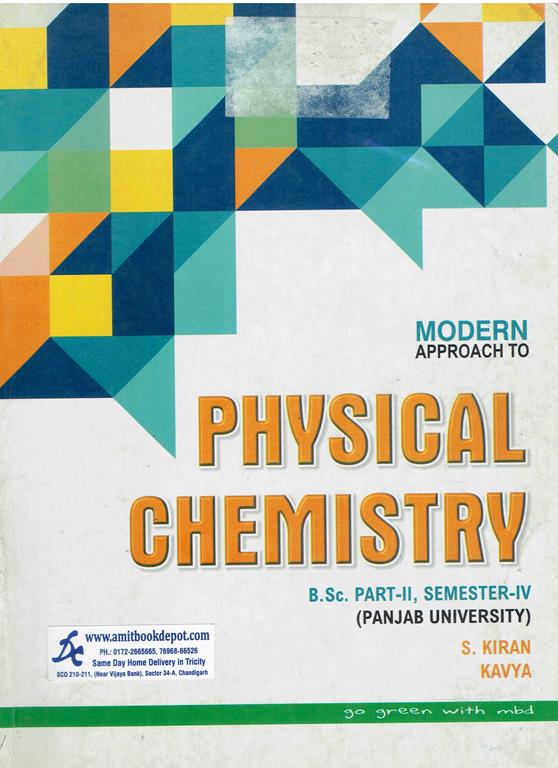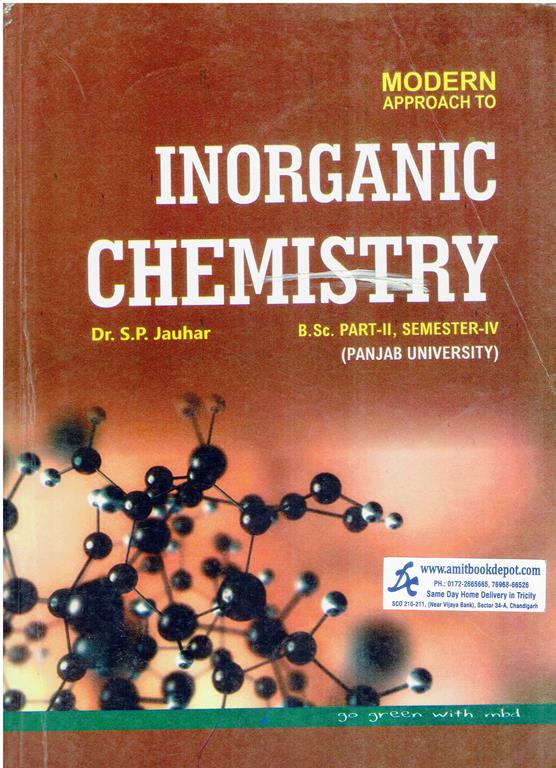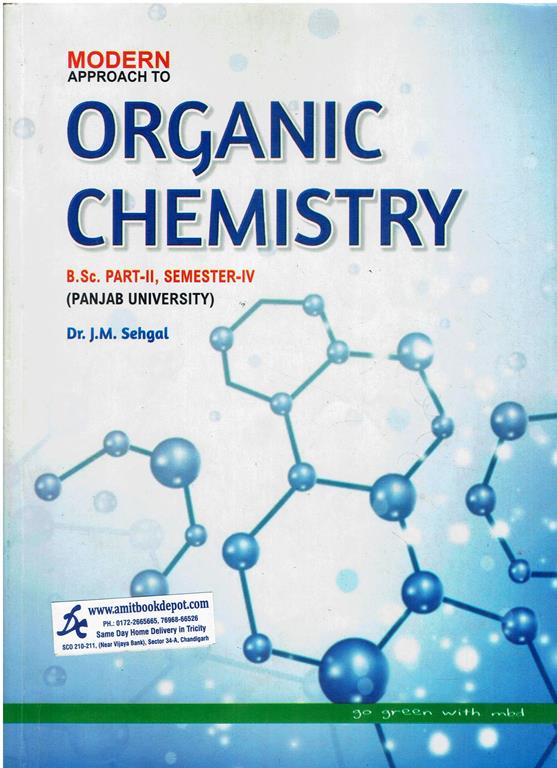
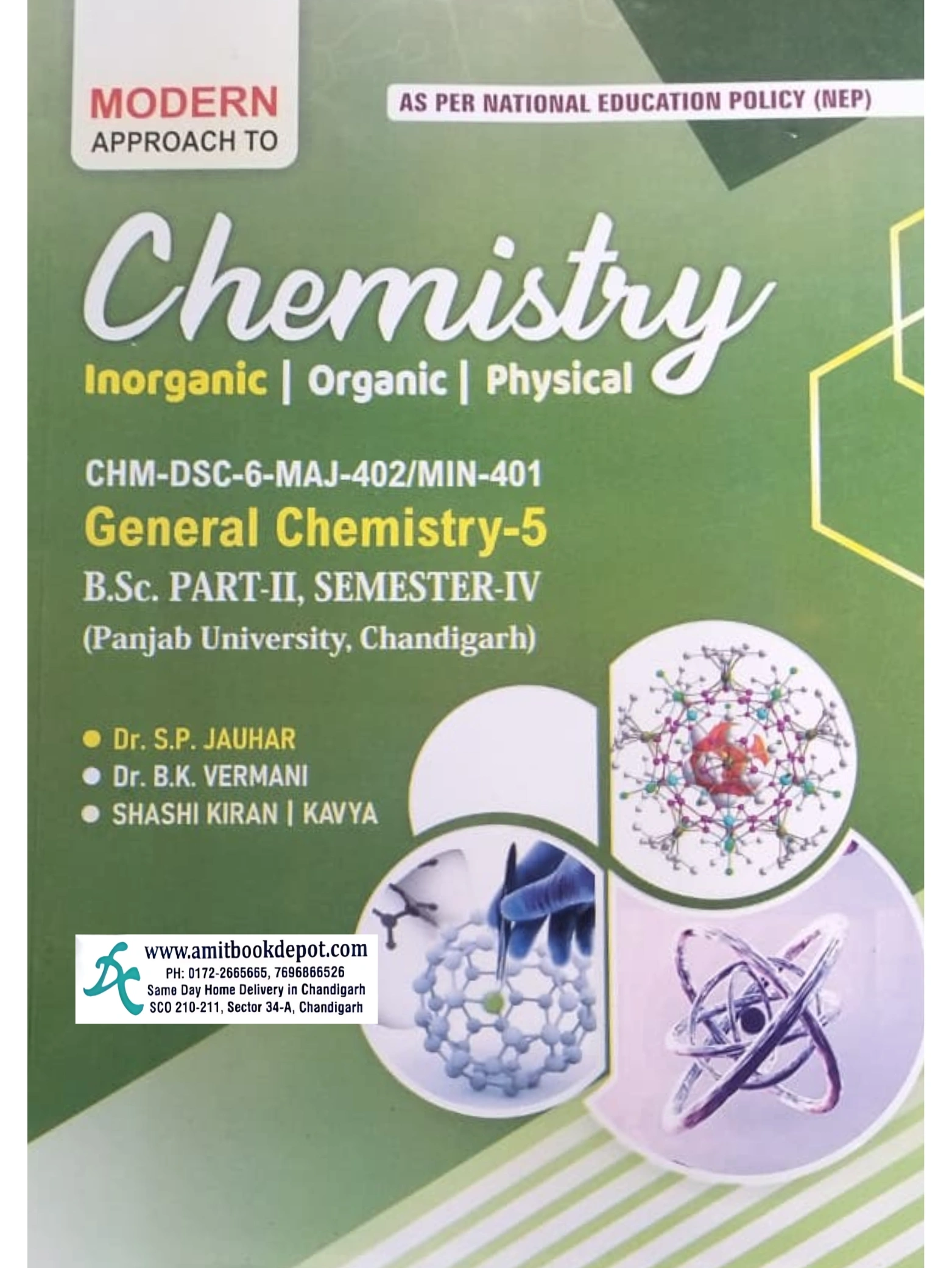

Yes. This textbook, "Modern Chemistry: General Chemistry - 5," by Dr. S.P. Jauhar et al., is specifically authored and published to cover the complete syllabus prescribed for Panjab University's B.Sc. Part-II, 4th Semester.
Yes. The book is updated to include all specified topics from the current syllabus, including clathrate hydrates in Unit I (Group 16) and a discussion on thermal and photochemical reactions in the solid state in Unit III.
The Organic Chemistry unit provides dedicated sections on the mechanisms of important name reactions, including the Fries rearrangement, Claisen rearrangement, Gattermann synthesis, and the Reimer-Tiemann reaction, as outlined in the syllabus.
Absolutely. The book concisely covers the introductory concepts of dinitrogen and dioxygen as ligands in the Inorganic Chemistry unit, as specified by the syllabus requirements.
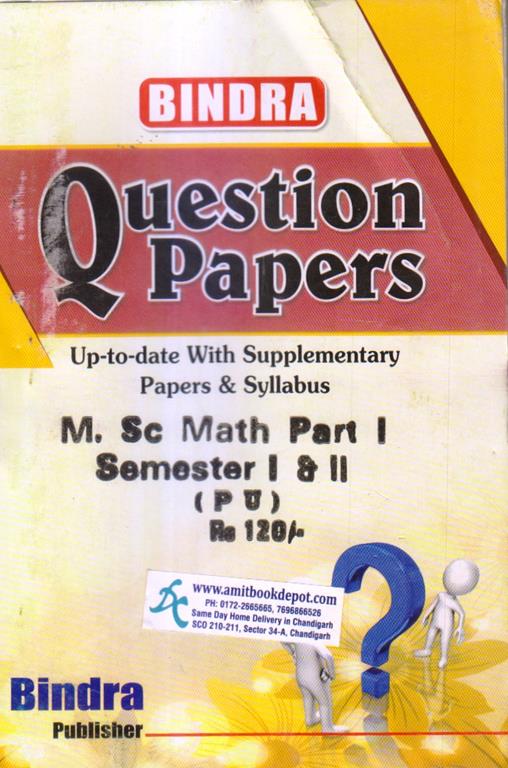
This volume is primarily a comprehensive theory textbook written closely to the syllabus structure. It does not typically compile previous years' papers, though it may include illustrative examples within chapters.
The book includes essential diagrams and structural representations, such as the structures of O₃, H₂O₂, allotropes of sulfur, and polyatomic cations of S/Se/Te, which are crucial for visual learning and exams.
Yes. Its clear, syllabus-aligned structure and explanation of fundamental to advanced concepts make it highly suitable as a primary self-study resource for Panjab University students.
The Organic Chemistry unit includes a dedicated section on the comparative acidic strengths of alcohols and phenols, explaining the resonance stabilization of the phenoxide ion, which is a key syllabus point.
Yes. The Solid State chapter begins with foundational definitions and builds up to explain the Laws of Crystallography (Constancy of Interfacial Angles, Rationality of Indices, Symmetry) and symmetry elements in a structured, student-friendly way.
It is designed for both. The syllabus code CHM–DSC–6–MAJ–402/MIN–401 indicates it is prescribed for both Major (402) and Minor/Subsidiary (401) students of Chemistry in their 4th semester at Panjab University.
No Description Added
Yes. This textbook, "Modern Chemistry: General Chemistry - 5," by Dr. S.P. Jauhar et al., is specifically authored and published to cover the complete syllabus prescribed for Panjab University's B.Sc. Part-II, 4th Semester.
Yes. The book is updated to include all specified topics from the current syllabus, including clathrate hydrates in Unit I (Group 16) and a discussion on thermal and photochemical reactions in the solid state in Unit III.
The Organic Chemistry unit provides dedicated sections on the mechanisms of important name reactions, including the Fries rearrangement, Claisen rearrangement, Gattermann synthesis, and the Reimer-Tiemann reaction, as outlined in the syllabus.
Absolutely. The book concisely covers the introductory concepts of dinitrogen and dioxygen as ligands in the Inorganic Chemistry unit, as specified by the syllabus requirements.
This volume is primarily a comprehensive theory textbook written closely to the syllabus structure. It does not typically compile previous years' papers, though it may include illustrative examples within chapters.
The book includes essential diagrams and structural representations, such as the structures of O₃, H₂O₂, allotropes of sulfur, and polyatomic cations of S/Se/Te, which are crucial for visual learning and exams.
Yes. Its clear, syllabus-aligned structure and explanation of fundamental to advanced concepts make it highly suitable as a primary self-study resource for Panjab University students.
The Organic Chemistry unit includes a dedicated section on the comparative acidic strengths of alcohols and phenols, explaining the resonance stabilization of the phenoxide ion, which is a key syllabus point.
Yes. The Solid State chapter begins with foundational definitions and builds up to explain the Laws of Crystallography (Constancy of Interfacial Angles, Rationality of Indices, Symmetry) and symmetry elements in a structured, student-friendly way.
It is designed for both. The syllabus code CHM–DSC–6–MAJ–402/MIN–401 indicates it is prescribed for both Major (402) and Minor/Subsidiary (401) students of Chemistry in their 4th semester at Panjab University.