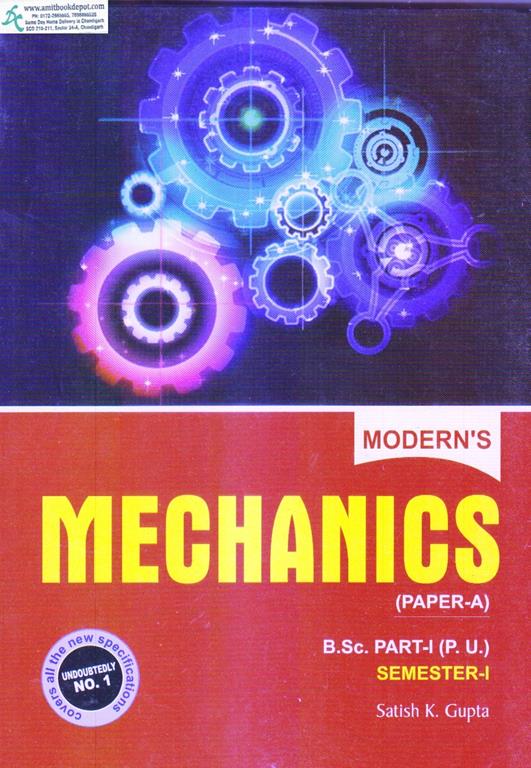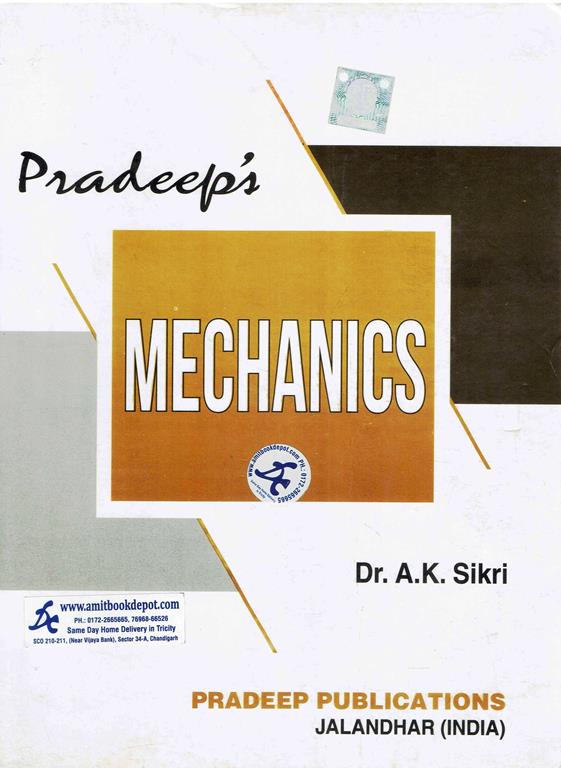
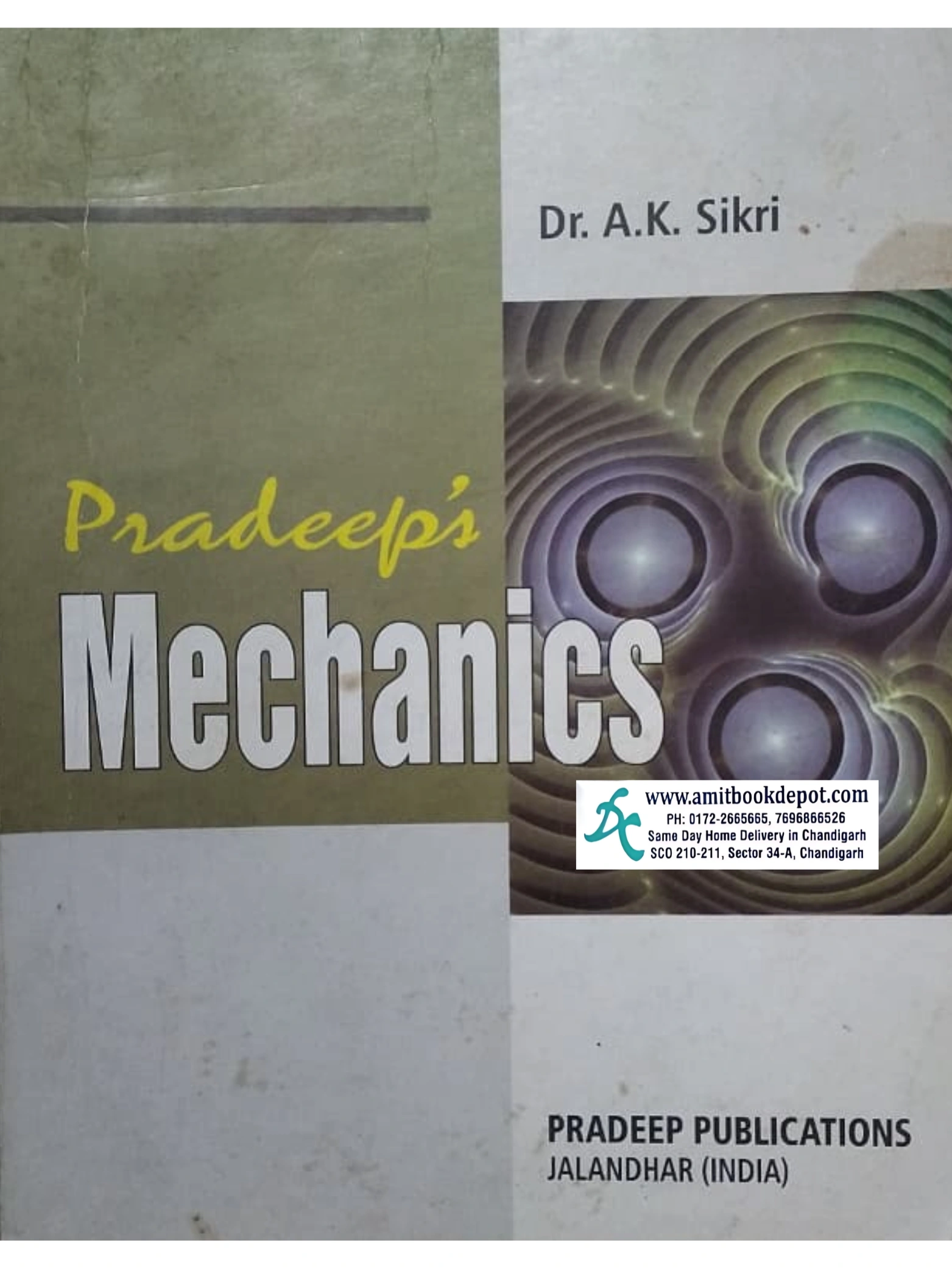


Yes, the book's contents, especially in Part I, are meticulously structured to cover all units of Paper A: Mechanics-I as prescribed in the latest Panjab University syllabus, including coordinate systems, conservation laws, central forces, and collisions.
Absolutely. The book includes a dedicated section on the Classical Mechanics of Collisions, which comprehensively covers the theory and derivation of Rutherford Scattering cross-section, linking it to the central force problem.
Yes, the book is known for its detailed conceptual derivations. The motion under a central force chapter includes a step-by-step derivation of the orbit equation and its application to prove Kepler's Laws.
Part II begins with Frames of Reference, naturally leading into the postulates of Special Relativity. It builds the concepts logically, explaining the necessity and consequences of relativistic theory after establishing classical limits.
Its structured approach, logical flow, and clear explanations make it one of the more self-study-friendly textbooks for mechanics at the BSc level. However, dedication and parallel problem-solving are recommended for best results.
Yes, that is its specific design. Part I corresponds to Semester I (Mechanics-I), and Part II covers the advanced topics typically taught in Semester II, making it a comprehensive two-semester resource.
The final chapter provides a foundational treatment of the motion of rigid bodies, covering the necessary concepts for this level, with a focus on rotational dynamics which is crucial for the syllabus.
Yes, this is a key strength. A dedicated chapter connects the conservation laws of linear momentum, angular momentum, and energy directly to the symmetries of space (homogeneity, isotropy) and time, a deep and important concept in physics.
The book covers the established principles of the Special Theory of Relativity, which are foundational and unchanging. It presents the standard, curriculum-required topics of relativistic kinematics and dynamics.
While its primary focus is the university syllabus, the strong conceptual foundation it builds in fundamental mechanics and relativity is highly beneficial for the physics section of various competitive examinations.
No Description Added
Yes, the book's contents, especially in Part I, are meticulously structured to cover all units of Paper A: Mechanics-I as prescribed in the latest Panjab University syllabus, including coordinate systems, conservation laws, central forces, and collisions.
Absolutely. The book includes a dedicated section on the Classical Mechanics of Collisions, which comprehensively covers the theory and derivation of Rutherford Scattering cross-section, linking it to the central force problem.
Yes, the book is known for its detailed conceptual derivations. The motion under a central force chapter includes a step-by-step derivation of the orbit equation and its application to prove Kepler's Laws.
Part II begins with Frames of Reference, naturally leading into the postulates of Special Relativity. It builds the concepts logically, explaining the necessity and consequences of relativistic theory after establishing classical limits.
Its structured approach, logical flow, and clear explanations make it one of the more self-study-friendly textbooks for mechanics at the BSc level. However, dedication and parallel problem-solving are recommended for best results.
Yes, that is its specific design. Part I corresponds to Semester I (Mechanics-I), and Part II covers the advanced topics typically taught in Semester II, making it a comprehensive two-semester resource.
The final chapter provides a foundational treatment of the motion of rigid bodies, covering the necessary concepts for this level, with a focus on rotational dynamics which is crucial for the syllabus.
Yes, this is a key strength. A dedicated chapter connects the conservation laws of linear momentum, angular momentum, and energy directly to the symmetries of space (homogeneity, isotropy) and time, a deep and important concept in physics.
The book covers the established principles of the Special Theory of Relativity, which are foundational and unchanging. It presents the standard, curriculum-required topics of relativistic kinematics and dynamics.
While its primary focus is the university syllabus, the strong conceptual foundation it builds in fundamental mechanics and relativity is highly beneficial for the physics section of various competitive examinations.