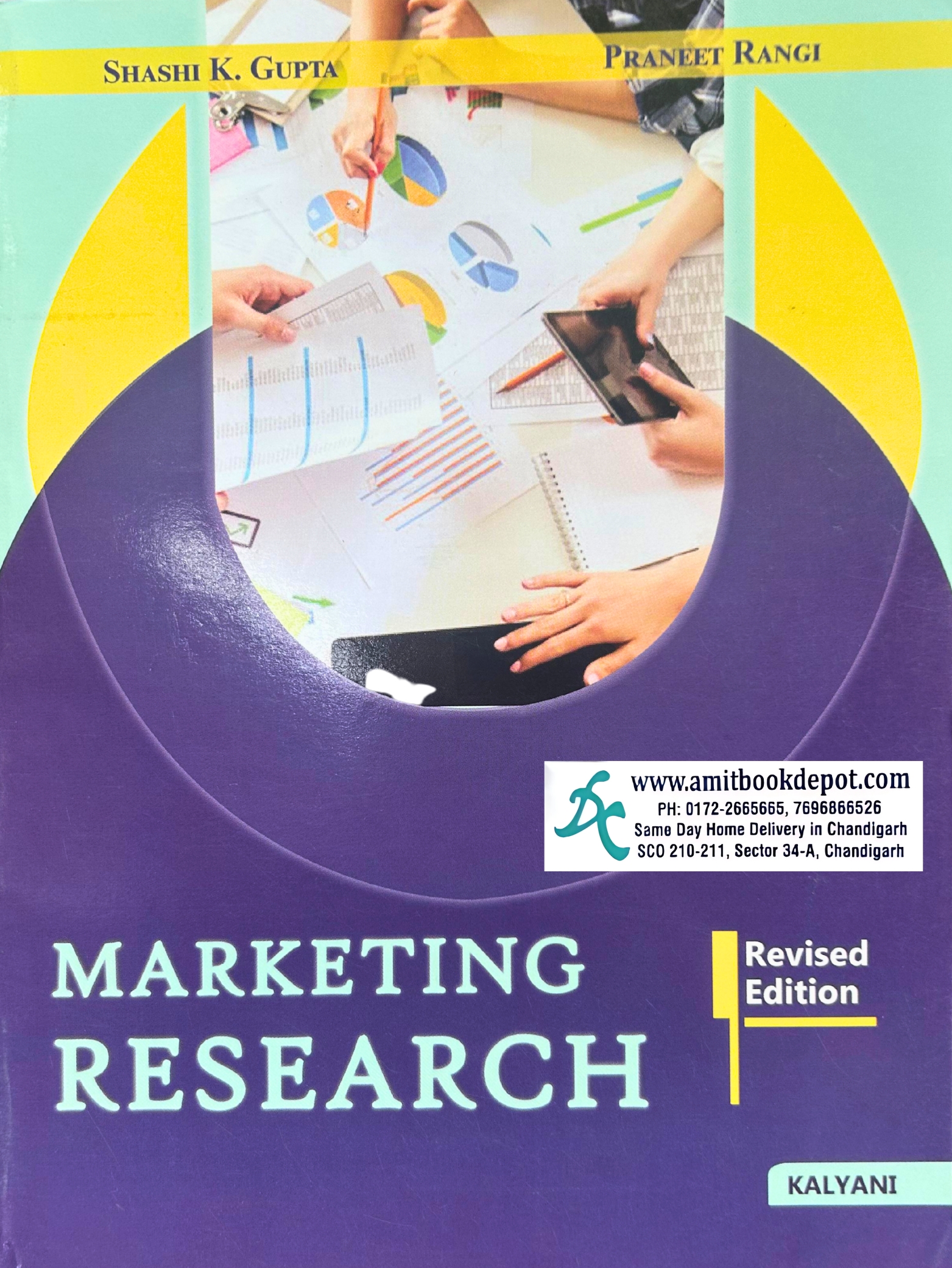
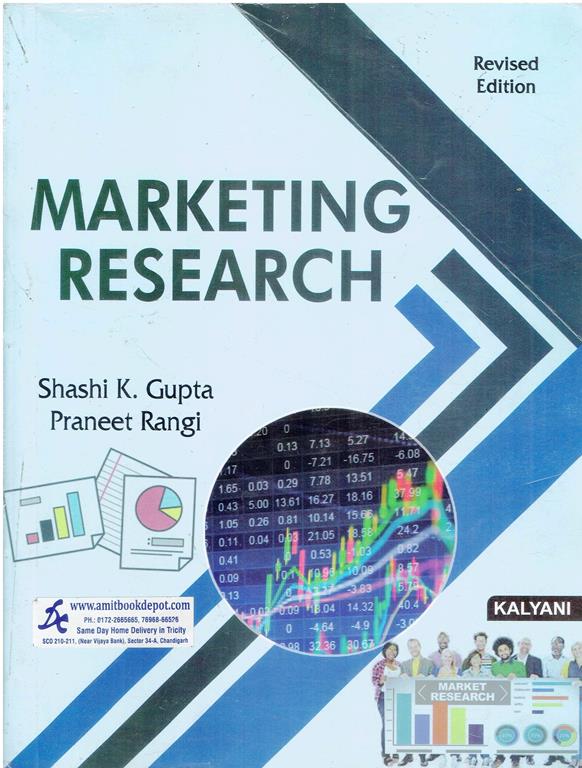
Yes, this book is meticulously crafted to align with the prescribed syllabus for M.Com 3rd Semester at Panjab University, Chandigarh, covering all units and topics in detail.
Absolutely. It includes dedicated chapters on qualitative research (focus groups, depth interviews) and comprehensive coverage of quantitative analysis, including descriptive statistics, hypothesis testing, and multivariate techniques.
Yes, Unit-II contains detailed chapters on sampling designs, explaining both probability and non-probability sampling methods, sample size determination, and sampling errors.
Yes, the initial chapters detail the complete marketing research process, from problem definition and research proposal to research design and implementation.
Yes, the book includes a detailed chapter on factor analysis, explaining its objectives, methods, steps, and applications using SPSS.
Yes, Unit-III covers attitude measurement and various scaling techniques like Likert scales, semantic differential, and multidimensional scaling in detail.
Yes, each chapter concludes with key terms, review questions, and references, making it ideal for self-study, revision, and exam preparation.
Yes, Unit-IV focuses entirely on marketing research applications, including product research, advertising research, consumer research, sales forecasting, and market segmentation studies.
Yes, the final chapter examines marketing research in India, discussing its growing importance, organizational structure, challenges, and future developments.
Yes, Chapter 3 explains research design types—exploratory, descriptive, and conclusive—along with their characteristics and importance.
No Description Added
Yes, this book is meticulously crafted to align with the prescribed syllabus for M.Com 3rd Semester at Panjab University, Chandigarh, covering all units and topics in detail.
Absolutely. It includes dedicated chapters on qualitative research (focus groups, depth interviews) and comprehensive coverage of quantitative analysis, including descriptive statistics, hypothesis testing, and multivariate techniques.
Yes, Unit-II contains detailed chapters on sampling designs, explaining both probability and non-probability sampling methods, sample size determination, and sampling errors.
Yes, the initial chapters detail the complete marketing research process, from problem definition and research proposal to research design and implementation.
Yes, the book includes a detailed chapter on factor analysis, explaining its objectives, methods, steps, and applications using SPSS.
Yes, Unit-III covers attitude measurement and various scaling techniques like Likert scales, semantic differential, and multidimensional scaling in detail.
Yes, each chapter concludes with key terms, review questions, and references, making it ideal for self-study, revision, and exam preparation.
Yes, Unit-IV focuses entirely on marketing research applications, including product research, advertising research, consumer research, sales forecasting, and market segmentation studies.
Yes, the final chapter examines marketing research in India, discussing its growing importance, organizational structure, challenges, and future developments.
Yes, Chapter 3 explains research design types—exploratory, descriptive, and conclusive—along with their characteristics and importance.