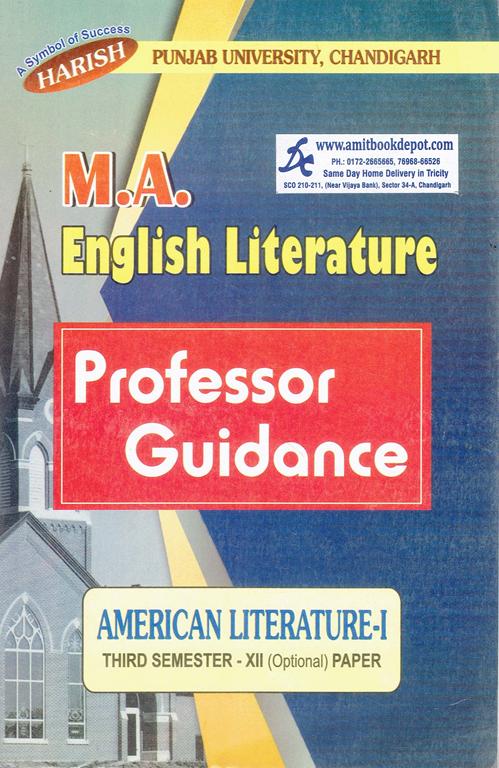
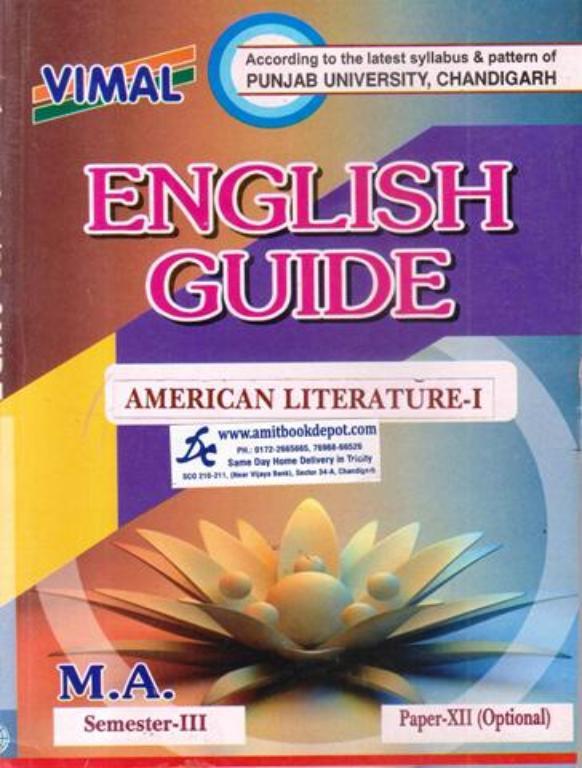
1. HISTORY OF AMERICAN LITERATURE
[Poetry and Drama: 1900 to the Present]
1. Introduction
2. The 17th Century Literature
3. The 18th Century
4. The New Nation
5. The 19th Century
6. American Renaissance
7. The Transcendentalist
8. New England Reformers and Historians
9. Hawthorne, Melville, and Walt Whitman
10. Melville's First-Person Narrative Method
11. Walt Whitman: The Poet of Democracy
12. From the Civil War to 1914
13. Literary Comedians
14. Fiction and Local Colorists
15. The Naturalists
16. Henry James
17. Henry Adams
19. The 20th Century
18. Poets of the Era
Writing From 1914 to 1945
Experiment in Drama
20. The New Poetry
21. Fiction
22. Critics of the Society
23. Hemingway, Faulkner, and Steinbeck
24. Lyrics by Fictionists
25. Literary Criticism
26. Socio-Literary Critics
27. Moral Aesthetic Critics
28. After World War II
29. The Novel and Short Story
30. African-American Litt (New Fictional Modes)
Unit-I
2. LANGSTON HUGHES'S POEMS
1. Let America Be America Again—Text
2. I, Too, Sing America—Text
3. The Negro Speaks of Rivers—Text
4. A Dream Deferred [Harlem]-Text
5. The Weary Blues—Text
LANGSTON HUGHES
1. Introduction to the Poet: His Life and Work
SELECTED POEMS OF LANGSTON HUGHES
- 1. The Weary Blues
Summary of the Poem
Structure of the Poem
1. Racial Alienation in the Weary Blues
2. Use of Imagery in Weary Blues
3. Theme of the Poem, The Weary Blues
4. Weary Blues and Harlem Renaissance
5. Narrative Voice of the Poem
6. Character Analysis of the Poem
- 2. A Dream Deferred [Harlem]
Introduction of the Poem
Summary of the Poem
1. Theme of the Poem, the Dream Deferred
2. Title of the Poem
3. Dream Deferred: A Poem Is an Answer to the Question
4. Martin Luther King's speech 4. Comparison between Dream Deferred and
5. Hughes's Style
- 3. Let America Be America Again
Summary of Poem
1. Theme of the Poem: Let America Be America Again
2. Literary Device of Langston Hughes
3. Tone of the Poem
4. Meaning of First Stanza of Poem
- 4. I, Too, Sing America
Introduction to the Poem
1. First line of the poem 'I, Too'
2. Theme of the Poem
3. End-stopped and enjambed lines are used in the poem.
4. Literary and Historical Context of the Poem
5. Form, Meter, and Rhyme of the Poem
6. Speaker and Setting of Poem
- 5. The Negro Speaks of Rivers
Introduction to the Poem
1. Theme of the Poem
2. Symbols of the Poem
3. Verse and Meter of the Poem
4. African-American Lineage in the Poem
5. Rivers' Interpretation
6. Characters of the Poeni
Unit-II
3. ALLEN GINSBERG'S POEMS
1. Howl-Text
2. Kaddish-Text
3. A Supermarket in California—Text
4. America-Text
- ALLEN GINSBERG
Introduction to the Poet
1. Ginsberg's Theme in Poetry
2. Ginsberg as a Psychiatric Patient
- SELECTED POEMS OF ALLAN GINSLIENG
- 1. HOWL
Summary of the Poem
Footnote to Howl
1. Critical Analysis of 'Howl'
2. 'Howl' as Voice of the Beats
3. Role of Maloch
- 2. KADDISH
Summary of the Poem
1. Dream Trapped in Disappearance
2. Character Development of Naomi
3. Kaddish: A Note on Death
- 3. A SUPERMARKET IN CALIFORNIA
Summary of the Poem
1. American Capitalism
2. Themes in Super Market in California
3. Isolation in Society
4. Symbols and Imagery Employed in the Poem
- 4. AMERICA
Summary of the Poem
1. Significance of the Title of the Poem, 'America'
2. Economics as a Theme of the Poem
3. Communism Interpreted in Ginsberg's America
4. War as a Theme
5. Hopelessness and Despair in the Poem
Unit III
4. ADRIENNE RICH'S POEMS
1. Planetarian-Text
2. Cartographies of Silence-Text
3. Stepping Backward-Text
- ADRIENNE RICH
Introduction to the Poet
1. Adrienne Rich as a Feminist Writer and Poet
2. Adrienne Rich's American Poems: Analysis, Themes, and Meaning
3. Adrienne Rich as a Poet and Pioneer
- SELECTED POEMS OF ADRIENNE RICH
- 1. Planetarium
Summary of the Poem
1. Adrienne Rich's Journey
2. Rich's Poetry Parallel to the Development of Her Life 2
3. Female Figure in Planetarium
4. Mistreatment of Women as the Theme of the Poem 3
- 2. Cartographies of Silence
Summary of the Poem
1. Silence as the Blueprint of Life
2. Cartographies of Silence: Polemics of Silence
3. Silence as a Significant Trope in Feminism
- 3. Stepping Backward
Paraphrase of the Poem
1. Introduction to the Poem
2. Summary of the Poem
3. Critical Appreciation of the Poem
Unit IV
5. BURIED CHILD—SAM SHEPARD
- SAM SHEPARD
Introduction to the Author
- BURIED CHILD
Introduction to the Play, 'Buried Child'
1. Family and Its Demise: Theme of the Play
2. Allegory and Symbols in the Play
3. Realism in the Play
4. Quest for Identity as a Part of the Play
5. Incest and Infanticide
6. Character Sketch of 'Dodge'
7. Character Sketch of 'HALIE'
8. Character Sketch of Shelley
9. Character Sketch of Tilden
10. Character Sketch of Vince
11. Character Sketch of Father Dewis
12. Critical Overview of the Play
13. Irony in the Play
14. 'Tilden' Character Analysis
15. The Role of Vince in the Play
16. The Birth of a Child in the Dodge Family
17. The Theme of Existence in the Play
Unit-V
6. THE PIANO LESSON: AUGUST WILSON
- AUGUST WILSON
Introduction to the Author
1. August Wilson and the Interracial Movement in 1960
- THE PIANO LESSON
Summary of the Play
1. Various Themes in 'The Piano Lesson'
2. Role of the Ghost in the Play
3. Symbols and Allegory Employed in the Play
4. Piano as a Symbol of Alter and Religion
5. The African-American Cultural Integration in the Play
6. Ancestral Communication in the Play
7. Piano as the Grand Theme
8. Character Sketch of Doaker Charles
9. Character Sketch of Boy Willie
10. Character Sketch of Berniece
11. Character Sketch of Martha
12. Character Sketch of Avery Brown
13. Character Sketch of Lymen
14. The Function of Grace's Character
15. Portrayal of Complicated and Authentic Family Relationship
16. Avery sees Berniece as an asset.
17. Conclusion of the Play
18. Thematic Significance of Final Exorcism
19. Music as a Crucial Element in the Play
20. Role of Magic in Berniece and Lymen's Seduction
21. Act of Revenge


.jpg)