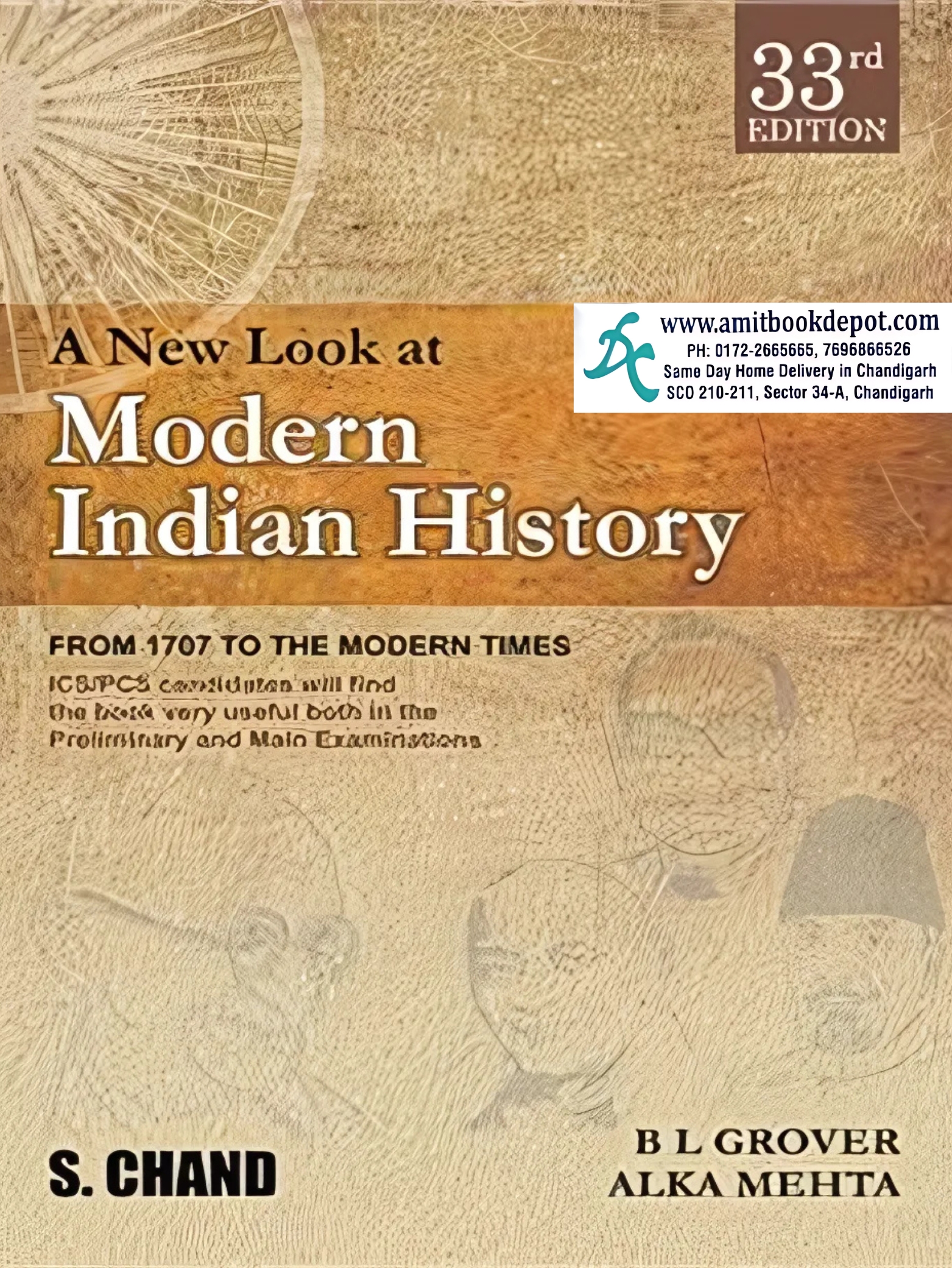
Yes, the latest edition includes appendices covering contemporary topics like the Citizenship Amendment Act, 2019, and the removal of Articles 370 and 35A, linking historical context to current affairs.
The book dedicates a section to this historical debate, presenting "Select Opinions" from various scholars, allowing readers to understand multiple perspectives and form a balanced view.
Yes, it includes detailed chapters on Maratha administration under the Peshwas and the administration of Ranjit Singh, providing insight into pre-colonial Indian polities.
Absolutely. A dedicated chapter on the Indian economy under colonial rule analyzes the drain of wealth, deindustrialization, and changes in agrarian structure, including the Ryotwari and Mahalwari systems.
Yes, Chapter 31 provides comprehensive coverage of movements like the Brahmo Samaj, Arya Samaj, Aligarh Movement, and lower-caste movements led by figures like Jyotirao Phule and Narayan Guru.
Yes, it has a dedicated chapter analyzing the political, economic, social, and military causes of the Revolt of 1857, along with its nature, spread, and consequences.
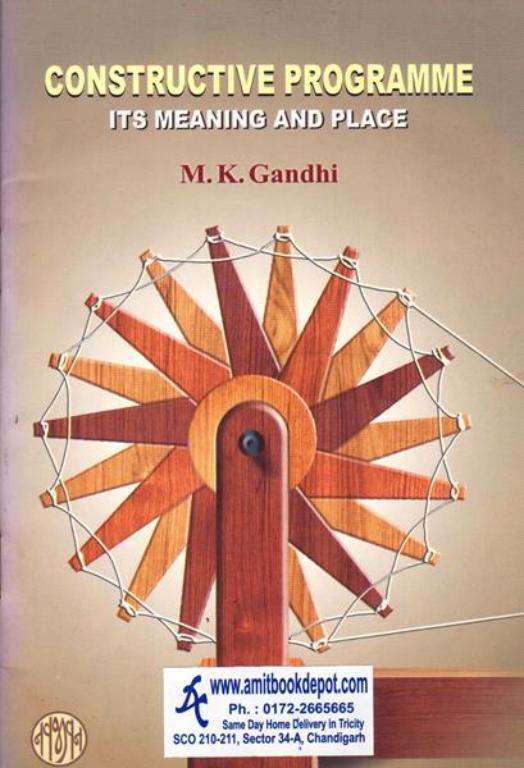
It details the Gandhian era (1919-47) in Chapter 33, covering the Non-Cooperation, Civil Disobedience, and Quit India Movements, and includes an assessment of Mahatma Gandhi's role.
Yes, separate chapters cover the Left Movements in India, the Trade Union Movement, and Peasant Revolts and Agrarian Movements, providing a holistic view of the struggle.
Yes, it is covered across multiple chapters (40-44), detailing every major act from the Regulating Act of 1773 to the Indian Independence Act of 1947, including the Government of India Acts of 1919 and 1935.
Yes, it covers the end of British paramountcy and the integration of princely states in Chapter 49 on the Nehruvian era, discussing this critical post-independence challenge.
No Description Added
Yes, the latest edition includes appendices covering contemporary topics like the Citizenship Amendment Act, 2019, and the removal of Articles 370 and 35A, linking historical context to current affairs.
The book dedicates a section to this historical debate, presenting "Select Opinions" from various scholars, allowing readers to understand multiple perspectives and form a balanced view.
Yes, it includes detailed chapters on Maratha administration under the Peshwas and the administration of Ranjit Singh, providing insight into pre-colonial Indian polities.
Absolutely. A dedicated chapter on the Indian economy under colonial rule analyzes the drain of wealth, deindustrialization, and changes in agrarian structure, including the Ryotwari and Mahalwari systems.
Yes, Chapter 31 provides comprehensive coverage of movements like the Brahmo Samaj, Arya Samaj, Aligarh Movement, and lower-caste movements led by figures like Jyotirao Phule and Narayan Guru.
Yes, it has a dedicated chapter analyzing the political, economic, social, and military causes of the Revolt of 1857, along with its nature, spread, and consequences.
It details the Gandhian era (1919-47) in Chapter 33, covering the Non-Cooperation, Civil Disobedience, and Quit India Movements, and includes an assessment of Mahatma Gandhi's role.
Yes, separate chapters cover the Left Movements in India, the Trade Union Movement, and Peasant Revolts and Agrarian Movements, providing a holistic view of the struggle.
Yes, it is covered across multiple chapters (40-44), detailing every major act from the Regulating Act of 1773 to the Indian Independence Act of 1947, including the Government of India Acts of 1919 and 1935.
Yes, it covers the end of British paramountcy and the integration of princely states in Chapter 49 on the Nehruvian era, discussing this critical post-independence challenge.