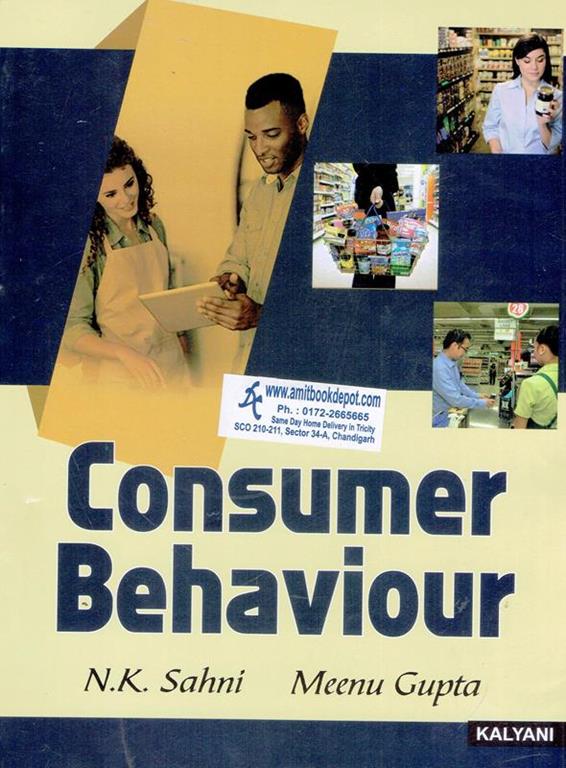
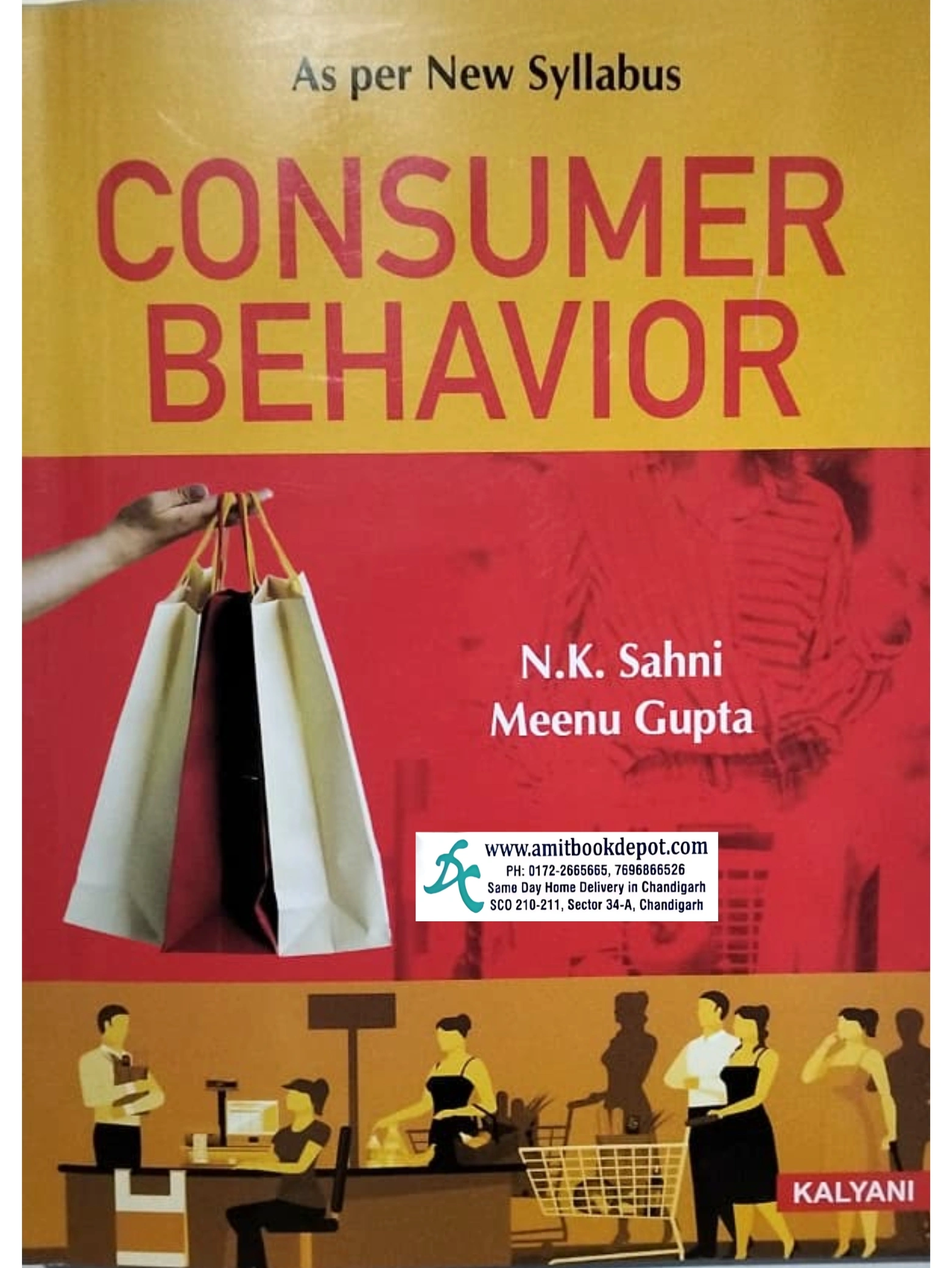
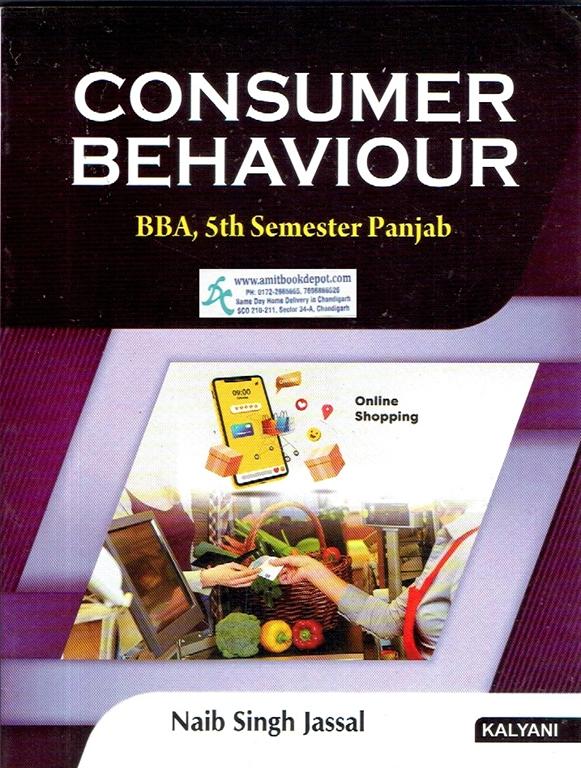
Yes, this book is meticulously crafted to align 100% with the latest syllabus for Consumer Behaviour (NBBA 403) under the New Education Policy (NEP) for BBA 4th Semester at Panjab University, Chandigarh.
Absolutely. The book covers all topics from Unit I and Unit II in detail and also outlines the framework for the five practical projects mandated by the syllabus, such as consumer surveys and observation reports.
Yes, the book covers key models of consumer behavior, including the Nicosia model, Howard & Seth model, and the Blackwell model, as specified in the syllabus.
Yes, it provides detailed explanations of both compensatory and non-compensatory decision rules, including the conjunctive, disjunctive, lexicographic, and affect referral rules.
Yes, a dedicated chapter explains industrial buying behavior and highlights the key differences between individual and industrial consumer decision-making processes.
Key internal determinants covered include consumer motivation, personality, self-concept, perception, learning, attitudes, and psychographics/lifestyles.
The book elaborates on external factors like culture, subculture, social class, reference groups, and family influence.
Yes, it is structured according to the syllabus units. The inclusion of the full syllabus with sections and marking scheme allows students to prepare specifically for the short answer (Section A) and essay-type questions (Sections B & C).
Yes, a chapter on researching consumer behavior is included, explaining the role of consumer research in shaping marketing strategies.
Consumer involvement, its role, and its impact on the decision process are discussed in detail, along with related concepts like customer satisfaction.
No Description Added
Yes, this book is meticulously crafted to align 100% with the latest syllabus for Consumer Behaviour (NBBA 403) under the New Education Policy (NEP) for BBA 4th Semester at Panjab University, Chandigarh.
Absolutely. The book covers all topics from Unit I and Unit II in detail and also outlines the framework for the five practical projects mandated by the syllabus, such as consumer surveys and observation reports.
Yes, the book covers key models of consumer behavior, including the Nicosia model, Howard & Seth model, and the Blackwell model, as specified in the syllabus.
Yes, it provides detailed explanations of both compensatory and non-compensatory decision rules, including the conjunctive, disjunctive, lexicographic, and affect referral rules.
Yes, a dedicated chapter explains industrial buying behavior and highlights the key differences between individual and industrial consumer decision-making processes.
Key internal determinants covered include consumer motivation, personality, self-concept, perception, learning, attitudes, and psychographics/lifestyles.
The book elaborates on external factors like culture, subculture, social class, reference groups, and family influence.
Yes, it is structured according to the syllabus units. The inclusion of the full syllabus with sections and marking scheme allows students to prepare specifically for the short answer (Section A) and essay-type questions (Sections B & C).
Yes, a chapter on researching consumer behavior is included, explaining the role of consumer research in shaping marketing strategies.
Consumer involvement, its role, and its impact on the decision process are discussed in detail, along with related concepts like customer satisfaction.