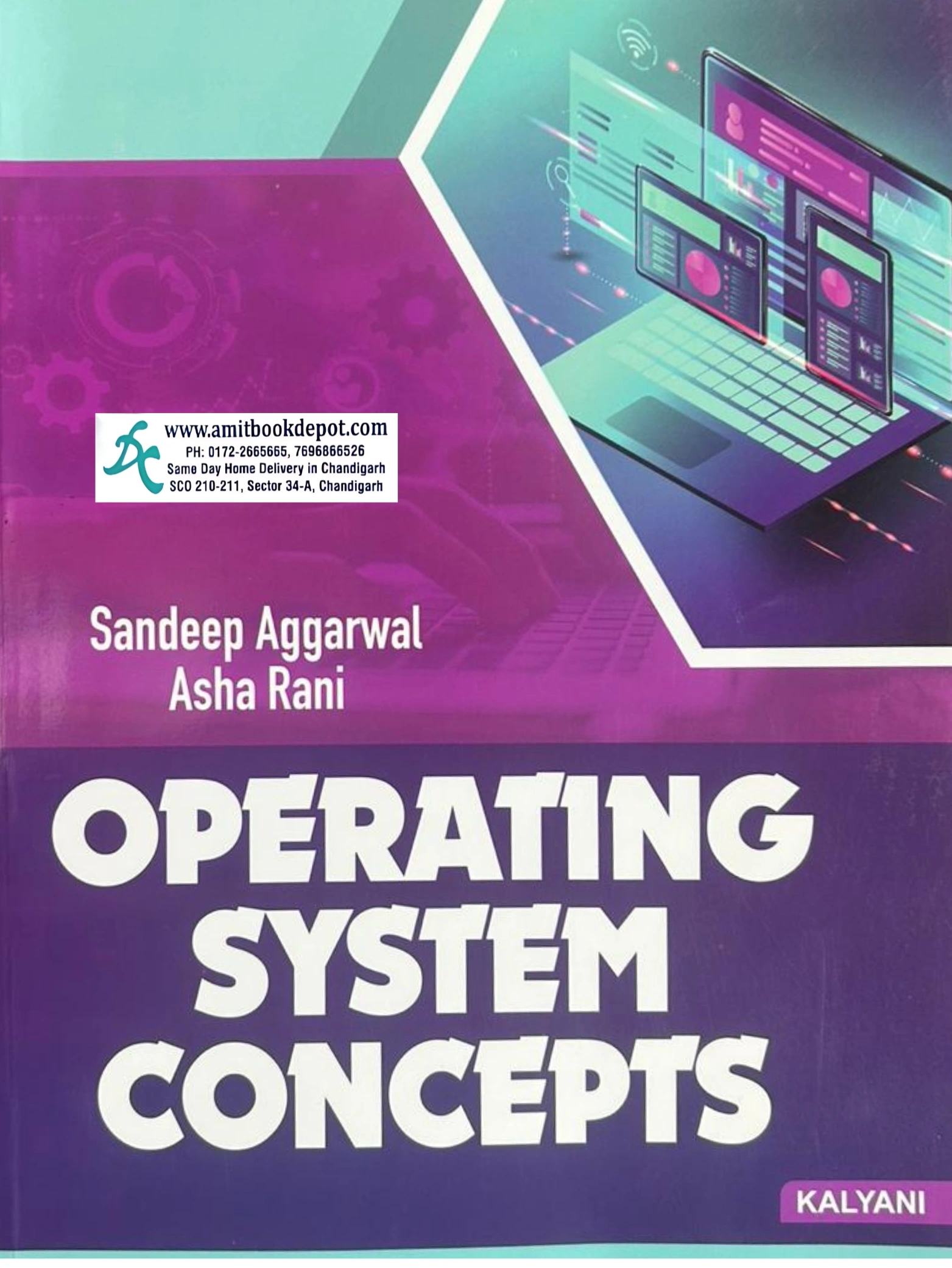
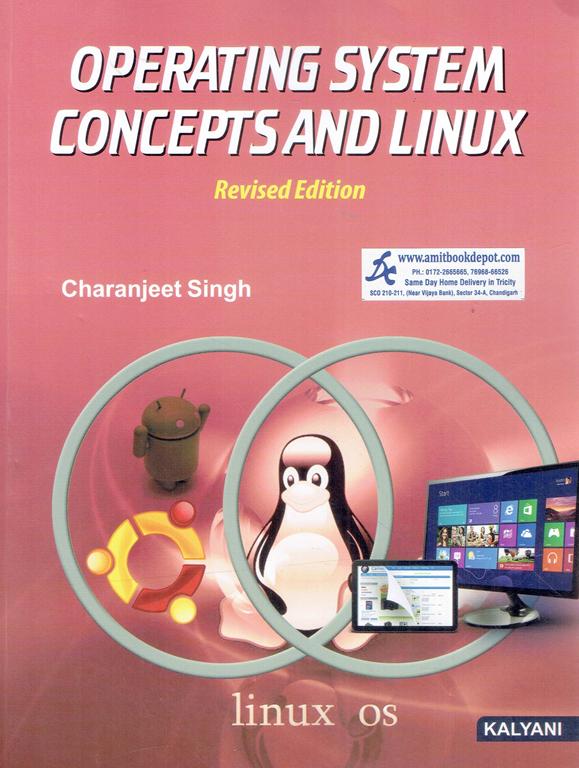
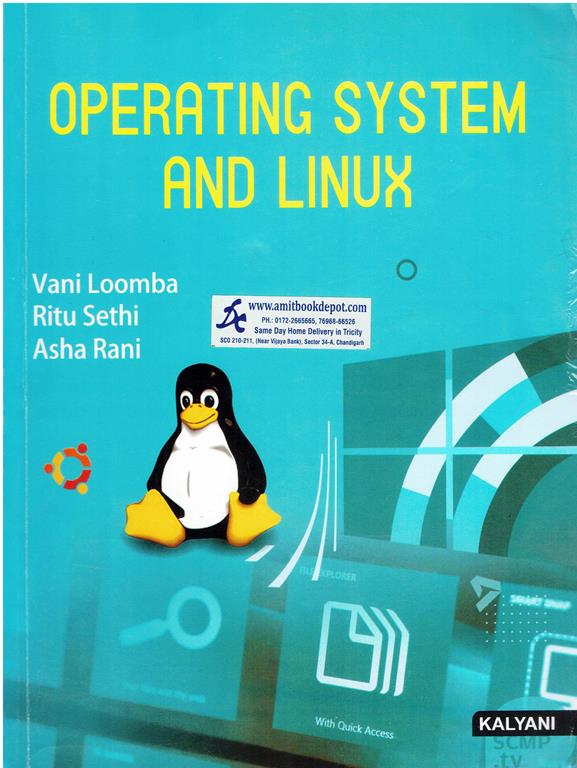
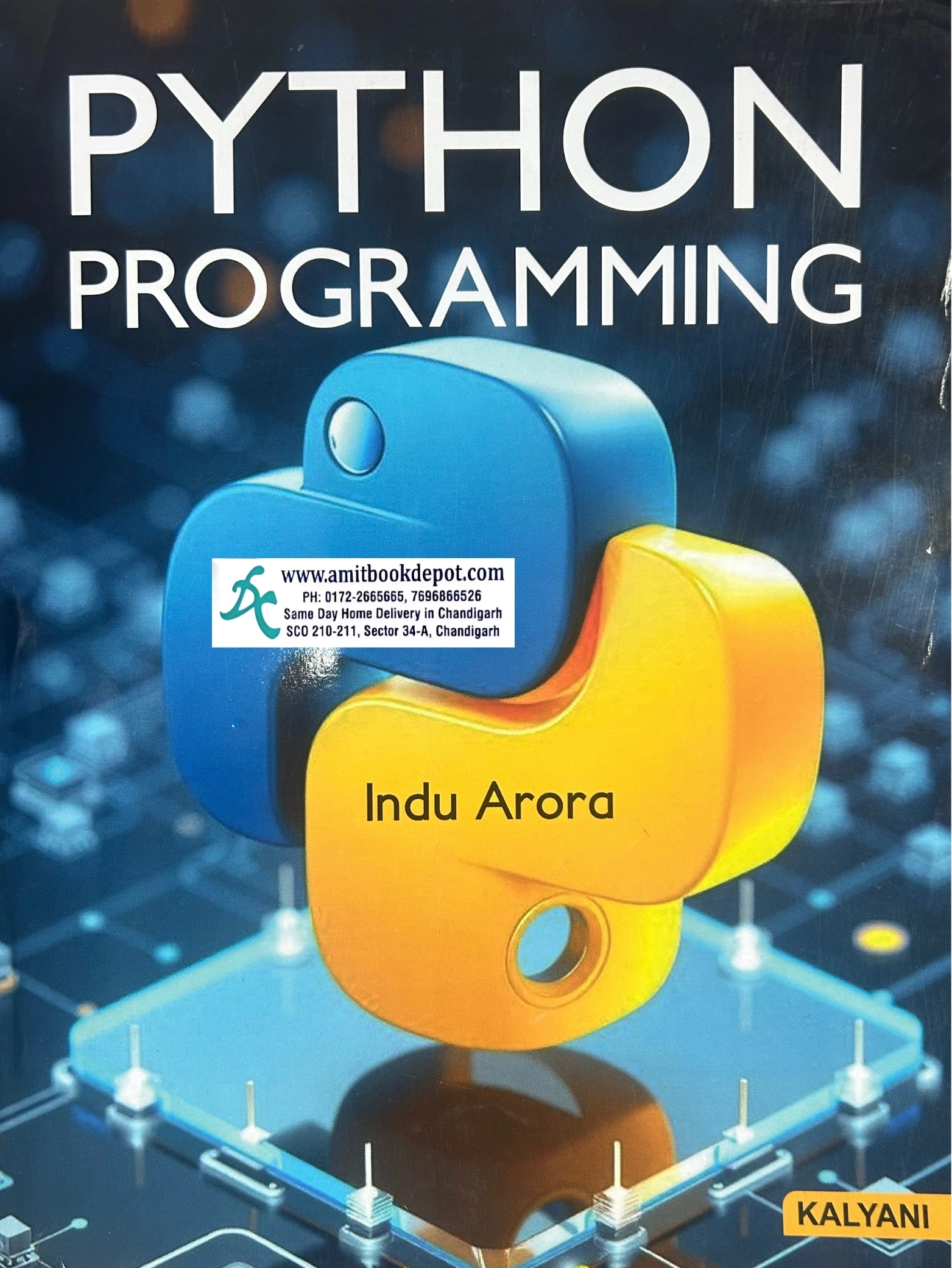
Yes, this book is meticulously crafted to follow the latest New Education Policy (NEP) syllabus for BCA 4th Semester, Panjab University, Chandigarh for the paper Operating System Concepts (BCA-DSC-4(Maj)-401).

Absolutely. The book is divided into two integrated parts: comprehensive theoretical units on OS concepts (Process Management, Scheduling, Deadlocks, Memory Management) and detailed practical units on the Linux operating system, commands, shell programming, and system administration.
Yes, Unit I provides detailed explanations of key CPU Scheduling Algorithms including FCFS, SJF, Priority, Round Robin, Multilevel Queue, and Multilevel Feedback Queue Scheduling, along with their criteria.
Yes, Unit II covers Deadlocks extensively, including the necessary conditions, handling methods, detection, recovery, and the Banker’s Algorithm as per the syllabus.
Unit III starts with a complete Introduction to Linux, its architecture, and history, then progresses step-by-step through file systems, basic to advanced Linux commands, permissions, wildcards, and filters, making it ideal for beginners.
Yes, Unit IV contains a dedicated chapter on Basic Shell Programming, covering scripts, variables, the read command, conditional statements (if, case), operators, and loops (while, for).
Yes, a full chapter on the VI Editor is included, detailing its modes, text insertion/deletion, copying, moving, searching, and quitting.
The book introduces key System Administration activities like using the su command, taking tar backups, managing disk space, mounting file systems, and managing users and printers.
Yes, Unit II provides a clear introduction to Virtual Memory, Demand Paging, and important Page Replacement Algorithms such as FIFO, Optimal, and LRU.
Yes, Unit IV covers Process Management Commands like ps, bg, fg, nice, and kill for controlling and monitoring processes in Linux.
No Description Added
Yes, this book is meticulously crafted to follow the latest New Education Policy (NEP) syllabus for BCA 4th Semester, Panjab University, Chandigarh for the paper Operating System Concepts (BCA-DSC-4(Maj)-401).
Absolutely. The book is divided into two integrated parts: comprehensive theoretical units on OS concepts (Process Management, Scheduling, Deadlocks, Memory Management) and detailed practical units on the Linux operating system, commands, shell programming, and system administration.
Yes, Unit I provides detailed explanations of key CPU Scheduling Algorithms including FCFS, SJF, Priority, Round Robin, Multilevel Queue, and Multilevel Feedback Queue Scheduling, along with their criteria.
Yes, Unit II covers Deadlocks extensively, including the necessary conditions, handling methods, detection, recovery, and the Banker’s Algorithm as per the syllabus.
Unit III starts with a complete Introduction to Linux, its architecture, and history, then progresses step-by-step through file systems, basic to advanced Linux commands, permissions, wildcards, and filters, making it ideal for beginners.
Yes, Unit IV contains a dedicated chapter on Basic Shell Programming, covering scripts, variables, the read command, conditional statements (if, case), operators, and loops (while, for).
Yes, a full chapter on the VI Editor is included, detailing its modes, text insertion/deletion, copying, moving, searching, and quitting.
The book introduces key System Administration activities like using the su command, taking tar backups, managing disk space, mounting file systems, and managing users and printers.
Yes, Unit II provides a clear introduction to Virtual Memory, Demand Paging, and important Page Replacement Algorithms such as FIFO, Optimal, and LRU.
Yes, Unit IV covers Process Management Commands like ps, bg, fg, nice, and kill for controlling and monitoring processes in Linux.