-
Mon-Fri: 10AM to 8PM 01722665665
-
My Account
-
-
0
Total :
₹ 0.00

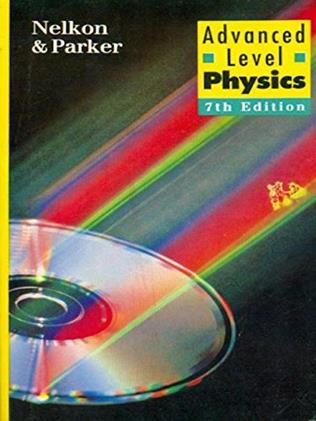
Advanced Level Physics 7th Edition by Nelkon & Parker (CBS Publishers) is a comprehensive book for A-Level and pre-university physics. Covering Mechanics, Electricity, Optics, Thermal Properties, Electronics, and Atomic Physics, it includes simple harmonic motion, electromagnetic induction, wave-particle duality, semiconductors, and nuclear energy. Each chapter features clear theory, worked examples, and exercises. Ideal for exam preparation, this updated edition builds conceptual mastery in dynamics, magnetic fields, interference, and thermodynamics. A trusted classic for serious physics students.


Yes. Part Three includes dedicated chapters on Interference of Light Waves and Diffraction of Light Waves, explaining fringe formation and Huygens’ principle.
Yes. Part Five covers junction diodes, transistors, analogue and digital electronics, and telecommunications fundamentals essential for modern physics.
Yes. Chapter 2 covers Circular Motion and Simple Harmonic Motion, including energy changes, damping, and resonance with mathematical derivations.
Yes. Chapter 14 is fully devoted to A.C. Circuits, covering reactance, impedance, phase relationships, and power in capacitive and inductive circuits.
Yes. Chapter 33 explains photoelectricity, energy levels, X-rays, and wave-particle duality, linking quantum theory to observable phenomena.
Yes. Chapter 7 covers The Gravitational Field, including Newton’s law, field strength, potential, and satellite motion.
Yes. Chapter 13 is dedicated to Electromagnetic Induction, covering Faraday’s and Lenz’s laws, eddy currents, and self-inductance.
Yes. Chapter 16 on Lenses, Optical Instruments describes microscopes, telescopes, and lens aberrations with ray diagrams.
Yes. Chapter 5 discusses Sources of Energy, including renewable and non-renewable sources, efficiency, and environmental context.
Yes. Chapter 34 covers Radioactivity, Nuclear Energy, including decay laws, half-life, fission, fusion, and nuclear reactors.
Yes. Part Three includes dedicated chapters on Interference of Light Waves and Diffraction of Light Waves, explaining fringe formation and Huygens’ principle.
Yes. Part Five covers junction diodes, transistors, analogue and digital electronics, and telecommunications fundamentals essential for modern physics.
Yes. Chapter 2 covers Circular Motion and Simple Harmonic Motion, including energy changes, damping, and resonance with mathematical derivations.
Yes. Chapter 14 is fully devoted to A.C. Circuits, covering reactance, impedance, phase relationships, and power in capacitive and inductive circuits.
Yes. Chapter 33 explains photoelectricity, energy levels, X-rays, and wave-particle duality, linking quantum theory to observable phenomena.
Yes. Chapter 7 covers The Gravitational Field, including Newton’s law, field strength, potential, and satellite motion.
Yes. Chapter 13 is dedicated to Electromagnetic Induction, covering Faraday’s and Lenz’s laws, eddy currents, and self-inductance.
Yes. Chapter 16 on Lenses, Optical Instruments describes microscopes, telescopes, and lens aberrations with ray diagrams.
Yes. Chapter 5 discusses Sources of Energy, including renewable and non-renewable sources, efficiency, and environmental context.
Yes. Chapter 34 covers Radioactivity, Nuclear Energy, including decay laws, half-life, fission, fusion, and nuclear reactors.